
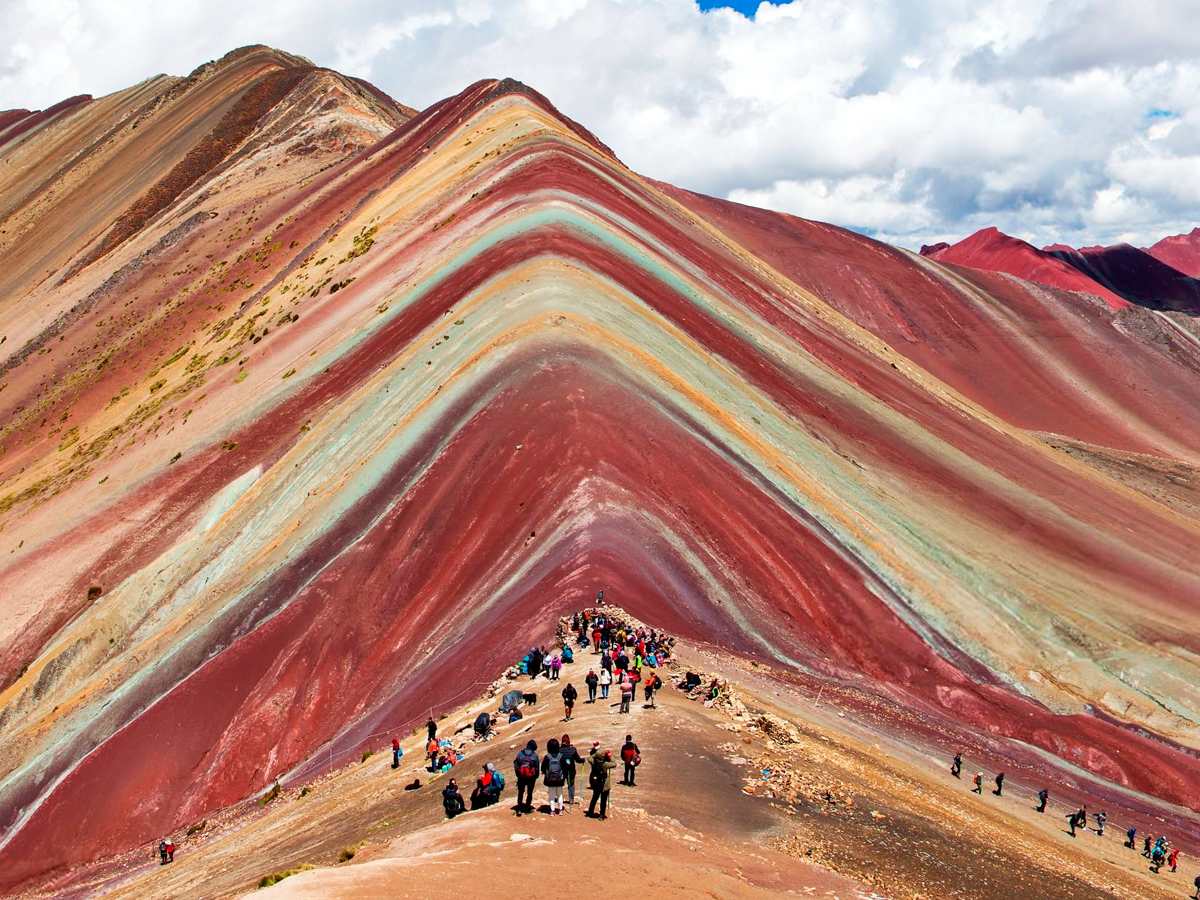
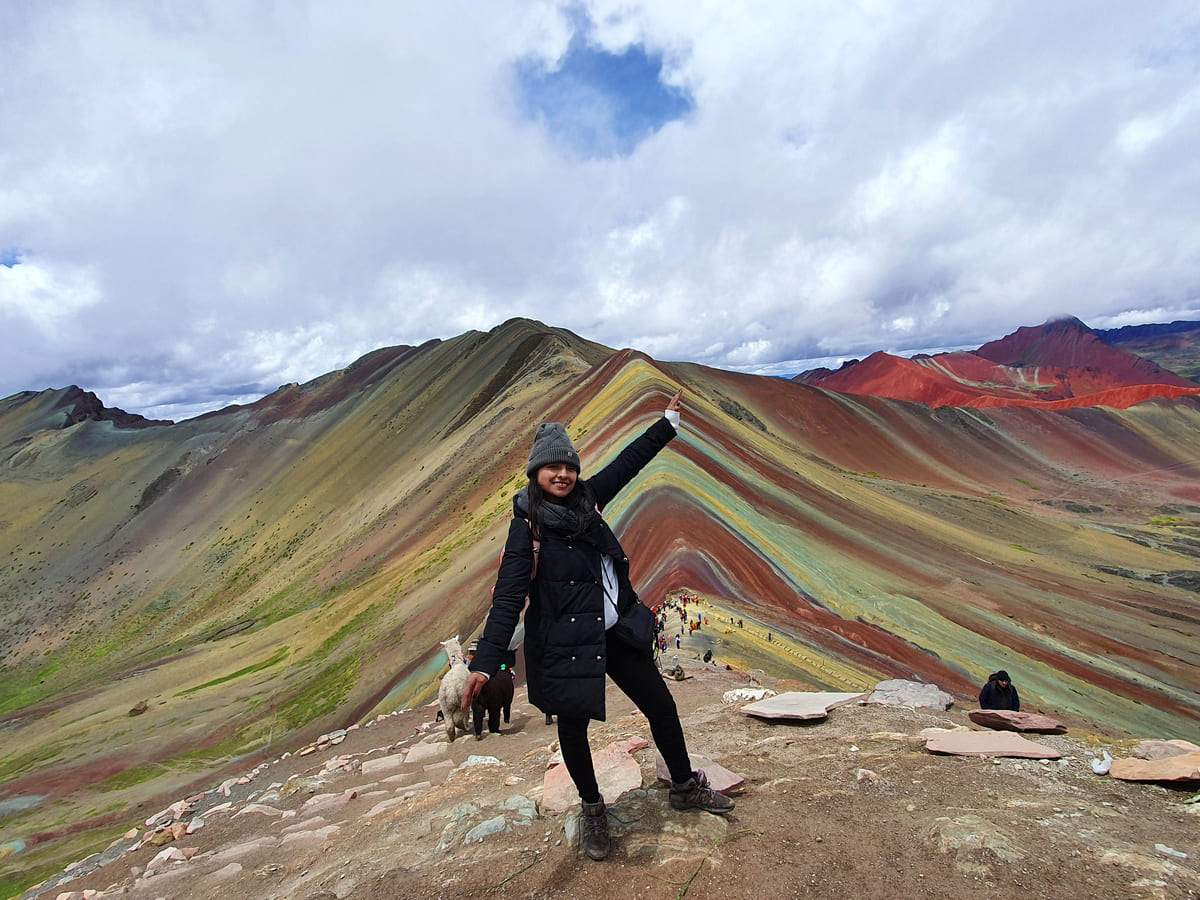
The Mountain of 7 Colors (also called Vinicunca or simply Rainbow Mountain Cusco) is one of the most popular tourist attractions in Peru. Rainbow Mountain in Peru is more than 100 kilometres from the imperial city. It is located on a mountain more than 5,200 metres high. The different shades of colour on this mountain are the result of a complex combination of minerals. The slopes and top of the mountain are covered in a natural colour scheme of red, purple, green, yellow and pink, creating a bright and beautiful landscape.
It's amazing to think that this attraction was covered by glaciers just a few years ago. Since it melted in 2016, this place has become one of the most popular places to visit in South America, along with the amazing citadel of Machu Picchu. But the Cusco region has more to offer than just views; for adventure lovers, there are total immersion experiences like the Salkantay Trek hike, which connects the snowy peaks with the jungle, showing that the mountains in Peru are just one part of the amazing Peruvian landscape.
Come and see the famous Rainbow Mountain in Cusco and start planning your next holiday. This is the perfect place to start exploring the area where Inca history and natural beauty meet. Below, you will find all the detailed information about the Mountain of 7 Colors:
Cusco now has three well-known "rainbow mountains", each with a different balance of distance, difficulty and crowds. Here's how they compare:
| Vinicunca (Rainbow Mountain) | Palcoyo | Pallay Poncho | |
|---|---|---|---|
| Distance from Cusco | ~100 km (3 hours by car) | ~100–125 km (3–3.5 hours by car) | ~190 km (3.5–4.5 hours by car) |
| Maximum altitude | 5,200 m / 17,060 ft | 4,900 m / 16,076 ft | 4,700–4,800 m / 15,420–15,750 ft |
| Hiking time | 3–4 hours (round trip) | 45 min – 1.5 hours (round trip) | 1–1.5 hours short route (round trip) |
| Difficulty | Medium-high (steep, longest, highest) | Easy (gentle incline, well-maintained path) | Moderate (short but steep final ascent) |
| Crowd level | High (the most visited) | Low | Very low |
| Best for | Travellers who want the iconic, most photographed viewpoint | Travellers who want a quick, easy hike with fewer crowds | Travellers looking for the most remote and untouched option |
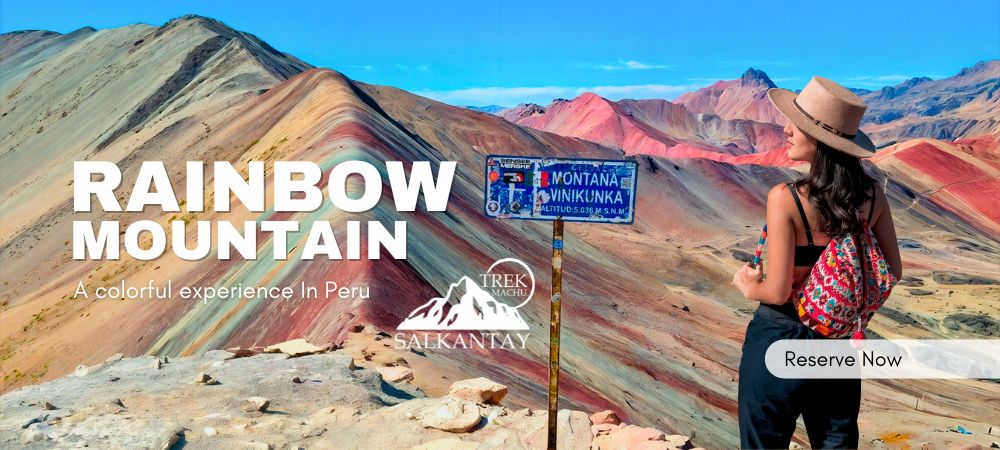
The Winikunka or Vinicunca mountain is behind the imposing Ausangate, which is part of the Vilcanota mountain range in Cusco. It is a valley that is irrigated by the Pitumarca River, which starts in the lower part of the Ausangate and flows into the great Vilcanota River. The Vinicunca massifs belong to the local farmers of Pampachiri.
The name comes from two Quechua words: "Wini" is the name for the rounded and heavy black stones that are found in the area. They call these "wini rumi" (stone). The second is "Kunka", which means "neck". This is because the hill is so narrow that it looks like a neck. At first, the people who lived on the high plateau and the settlers knew it as "Qolla Ñan", which means "way of the Qollas".
It starts in the city of Cusco and goes to the towns of Andahuaylillas, Quiquijana and Checacupe. After travelling for three hours by car or tour bus, you will arrive at Pitumarca, where the Qheshiuno community is located. This is where your walking trip will start. The walk takes about an hour to the horse station, where the arrieros will always help you. The horses will take you up to a certain point in the climb. Then you have to climb on foot to reach the top, which is 5,200 metres above sea level, where there is a viewpoint. From there, you can see the mountains all around you. They are the domains of the great Apu Ausangate.
The climate in the highlands of Cusco is cold. Rain, wind and altitude sickness (or soroche) can be the biggest challenges for travellers. It can get as cold as zero degrees. The best time to go is during the dry season (from April to October), when there is less rain. If you're planning a visit during the rainy season (which is from November to March), be sure to pack a rain poncho.
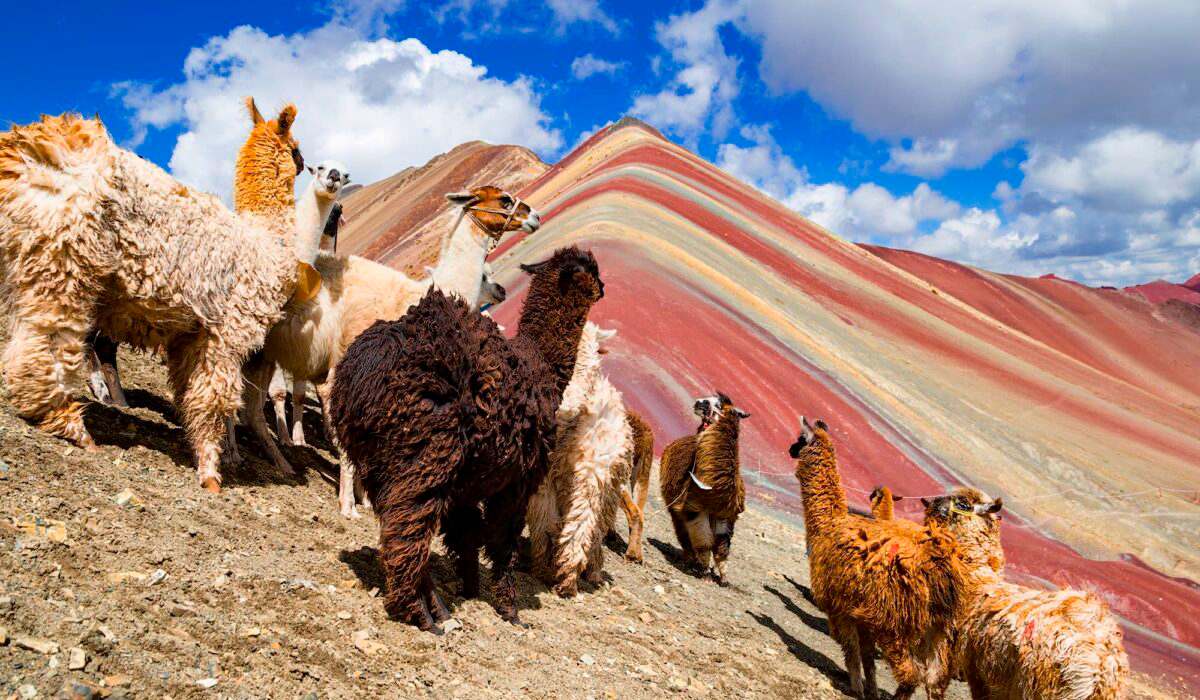
The place has amazing geography, and it is home to animals that are usually found high in the Andes mountains, such as llamas, alpacas and vicuñas. The locals there raise horses to take visitors around. This region is very high up in the Andes mountains, where natural hot springs are common.
The Rainbow Mountain in Peru, also known as Vinicunca, has a fascinating geological history. According to the Cultural Landscape Office of the Decentralized Culture Directorate of Cusco, the mountain's unique colors are the result of "a complex geological history of marine, lake and river sediments".These sediments were carried to the mountain by water that once covered the area. They date from between the tertiary and quaternary periods, meaning they are from between 65 and two million years ago. Over time, the sediments formed layers (with different sizes of grains) that today are seen as the edges that attract tourists so much. The movement of the plates raised up the sedimentary rock until it became mountains. Muñoz and the study of the Cultural Landscape Office explain how each strip is made according to its colour.
As well as the well-known Machu Picchu, the area around Cusco has lots to offer. You can learn about the culture, history and landscapes of the Andean Peru. From traditional towns to little-known natural wonders, there is much to discover just a few kilometres from the imperial city. So, if you are looking for new adventures, here are some places you can't miss:

 +51 84 226 547
 +51 912 891 560
 Av Tupac Amaru PP-10B, Santiago, Cusco, Peru
  info@salkantaytrekmachu.com
 www.salkantaytrekmachu.com


