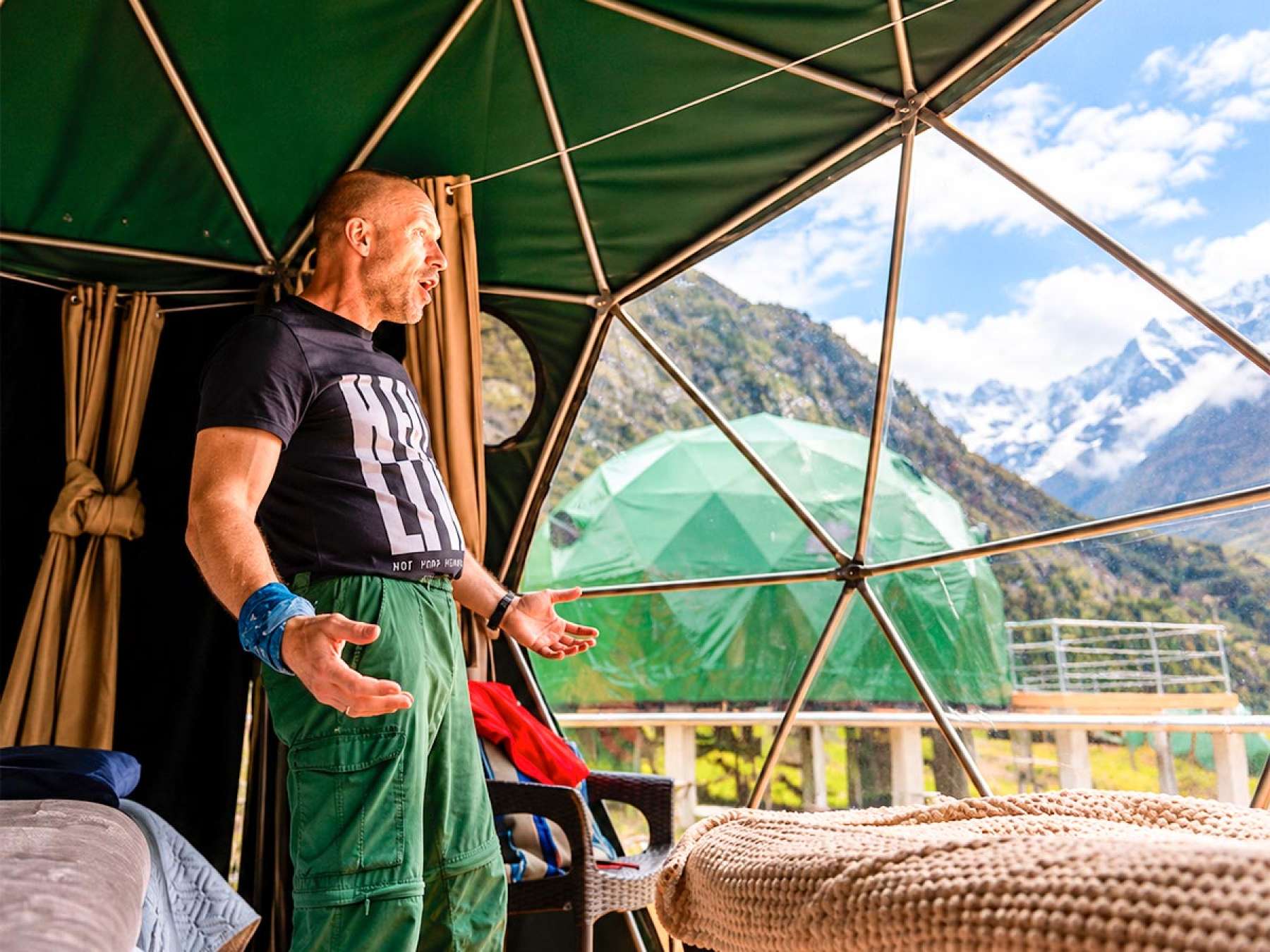
Before signing up for the Salkantay Trek, most travelers focus first on the itinerary and the price. They leave an equally important question for last: where will you sleep during the 4 or 5 nights that the route lasts? The answer changes a lot depending on the agency and the package you choose. It directly affects the level of rest, comfort, and budget of the trip.
On the Salkantay route, there are three levels of accommodation available: traditional camping, with tents and basic trekking gear; sky domes or glass domes, a middle glamping option with more comfort; and mountain lodges, which offer a bed, private bathroom, and electricity at the end of each walking day. Each option costs a different amount of money, and not all agencies offer them at the same stops on the route.
In this guide we will help you get to know each of these 3 types of lodging, what services they include, at what points on the trail you will find them and how to choose the option that best fits your budget and expected comfort level.
Before explaining each type of accommodation, this table shows the main differences between the three options. It can help you decide which one is best for your budget and what you want to find at the end of each day of walking.
| Feature | Traditional camping | Sky Domes / Glamping | Mountain Lodges |
|---|---|---|---|
| Bed | Sleeping pad/mat on the ground, inside a 4-season tent | Real bed with mattress, inside a heated or well-insulated dome | Real bed, closed hostel/hotel type room |
| Bathroom | Portable or shared bathroom, with no guaranteed hot water | Depends on the camp: some with a shared bathroom, others with a private bathroom and hot shower | Private bathroom with hot water shower |
| Electricity | Not available | Changes based on the camp; some include electricity and wifi | Yes, included, usually with wifi |
| Approximate price (5 days) | $450 – $650 | $600 – $1,000 | $3,000 – $4,500+ |
| Privacy | Low to medium (shared or single tents, common services) | Medium to high (single or couple dome, bathroom sometimes shared) | High (private room, private bathroom) |
| Availability on the route | Offered by most agencies on all stages | Only with agencies that operate their own exclusive camps (not all stages) | Limited to certain sections and agencies specialized in this format |
The Salkantay Trek is the second most popular route to Machu Picchu after the Inca Trail. Unlike the Inca Trail, the Salkantay Trek does not require a government permit. This gives agencies more freedom to design their own accommodations along the way.
The route covers about 70 kilometers in 4 or 5 days, depending on the itinerary, and its highest point is the Salkantay pass, at 4,630 meters (15,190 feet). During the trip, hikers go through different ecological zones. They start in alpine puna areas, cross the high-altitude pass, and go down towards the cloud forest and warmer areas near Santa Teresa before arriving at Machu Picchu.
The different elevations and climates mean that the type of accommodation changes from one night to another on the same route. What works at 3,900 meters in Soraypampa is not the same as what is needed at 2,000 meters in Lucmabamba. Next, we'll look at the details of the three types of lodging available on the trail.
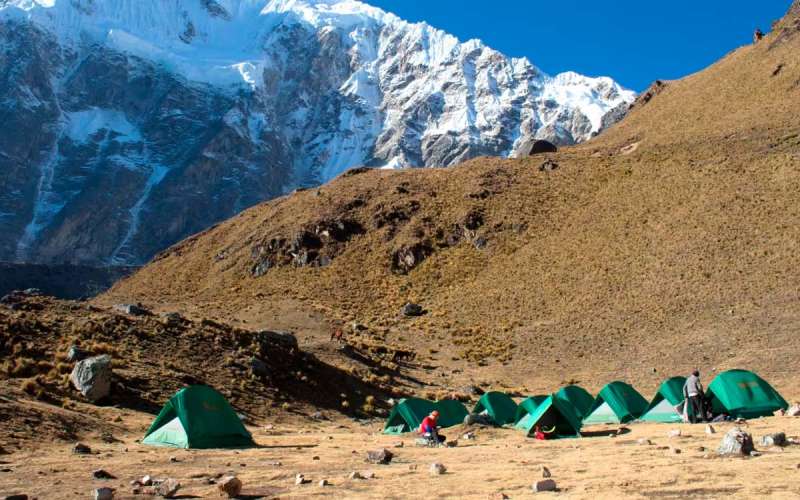
Traditional camping is the most common option and the one offered by most agencies that run the Salkantay route. It is also the type closest to what is known as "classic trekking": tents, basic gear, and a more self-sufficient experience than in the other two options.
What is included?
Who is it for?
This experience is for budget-conscious travelers who prioritize cost over comfort. It's also for those with prior camping experience or those seeking a more traditional approach, similar to how the route was originally traveled (typically, it's for young groups or backpackers).
Price range
$450 – $650 for the full 4-5 day package. It is the cheapest option of the three types, as it does not need a fixed setup or maintenance of permanent facilities along the route.
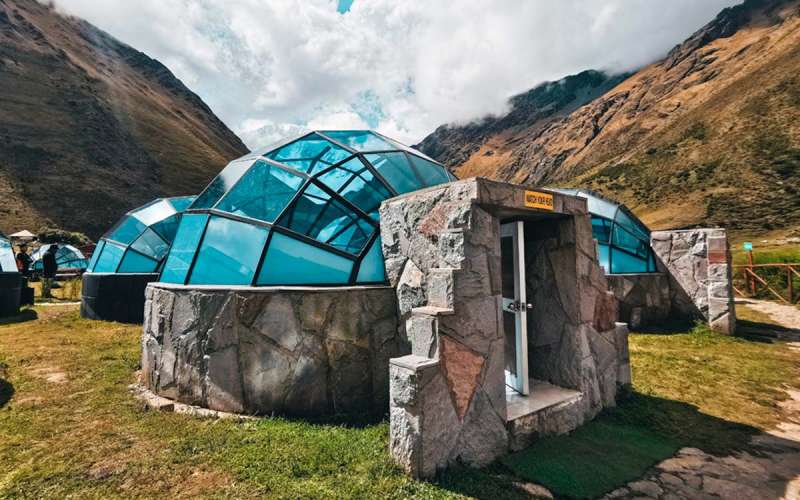
Sky domes are a type of accommodation that are similar to traditional camping but more comfortable than mountain lodges. They are glass domes or thermally insulated structures that replace the tent. These can be found in exclusive camps run by only some agencies (they are not available in all packages or with all operators).
What is included
Who is it for?
This experience is for travelers who want more comfort without paying as much as a lodge. It is also for couples on their honeymoon, anniversary, or special trip who want to be alone at night. This is also for people who have never gone camping before and still want to do the whole route on foot, or for those who want to see the dome (with its starry sky and Andean landscape) as part of the experience.
Price range
$600 – $1,000 for the full 4-5 day package.
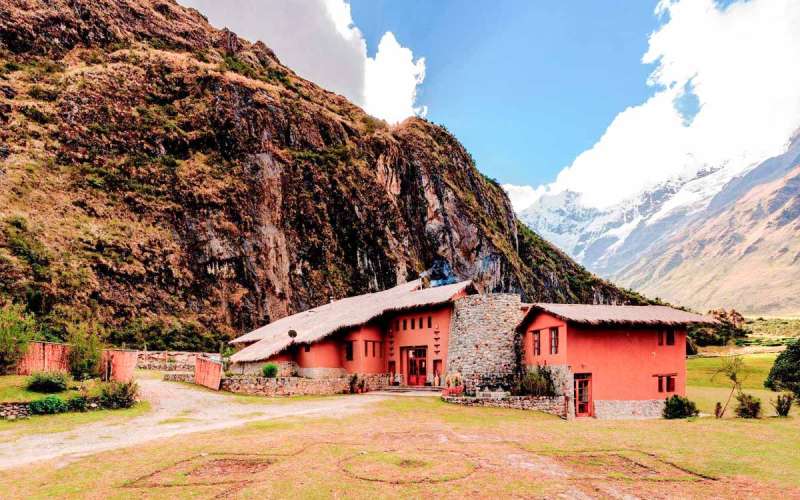
Mountain lodges are the most comfortable option on the Salkantay route. Lodges are different from other types of accommodations like camping and sky domes because they are fixed buildings. They are like hostels or mountain hotels. You can find them at important places along the trail.
What is included
Who is it for?
This experience is for travelers who prioritize rest and physical recovery on days when they don't walk, especially for older people or those who don't tolerate cold well or basic camping conditions. It is also for luxury travelers who want the highest level of comfort available on the route or for family and corporate groups who prefer simple logistics (no setting up or taking down tents every day).
Price range
$3,000 – $4,500+ for the full 4-5 day package.
The type of lodging available depends on your budget and where you are on the route. As you walk from the highlands to the cloud forest, the weather and the camp setup change. This plan for overnight stays matches the classic 5 day trip. The fast 4 day version (Backpacker) skips the stop in Lucmabamba and goes straight to Aguas Calientes.
Highest and coldest point of the route, located in a valley between the snowy Humantay and Salkantay mountains. Being the highest stage, the fixed setup is more limited than on the following nights.
| Type of lodging | Availability | Bathroom | Relevant detail |
|---|---|---|---|
| Traditional camping | Yes, basic option | Shared / portable | The most common in this stage; below zero temperatures at night |
| Sky Domes | Yes | Shared | Better heat insulation than the tent, but shared bathroom due to logistical limits of the altitude |
| Mountain Lodges | Only in "Luxury" program | Private | Only package that offers a lodge from the first night |
After crossing the Salkantay pass (4,630 m) and starting the way down, the weather gets warmer and the setup available in all three options improves.
| Type of lodging | Availability | Bathroom | Relevant detail |
|---|---|---|---|
| Traditional camping | Yes | Shared / portable | Better weather conditions than in Soraypampa |
| Sky Domes | Yes | Private with hot water shower | First stage where the dome includes wifi |
| Mountain Lodges | Yes, "lodge to lodge" mode | Private | Middle stage of the luxury program |
Last night before connecting with Hidroelectrica or Santa Teresa in a warm and tropical weather zone.
| Type of lodging | Availability | Bathroom | Relevant detail |
|---|---|---|---|
| Traditional camping | Yes, included in standard 5-day packages | Shared / portable | It is the default option in the classic itinerary |
| Sky Domes | Yes | Private with hot water shower | Highest level of comfort within this option; electricity included |
| Mountain Lodges | Only in "Premium" program | Private | Located near the Cocalmayo hot springs; in the classic 5-day package this night is covered by camping |
There is no "best" option among camping, sky domes and mountain lodges — there is the option that best fits your budget, your past experience and the type of trip you are taking. Use this quick checklist based on your profile:
If you have a tight budget
If it is your first time trekking
If it is an anniversary or honeymoon trip
If you travel in a family or corporate group
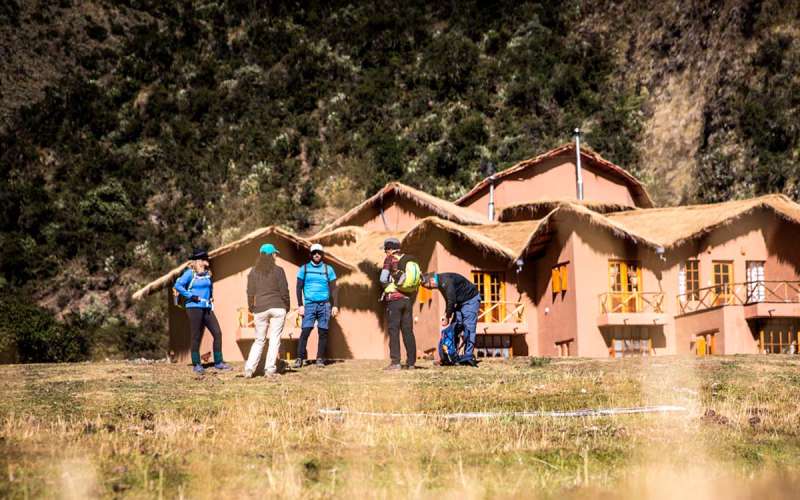
The types of places to stay available on the Salkantay Trek change with the season. This directly affects how quickly spots for domes and lodges sell out. Camping is the most flexible option logistically, so it almost always has spots available.
It is the high season for trekking in Cusco. The months of July and August are the driest and also have the highest tourist demand, matching the high season for Machu Picchu in general. During these months:
In these months, it rains more often and it's hard to predict where the rain will fall. This can affect the condition of the trail, especially on the downhill sections that lead to the cloud forest.
Here's a helpful tip: If you're planning a trip in July or August and want a dome or lodge, be sure to book it as soon as you confirm your travel plans to Peru. After those two months, you have more time to decide on a place to stay closer to the date.

 +51 84 226 547
 +51 912 891 560
 Av Tupac Amaru PP-10B, Santiago, Cusco, Peru
  info@salkantaytrekmachu.com
 www.salkantaytrekmachu.com