
One of the most incredible ways to visit Machu Picchu is through the Salkantay Trail. This 5 day hiking route is not only an alternative to the Inca Trail, but it is considered by many as one of the best high mountain experiences in the region. The path crosses the imposing snowy Salkantay mountain, connecting glacial peaks with the lush jungle brow before reaching the Wonder of the World.
Would you like to get to know Machu Picchu with this adventure surrounded by amazing landscapes? If you are looking for an experience that combines challenges with unmatched natural beauty, the classic Salkantay trek is the option you should take. Within the variety of treks in Cusco, this route stands out for its climate diversity, allowing you to go from below-zero temperatures in the mountain passes to tropical climates in a matter of hours.
Next, discover everything you need to know about the Salkantay trek, from physical preparation to the key points you will find on the way.
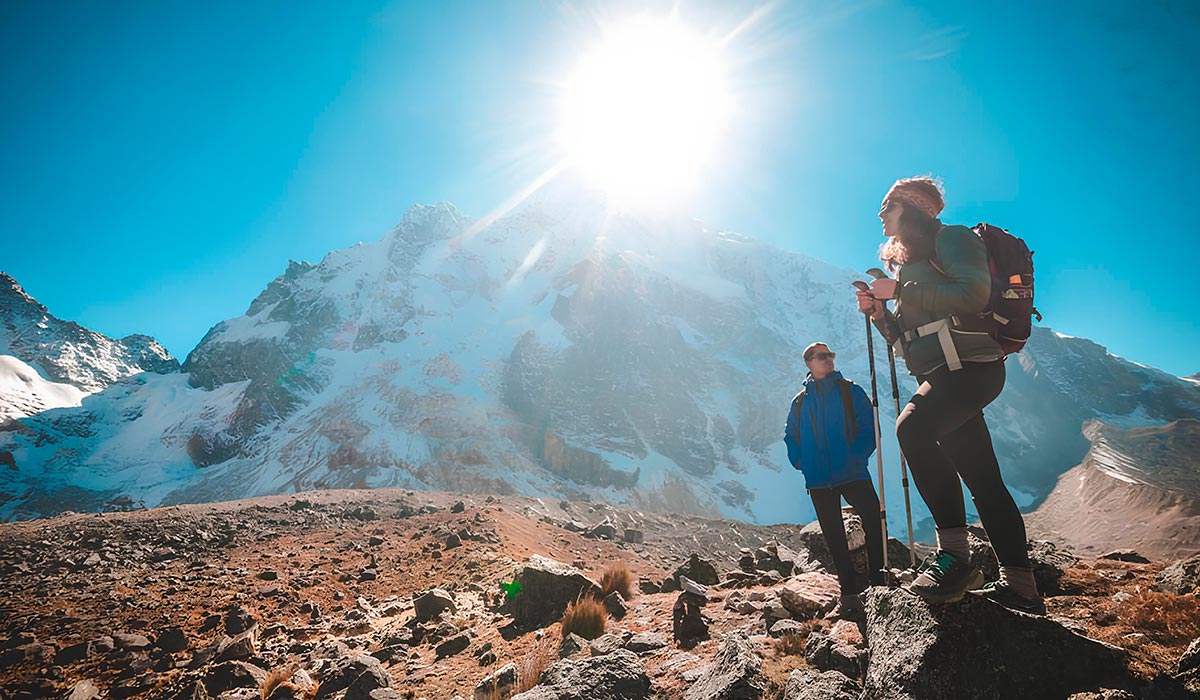
The Salkantay trail to Machu Picchu passes through stunning landscapes varying from the cloud forest to the high mountains. Along the way you will see the fantastic views of second highest mountain in the Cusco area - Salkantay ("Savage mountain" from Quechua) standing at 20,574' (6,271 m). Salkantay trail to Machu Picchu goes through unfrequented areas and combines culture and tradition with the incredible flora and fauna offered by Peru. You will be in the real Andes and the perfect conditions to get a sense of the life in the area.
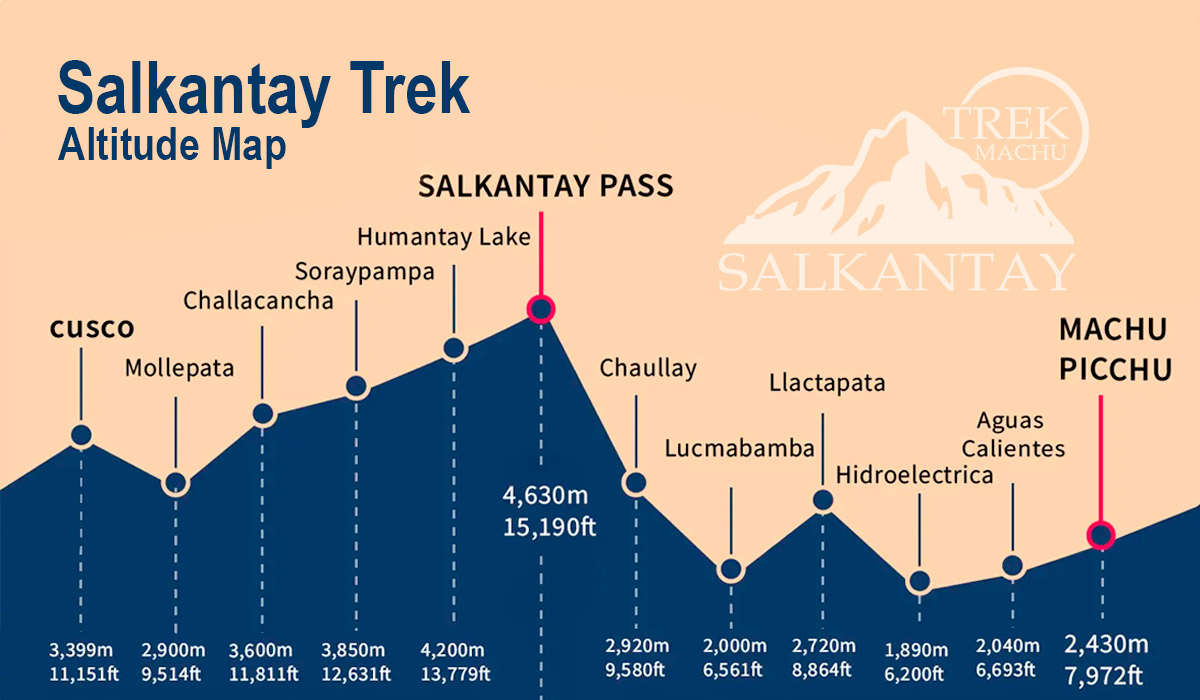
Cusco is located at an elevation of 3,400 meters above sea level, which may pose challenges for certain individuals. Therefore, we strongly advise spending a minimum of 48 hours in Cusco before embarking on the trek. During this time, it is recommended to stay hydrated by consuming ample water, abstain from alcohol, and ensure you get sufficient rest.
The trek to Salkantay reaches its highest point at the stunning Salkantay pass, situated at an altitude of 4,600 meters. The lowest elevation along the trek is 2,200 meters at the final campsite in Sahuayaco.
How difficult is the route? You should have no difficulties completing this challenge as long as you are in good health, have good physical fitness, and are used to walking on varied terrain. The Salkantay Trail is demanding, especially during the second day, when the highest point of the journey is reached.
However, if you do not hike frequently, it is highly recommended to do some prior training before your trip to Peru. Preparing your legs for long climbs and strengthening your cardiovascular endurance will allow you to enjoy the landscapes much more without tiredness being an obstacle. Remember that the classic Salkantay trek tests your endurance in changing climates.
Is there an age limit for this adventure? This tour is suitable for people of almost all ages, as long as they have a proper physical condition and do not have movement difficulties walking long distances.
Considering the difficulty levels outlined above, Salkantay Trekking falls within the range of Easy to Moderate.
The mountain in itself presents an extremely cold climate (several degrees centigrade below 0º). The climate during the Salkantay trail, on the other hand, is varied. The intense sun and the cold night in the first days change for the tropical environment of the last. Now talking about the flora and fauna, the 5 days and 4 nights that the Salkantay trek lasts covers landscapes with a great variety of flora and fauna. Among the species of flowers and plants stand out the orchid and the ichu (Andean grass). Among the species of birds and animals, we should mention the llama, alpaca, vizcacha, condor, spectacled bear and the cock of the rocks (national bird of Peru).

The Salkantay Trail stands out not only for its snowy peaks, but also for its amazing biodiversity. As you go down toward the jungle brow, you will see different types of orchids that seem to decorate the path with an ancient story. It is said that these beautiful flowers are, in fact, the tears of an Inca princess.
According to history, it is told that, in the ancient kingdom of the Andes, there lived a beautiful princess who fell deeply in love with a brave Inca warrior. However, her father forbade them from being together, as she was destined exclusively for the service of the Sun god.
Heartbroken by the decision, the princess fled and crossed the mountain range crying for her forbidden love. According to the legend, her tears turned into the beautiful "Waqanki" flower (which in Quechua means "you will cry"). Since then, every time the warrior found this flower in the heights of the Andes, he cried remembering his lost love. This story has survived until today in songs and poems that say:
"You will cry, my most beautiful flower with your beautiful eyes... beautiful Waqanki, flower that blooms in the heights, how will your song be when I carry you in my heart?"
This story is the most important testimony of the appreciation of orchids since the time of the Incas. It is estimated that in the Historic Sanctuary of Machu Picchu there are around 350 native species. During the classic Salkantay trek, especially in the cloud forest sections, you can easily see more than 100 of these species in their natural habitat, making this one of the most visually rich treks and adventures in Peru.
Peru offers unique experiences that show impressive landscapes, archaeological sites, and living traditions, attracting travelers who seek adventure and discovery in each region of the country. Get to know some of the most recommended trips to explore its diversity.

 +51 84 226 547
 +51 912 891 560
 Av Tupac Amaru PP-10B, Santiago, Cusco, Peru
  info@salkantaytrekmachu.com
 www.salkantaytrekmachu.com


