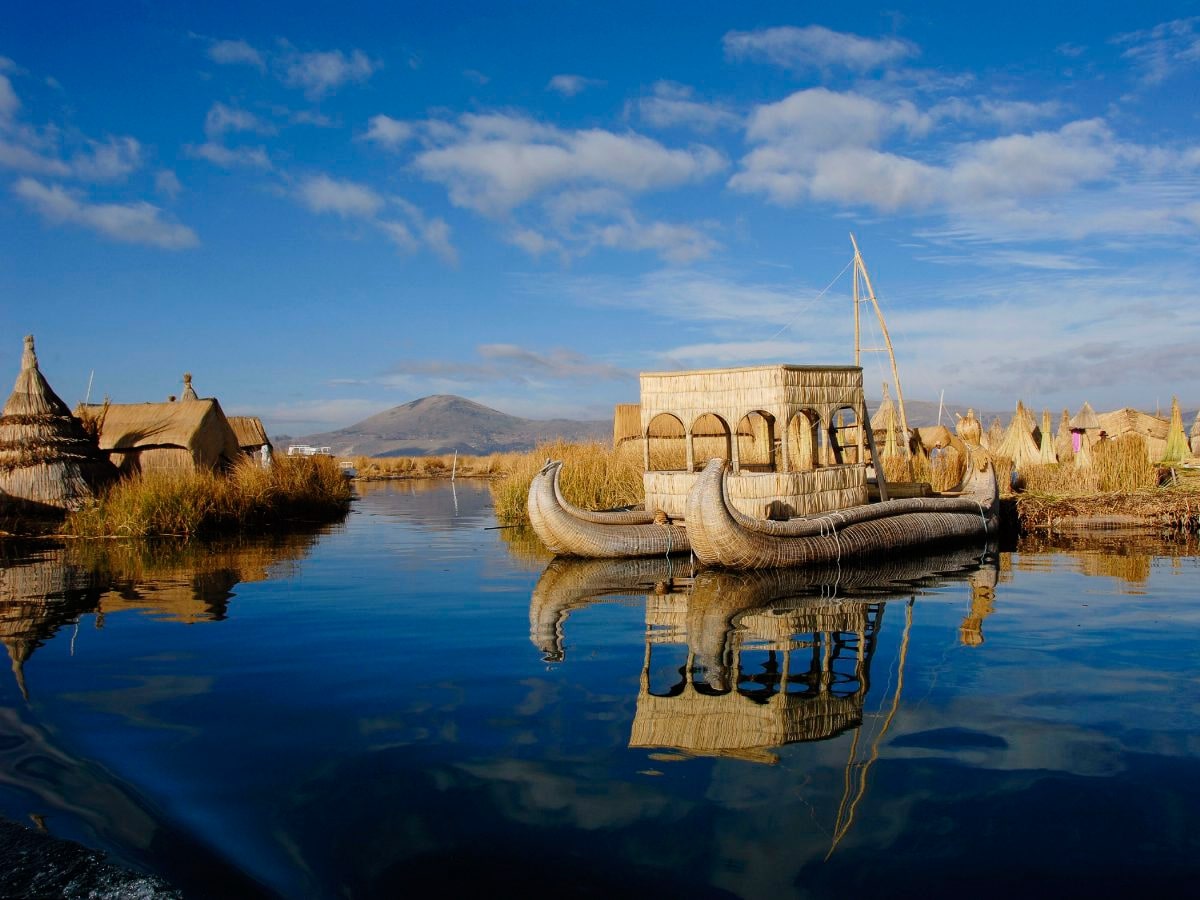
Lake Titicaca is the highest navigable lake in the world, sitting at 3,809 meters above sea level on the border between Peru and Bolivia. This 2-day tour takes you by boat across its cold, deep-blue waters to three communities that have shaped daily life on the lake for centuries.
Your first stop is the Uros, a group of floating islands built entirely from layers of dried totora reed — the same reed used to build the islands' homes, boats, and even watchtowers. Each island is anchored to the lakebed and rebuilt from the top as the reeds beneath rot away, a maintenance cycle that has kept these communities afloat for generations.
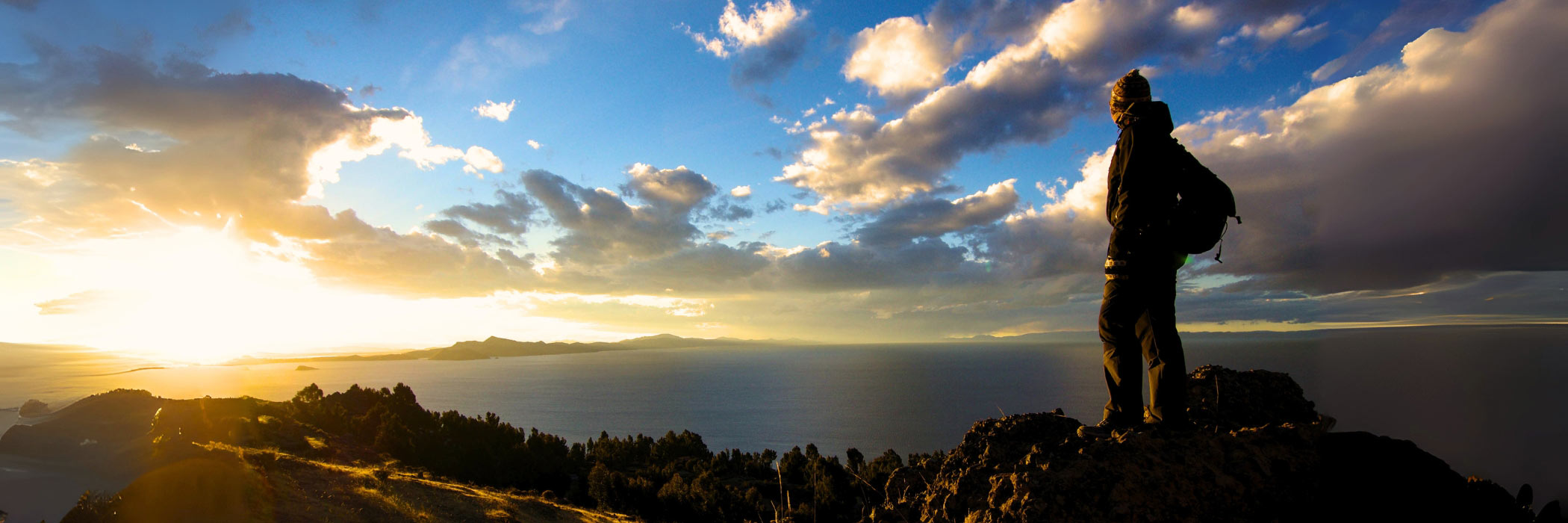
From there, you'll continue to Amantaní Island, home to Quechua-speaking families who farm potatoes, quinoa, and wheat on stone terraces built long before roads or electricity reached the island. You'll spend the night with a local host family, share a home-cooked dinner, and — weather permitting — climb to Pachatata, one of the island's two hilltop temples, for a clear view of the lake at sunset.
On the second day, you'll stop at Taquile Island, known across Peru for its hand-woven textiles — a tradition recognized by UNESCO as part of the Intangible Cultural Heritage of Humanity. Men and women on Taquile still knit and weave using techniques passed down within families, and the textiles themselves are used to signal age, status, and marital role within the community. From Taquile, you'll sail back to Puno by early afternoon.
This is not a lake you view from the shore. It's a community you sleep in, eat with, and learn from.
Day 01: Amantani Island
Day 02: Puno
The microscopic flora or phytoplankton of the lake is quite poor and with predominance of species of wide geographic distribution. Carbon fixation reaches in the lake greater than 1.13 grams per square centimeter per day; in the smaller lake at 0.56 grams per square centimeter per day, and in the bay of Puno at 0.82 grams per square centimeter per day.
The upper plants present:
The bottoms have abundance of carofíceas algae like:
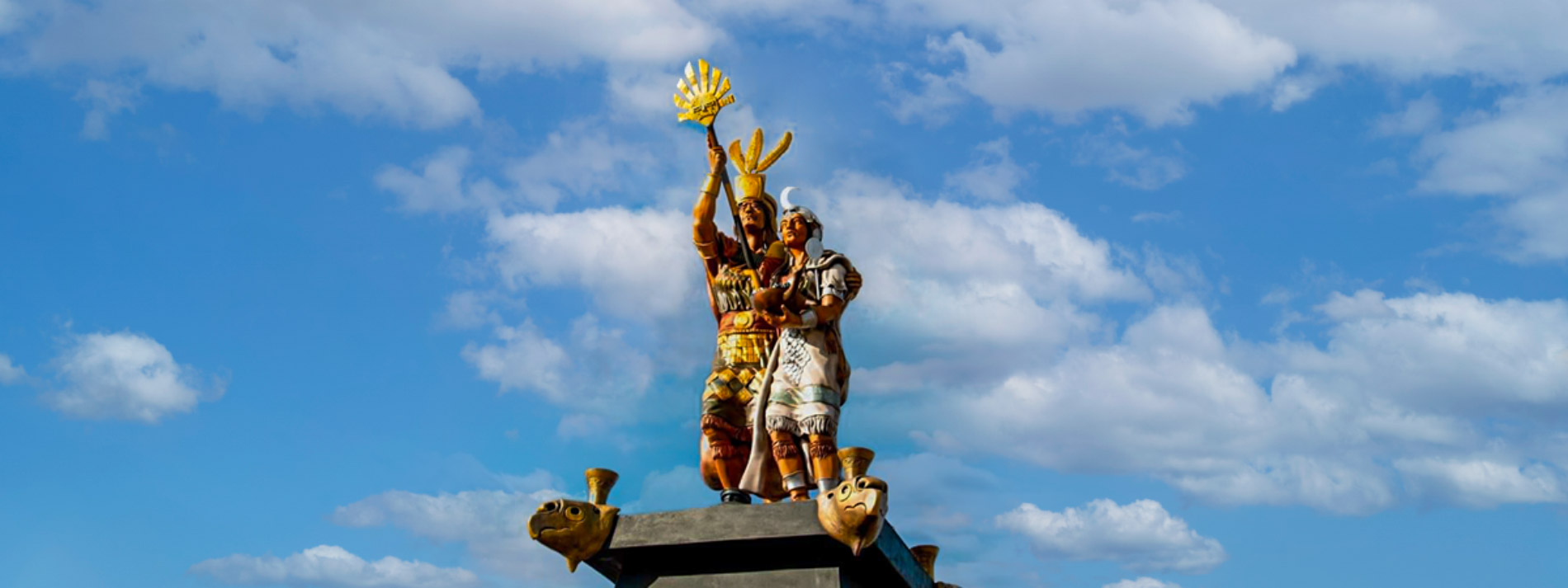
That constitute the most outstanding vegetal mass (near 65% in the greater lake). Between the shore and the nine meters of depth the associations of plants that cover almost the entire surface are distributed. Zooplankton is made up of copepods and cladocerans, which play an important role for planktivorous fish. The lake has 42 islands, among the most important are those of Taquile and Amantani, in Peruvian territory. In this past and present place they are conjugated around one of the most emblematic places of the Inca culture, and its mysteries continue to amaze us. Titicaca cradle of the Andean civilization, populated by indigenous Aymara and Quechua who still maintain their own customs, traditions inherited from their ancestors.
This lake offers a varied fauna composed mainly of :
The lake has 22 species of mollusks: 18 of snails and four of shells. The hidrobíidos, with 14 species, have a density in the fund of 8000 to 10 000 individuals per square meter. The lake contains 29 species of fish, of which 24 are of the genus Orestias (endemic), two of Trichomycterus (suches) and three introduced (one of Salmo gairdneri = rainbow trout, and the silverside = Basilichtys bonaris). Trout fishing reaches about 1000 metric tons per year. Amphibians reach 21 species (Pleuroderma, Telmatobius, Bufo and Gastrotheca), almost all endemic. A snake (Tachymenis peyuviana) frequents the wet shores of the lake. The avifauna of the lake consists of 28 species, of which one is endemic, the diver of the Titicaca or ninra (Centropelma micropterum).
The ideal time to visit the lake is between May and October, as the days are sunnier and the temperature changes are not so abrupt. The average temperature of that time is 25 ° C. Although during the nights, temperatures are usually below 0 ° C. throughout the year.
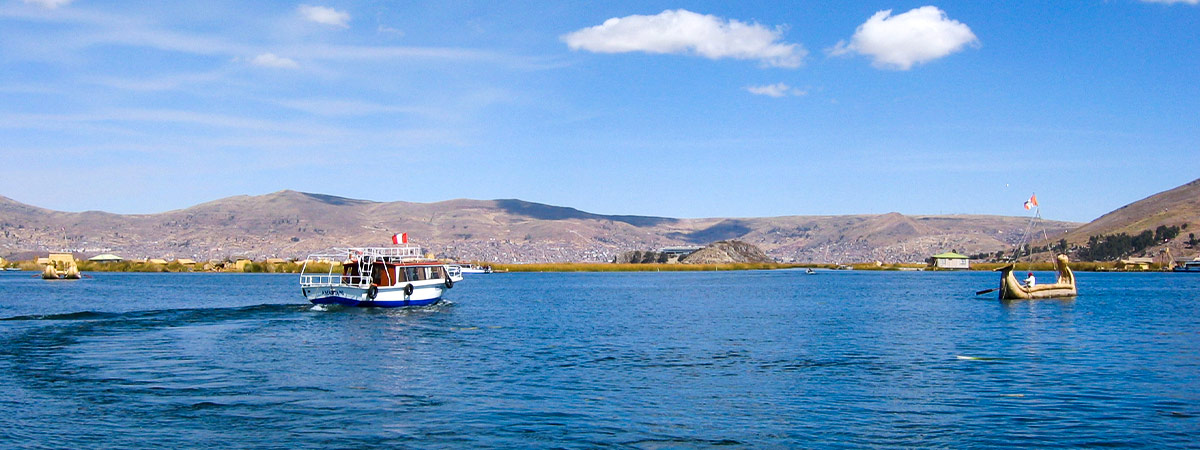

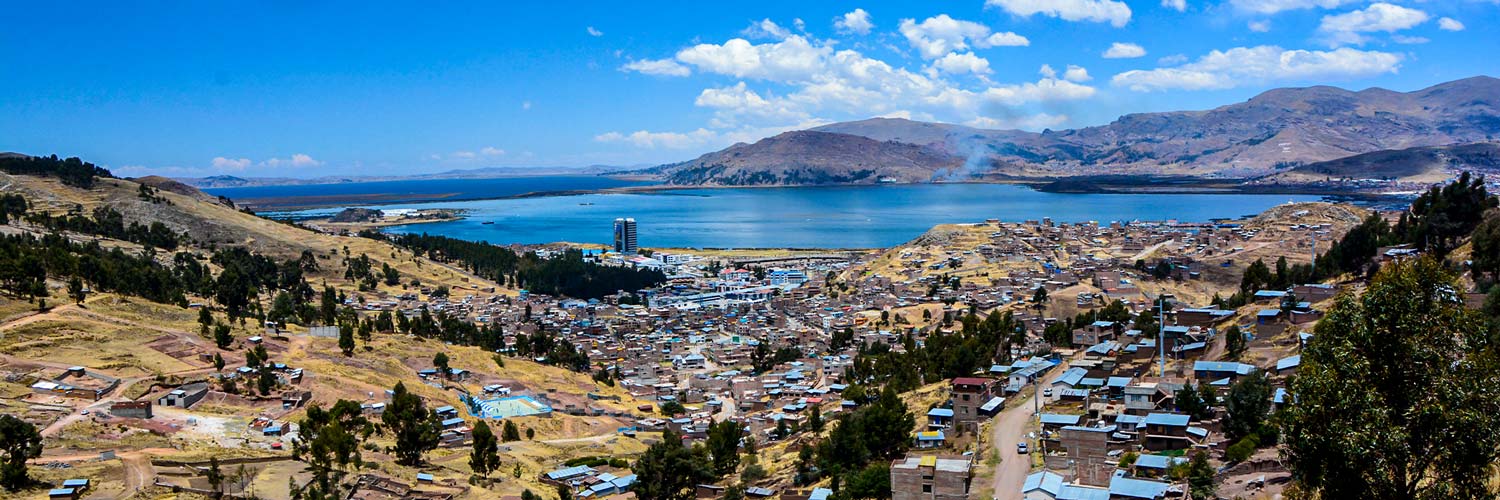
Our representative staff will pick you up from your hotel and take you to the main port. A 25 minute boat ride to Uros Island. Fishermen and hunters inhabit the floating islands of the Uros. Uros residents use the totora (aquatic plant) that grows in the lake, to create the conditions that guarantee for the islands to float. The dense roots that these plants generate support the island. The Uros use the totora to build their islands, houses, to cook and eat, likewise to sell in the city of Puno and also to exchange (barter) with products such as quinoa, potatoes, barley, etc. The Uru culture appeared more than 3000 years ago and its population spoke the Uro Puquina language, the last person who still spoke the Uru language died approximately in the 60s, there is no script referring to the language, currently the population speaks Aymara. In the Uros live more than 1000 people, divided into 80 artificial islands built on the basis of the totora, where the raft is the only means of transport, which is also used for fishing. Then a trip to Amantani Island approximately 41 km from the city of Puno, (03:15 hours by regular boat), (02:15 by semi-speedboat) (01:20 hours by speedboat), where 4000 people live. Year after year the inhabitants of the Island of Amantani have been fighting for a better quality of life because this tour has been created just to support the inhabitants of the Island receiving lodging, food and an unforgettable experience in the middle of Lake Titicaca. When arriving at the island of Amantani, the families will wait for us and will accompany you to Amantani Lodge for your stay at home as a cordial welcome. Traditional lunch prepared by families with products from the area. At dusk we will hike to the top of the island at 4130m from where you can observe the sun's magnificent entrance on the Titicaca the highest navigable lake in the world, and visit the famous pre-Inca temple Pachatata with more than 3000 years of antiquity of culture Tiawanaco and Pukara. Here you will have the opportunity to have dinner with our family. Overnight at Amantani Lodge.
We will start our second day taking the breakfast with our adoptive family . Then visit Taquile Island (01 hour by regular boat), (45 minutes by semi-speed boat) (25 minutes by speedboat), famous for its production of handicrafts (declared cultural heritage of humanity), particularly for its beautiful textiles. In addition there is very interesting taste because people still practice the principles of Inca morality such as "Ama Sua" (do not steal) "Ama Quella" (do not be idle) and "Ama Lulla" (not to lie) that are still used among the population. The island is about 1.5 km wide and 5.7 km long. The island of Taquile was a prison in the colonial era, currently live approximately 2000 people, the villagers use a very special cap for example referring to the single or married and authorities, this island has a garden, primary and secondary school. Visiting the non-tourist areas you will appreciate temples, tombs and terraces from the pre-Inca period (Pucara), its landscapes, traditional farming techniques and its ancestral customs, etc. This visit can be tiring, due to the 565 steps that must be taken to go down to the main port and because of the altitude (13,000 feet / 4,030 meters above sea level), but it's worth the effort. Then we will return to Puno. Transfer from the port to your hotel.

 +51 84 226 547
 +51 912 891 560
 Av Tupac Amaru PP-10B, Santiago, Cusco, Peru
  info@salkantaytrekmachu.com
 www.salkantaytrekmachu.com