
Machu Picchu is famous all over the world. Millions of users of the world's largest travel community chose it as the best destination. Some people want to learn about the Inca city and climb its two main peaks to enjoy the view from above. The first peak is Machu Picchu Mountain, located south of the citadel. The climb is moderately difficult. The second peak is Huayna Picchu, a steep mountain in the northern sector that stands out behind the archaeological site.
The first route is easy for most visitors, but climbing Huayna Picchu is more difficult. This Inca trail features uneven stone steps, narrow paths along cliff edges, and a steep incline that demands constant caution.
Due to these technical features, it is important to ensure that you meet the necessary conditions for this route when purchasing Machu Picchu tickets. Below, we provide the latest information about the climb to help you plan safely.
Huayna Picchu, also spelled Wayna Picchu, means "young mountain" in the Quechua language. This hill is located in the northern part of the archaeological site. It is the hill visible in traditional photos of the citadel.
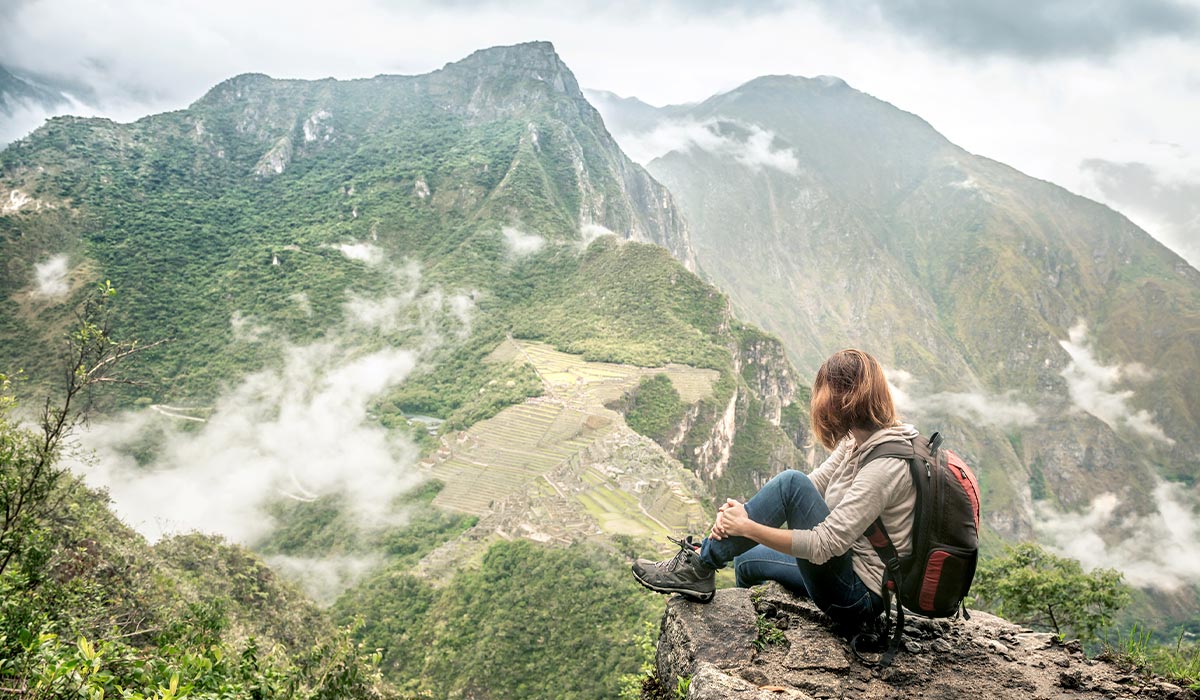

In order to go on this climb, you need to purchase a ticket for Huayna Picchu (Circuit 3A — Waynapicchu Route). Due to high demand, these tickets should be purchased at least three to four months in advance. Only 350 people are allowed to climb the mountain each day. You cannot enter the trail without this reservation. Having a ticket for the citadel is not enough. Also, current safety rules state that only people over 12 years old can climb.
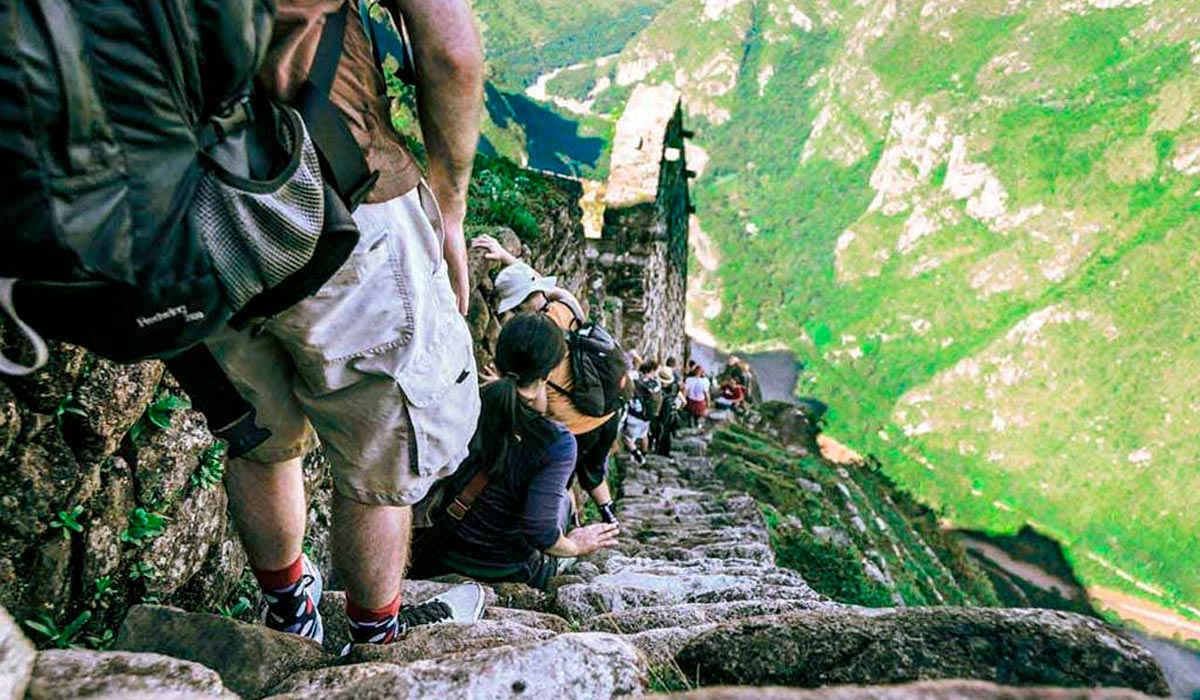
The shape of Huayna Picchu is what gives the Machu Picchu archaeological complex its distinctive appearance. At its highest point, 400 meters above the main square of the citadel, terraces have been built right on the edge of the cliff. These platforms were designed for growing plants and also served as important military and astronomical observation points.
There are also the remains of a stone enclosure in the highest area. It appears that the building was either unfinished or partially dismantled. From there, you can see the Inca citadel, the Urubamba River Canyon, and the snowy peaks of the Vilcabamba mountain range.
The Temple of the Moon, also known as the Great Cavern, is located on the back slope on the northern side. This geological formation was shaped by skilled Inca stoneworkers. They carved stairs, niches, and stone blocks directly into the rock. In front of the temple, there is a system of terraces over 50 meters long.

Inca Trail: On your last day, you'll start early and arrive at Machu Picchu. After trekking, you'll check in at the gate and enter to explore the Inca city. There, you'll have a guided tour. Once the tour is over, all travelers must be outside. If you have a ticket for Huayna Picchu, you will need to show it when you enter again. Then, you can slowly walk from the check gate to the mountain. The walk takes about an hour. It will take you two hours to climb to the top of Huayna Picchu. We recommend buying your Huayna Picchu ticket before 10:00 a.m., which will give you enough time to visit Machu Picchu.
Book Your Inca Trail Tours 2026

 +51 84 226 547
 +51 912 891 560
 Av Tupac Amaru PP-10B, Santiago, Cusco, Peru
  info@salkantaytrekmachu.com
 www.salkantaytrekmachu.com


