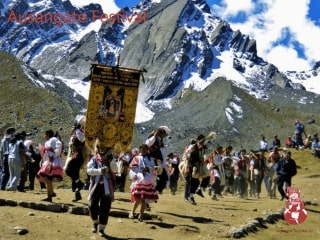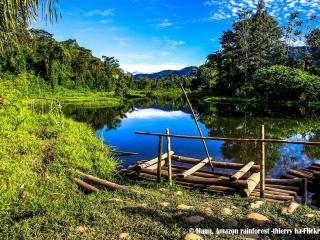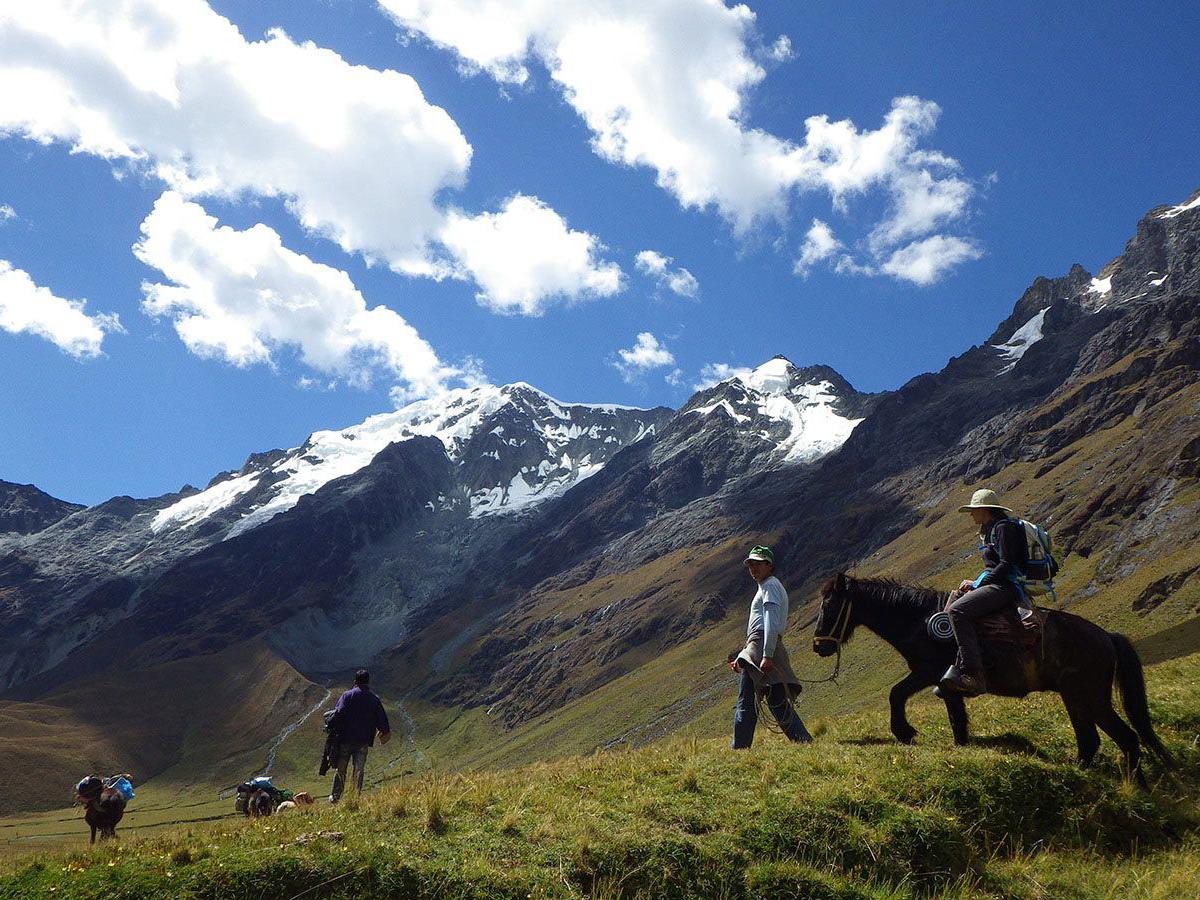
The 4-Day Salkantay Trek Expedition Tour connects the classic Salkantay route directly with the Inca Trail, following the left-side path through Humantay Lake, the Ichupata viewpoint with a panoramic view of the Salkantay glacier, and the Salkantay lagoon. The route continues toward Pampacahuana before entering the Inca Trail through Huayllabamba, where the trek passes the Patallacta archaeological site on the way to Km 88 (Corihuarayrachina). From there, a train connects to Aguas Calientes on the third day. The final day includes a guided visit to Machu Picchu, followed by a return train to Ollantaytambo and a transfer by tourist transportation from Ollantaytambo to Cusco. This itinerary follows the Salkantay route, which remains less traveled than the Inca Trail, passing beneath Apu Salkantay, the snow-capped peak that anchors Quechua beliefs in the high Andes.
At Salkantay Trek Machu, we are a local tour operator offering this route as an alternative to the classic Inca Trail, combining the Salkantay trek with Inca Trail landscapes across the high Andes of Cusco.
Sustainable Tourism: At Salkantay Trek Machu, we are happy to promote and practice sustainable tourism and support local communities.
Difficulty Hike: 4 Demanding.
Age Requirements: 4+ / All travelers under age 18 must be accompanied by an adult.
Staff: Salkantay Trek Machu representatives in Cusco and a professional bilingual tour guide, a cook, and porters for hiking the Salkantay trek expedition to Machu Picchu.
Permits: Salkantay ticket, Inca Trail permits and Machu Picchu ticket.
Accommodation: Campsite (3 nights), Hotel (1 night)
Meals: 3x breakfast, 4x lunch, 4x dinner, 3x afternoon tea (Please allow USD 20-50 for meals not included).
Transportation: Transportation by private van, 1x train.
Day 01: Cusco- Soyraypampa - Salkantaypampa
Day 02: Salkantaypampa - Pampacahuana
Day 03: Pampacahuana - Inca Trail - Aguas Calientes
Day 04: Machu Picchu
Salkantay (6271m) is a glacial summit situated less than fifty miles northwest of Cusco city in the southern region of Peru by the Cordillera Vilcanota. Salkantay is a striking snow-topped peak, honored for thousands of years by the native Indians. The name Salkantay is a Quechua word, meaning "Savage Mountain". It is the 38th tallest peak in the Andes and the twelfth tallest in Peru. However, as a sphere high point in the deeply carved landscape, it is the second most geographically easily seen crest in the country, after Huascaran.

Early in the morning, our guide picks you up from your hotel and we drive from Cusco to Soraypampa (10,660 ft / 3,250 m). Before arriving in Soraypampa, we stop in Mollepata for breakfast, then continue driving to Soraypampa; the full journey takes about 4 hours and 30 minutes. Once we arrive in Soraypampa, our guide and cook introduce you to the muleteers, who load the horses with the trekking equipment. We also give you a short briefing with recommendations for the trek.
Our first stop is Humantay Lake. We trek uphill for approximately 2 hours and 30 minutes along a zigzag route to reach the lake. Once there, we take in the turquoise color of Humantay Lake, along with views of Humantay Mountain and part of the surrounding Andean mountain range. Afterward, we walk back down to Soraypampa for lunch.
After lunch, we continue trekking toward our first campsite, Salkantaypampa. The walk takes about 4 hours; along the way, Soraypampa becomes visible in the distance as the trail moves closer to Salkantay Mountain, passing through Andean landscapes. Upon arriving in Salkantaypampa, we see part of the Salkantay mountain up close, with a good vantage point for photos.
We spend the night at this campsite, where our trekking cook prepares dinner. Since the following day starts early, we recommend resting soon after dinner. Inside your tent, you will find a sleeping bag, pillow, and blanket, along with your duffel bag containing your personal belongings and other equipment included in the service, to make your camping experience comfortable.
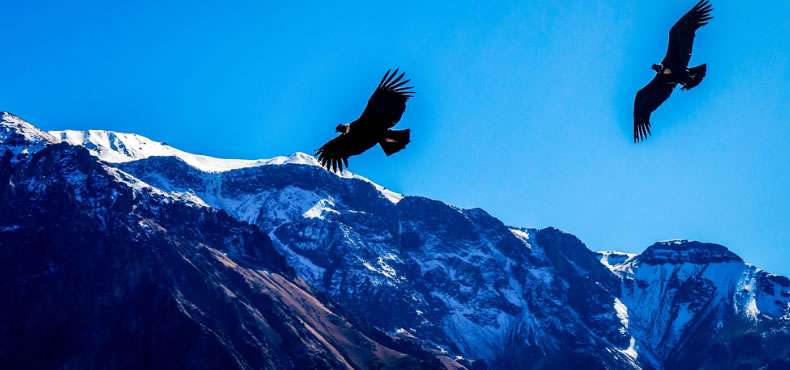
Today we wake up early, as it's the most challenging day of the Salkantay trek. We have breakfast at the campsite and a short briefing about the trek. We begin by walking along a flat path for 20 minutes on the left side of the trail until we reach the Blanco River. We cross the river and from there ascend to Ichupata, our first rest stop. After crossing the river, we climb for 4 hours along a bridle path, taking in the river's course and the natural landscapes of the area. We spot Andean deer (Taruca), an animal that was very important in Inca times and can still be seen represented at Inti Raymi. We also see viscachas (Andean rodents), and if we're lucky, we might see condors and other Andean birds soaring overhead.
Once at Ichupata, we take in a panoramic view of the Salkantay mountain. We also see the Salkantay Pass ahead, part of the classic route to Machu Picchu. Then we continue ascending until we reach the second pass, called Pampa Japonesa. From there, we cross to the left to take in Salkantay Lagoon, with the Salkantay peak and the surrounding Andean mountain range in view.
After these views, we continue ascending until we reach the Inca Chiriaska Pass (15,826 ft/4,825 m). From there, we can see the Salkantay peak (20,574 ft/6,271 m). We cross the pass and descend to Chachani Qasa, where we have lunch.
After lunch, we begin a 6-hour descent to our campsite, Pampacahuana. During the descent, we take in the Andean mountain range and Andean wildlife along the way. This descent follows a route of three natural plateaus, each offering a different view of the Andean mountain range. We also see the source of the Pampacahuana River. It originates on the slopes of Salkantay Mountain, and as it descends, it swells due to the many springs and streams that feed it. At the final plain, we cross the river via a wooden bridge and continue along a bridle path. Along the way, we see the river's course running deep underground. We also see Inca canals, built by the Incas to channel water toward Huayllabamba. As we descend into Pampacahuana, we see deteriorated Inca structures that, in Inca times, formed a stone canal used to carry water to nearby Inca settlements. Dinner is served that evening, and we camp for the night.
After breakfast at the campsite, today's trek to Machu Picchu is an easy one. We begin our descent to the archaeological site of Paucarcancha. During the walk, we enter the subtropical zone, leaving behind the Andes Mountains of the Vilcabamba range. We venture deeper into the cloud forest along the trail, which includes short ascents and descents. We take in the birds and the calls of wild animals, whose songs accompany us throughout the journey. We also see the San Pedro cactus and a variety of other flora. Mosquitoes are also present, so it's recommended to use mosquito repellent. Along the way, we hear the sound of the river, which has flowed since its source, now larger and more voluminous.
Upon arrival at the Paucarcancha archaeological site, we have a guided tour of the surrounding area. Afterward, we descend to the Inca Trail checkpoint, where park rangers check our documents against our Inca Trail permit. After the check, we continue our trek toward Corihuayrachina (Km 88). Along the way, we enter the Inca Trail route through Huayllabamba, passing local houses and porters carrying camping equipment for passengers hiking the Inca Trail Classic.
We also visit the archaeological site of Patallacta with a guided tour. Then we descend to Corihuayrachina, where we take in the Inca terraces and the archaeological site itself. We have lunch in the area; this is our cook's last day with us. We then board the train at Corihuayrachina station, which takes us to the town of Aguas Calientes, where we spend the night in a comfortable hotel and have dinner at a tourist restaurant, before preparing for the next day's visit to Machu Picchu.
Today is our last day and the most anticipated visit, Machu Picchu. Depending on our reserved entrance time and circuit, our guide coordinates the pick-up time from the hotel to take us to the bus station. From there, we board the bus up to Machu Picchu. Along the way, we take in the course of the Vilcanota River, where the Pampacahuana River has already joined this larger, more powerful river. We also enjoy the green mountains that line the route.
Upon arriving in Machu Picchu, we go through a control point where we present our passports and entrance tickets before the guided visit. Depending on the circuit reserved, we enter through the authorized gate.
If booked in advance, Circuit 2 is the most likely option, allowing a more complete exploration of the Machu Picchu citadel. If unavailable, the alternative is Circuit 3, covering the lower section of the site. For full details on Machu Picchu circuits and entrance requirements, see our [Machu Picchu circuits and tickets guide]. Once the guided visit concludes, we head to the exit gate to board the bus back down to the town of Aguas Calientes, where we have lunch (not included) before taking the return train in the afternoon.
For travelers looking to add more adventure to their trip, we recommend booking Machu Picchu Mountain or Huayna Picchu in advance. Both mountains offer a panoramic view of Machu Picchu from a different perspective.
We take the return train from Aguas Calientes to Ollantaytambo, where our driver is waiting for us. Transfer by tourist transportation from Ollantaytambo to Cusco, with drop-off at the hotel, marking the end of this short Salkantay to Inca Trail trek.

 +51 84 226 547
 +51 912 891 560
 Av Tupac Amaru PP-10B, Santiago, Cusco, Peru
  info@salkantaytrekmachu.com
 www.salkantaytrekmachu.com