Write us
Requets information
Salkantay Trek Machu
Sustainable Tourism Operator
+51 912 891560
Resquest information

How to Visit the 4 Cusco Ruins: Tickets, Route & Tips

Published: 20 October 2026 | Update: 20 October 2026 | Reads: 2
Home / Travel Blog / How to Visit the 4 Cusco Ruins: Tickets, Route & Tips
How to Visit the 4 Cusco Ruins: Tickets, Route & Tips

If you are wondering what to see in Cusco beyond the Plaza de Armas, the answer is just a few kilometers away, in the heights north of the city. There you will find the ruins of Cusco: Saqsaywaman, Q'enqo, Puka Pukara and Tambomachay, four Inca sites that stretch between 3,600 and 3,800 meters above sea level. Although they are known as "the ruins of the city", they actually border the route that leads to Pisac, on the way to the Sacred Valley.

The good news is that all four form a circuit that can be done in a single day, whether in half a day or a full day, depending on your pace and the transport you choose. Each site has its own history: there are sacred water sources, a checkpoint, a ceremonial chamber, and a gigantic stone fortress. Is it possible to visit them on your own, without hiring a tour? Yes, and you only need a ticket, a good plan, and a bit of preparation.

In this blog you will find the necessary information to organize your visit: how much the Tourist Ticket costs and where to buy it, how to get there by bus, taxi, or on foot, the recommended route to explore the four sites from top to bottom, and how much time to dedicate to each one. At the end, you will also find ideas to extend your day in the historic center.

What are the 4 ruins of Cusco?

When Qosqo (Cusco) was the capital of Tawantinsuyu, the Inca empire, the city did not end in what is now the historic center. The northern hills formed part of a vast landscape, in which these four sites were built, linked to the four ideas that sustained Inca power: water, war, rituals and the authority of the Inca. Most are attributed to the imperial expansion period of the 15th century, although their exact use is still debated among researchers.

Each played a distinct role within that ensemble:
  • Tambomachay is linked to the cult of water. Its stone channels and fountains continue to carry spring water, and for that reason it is popularly known as the "Baths of the Inca", although its ritual function is the most accepted hypothesis.
  • Puka Pukara, or "red fortress" in Quechua, owes its name to the reddish tone of its walls. It is believed to have functioned as a checkpoint and tambo, that is, a place of rest and supply for travelers, messengers, and the Inca's entourage.
  • Q'enqo means "labyrinth" or "zigzag" and refers to the channels carved into the rock. It is a sanctuary with an underground chamber and a stone table, which is associated with rituals, possibly funerary ones.
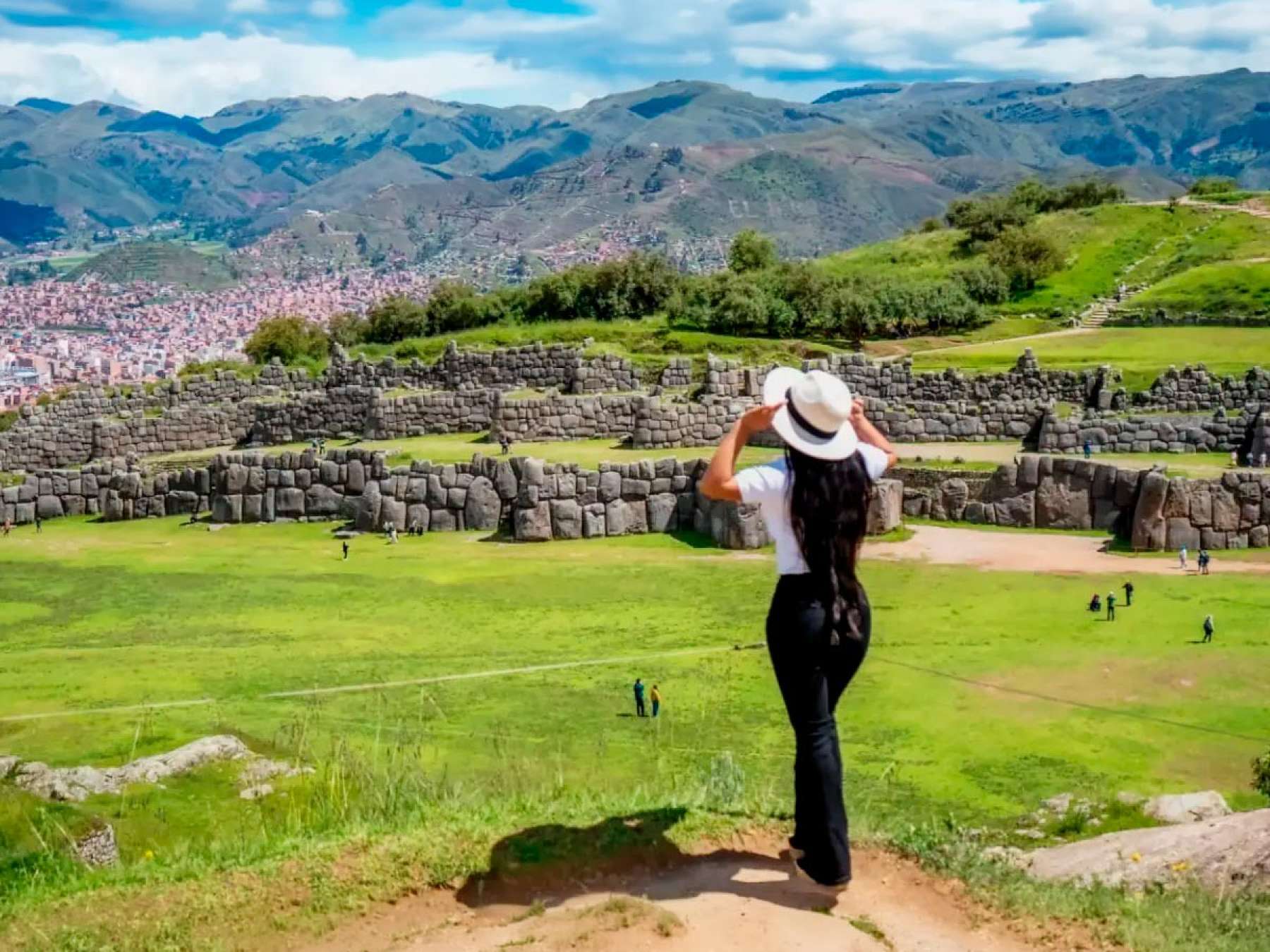
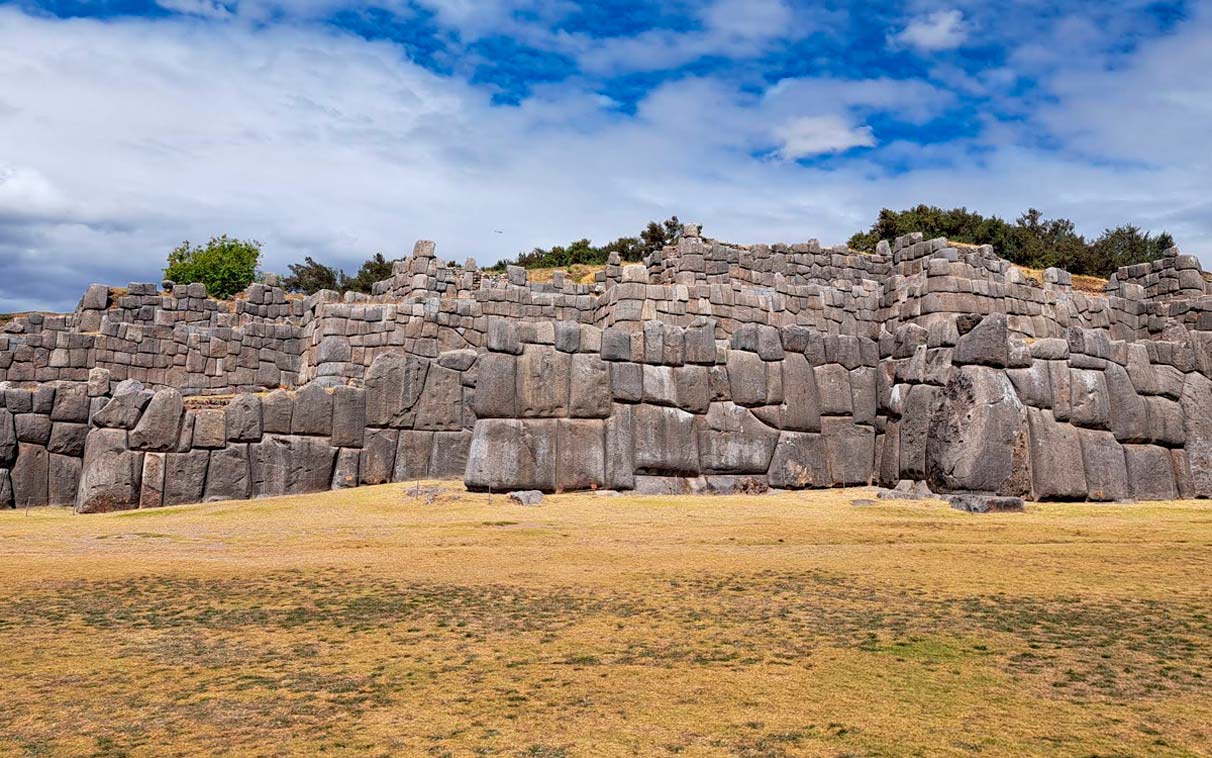
  • Sacsayhuaman is the largest and most imposing of the four. Its huge zigzagging walls and its esplanade, where Inti Raymi is celebrated today, show the power of the Inca State. It was also the scene of the great battle of 1536 between the Incas of Manco Inca and the Spanish forces.

Cusco Ruins

What you should know before visiting the 4 ruins of Cusco

Before heading out to the ruins, it is best to have your ticket, document, and schedules sorted out. This way you avoid lines, misunderstandings at the gate, and, above all, losing valuable time of the day.

Ticket types: Circuit 1 or General Ticket

To enter Sacsayhuaman, Q'enqo, Puka Pukara and Tambomachay, a separate entry ticket is not sold. It is not possible to buy an individual entry ticket for any of the sites included in the Tourist Ticket. You have two options:

  • Circuit 1 (partial ticket): Includes only the four sites of the circuit. It is the most economical option if your plan is limited to these ruins. It is valid for a single day, so you must visit the four sites on the same day.
  • General Ticket (integral): Which gives access to 16 places and is valid for 10 days. It is convenient if you also plan to visit museums in the historic center or the Sacred Valley.
TicketWhat it includesValidityForeigner priceNational price
Circuit 1 (Partial Saqsayhuaman)Sacsayhuamán, Q’enqo, Puka Pukara, and Tambomachay1 dayS/ 70S/ 40
General (Integral)16 attractions: the 4 ruins, city museums, Moray, Pisac, Ollantaytambo, Chinchero, Tipón, and Pikillaqta10 daysS/ 130S/ 70

If you are only going to tour the 4 ruins, Circuit 1 is sufficient. The General Ticket is convenient if you plan to visit other sites on the list as well. Children up to 9 years old do not pay, and from 10 to 17 years old the student rate is paid with an identity document.

Note: center museums (such as the Qorikancha Site Museum or the Regional Historical Museum) are not in Circuit 1. If you want to visit them, you need the General Ticket or Circuit 2.

Where to buy the Tourist Ticket

To purchase the Tourist Ticket, the main point is the COSITUC head office, at Av. El Sol 103 (Galerías Turísticas), a few steps from the Plaza de Armas. You can also buy it on site. According to the official COSITUC website, it is sold at all locations included in the ticket, except at the Regional Historical Museum, the Qosqo Center for Native Art, the Museum of Popular Art, and the Museum of Contemporary Art.

That means you can pay directly at the ruins, although buying it earlier in the center saves you lines and surprises. Keep in mind that there is no official online sale; purchase is in person. It is worth noting that you must bring cash in soles, since payments are made in soles and in cash, and foreign currencies are not accepted.

Schedules

  • COSITUC Office (Av. El Sol 103): Monday to Sunday, from 07:30 to 18:00. Other pages indicate slightly different hours, so confirm before going.
  • Entrance to the ruins: The sites can be visited Monday to Sunday from 07:00 to 18:00 hours.

Schedules may change due to holidays, maintenance, or events such as Inti Raymi. Check the COSITUC website a few days before.

Mandatory identity document

The ticket is nominal, meaning it is in your name. Carry your passport (foreigners) or DNI (Peruvians) at each site, because they may ask for it at the entry control. If you purchased the student rate, also carry the corresponding card.

How to get to the 4 ruins of Cusco

The four ruins are along the road that climbs from the city toward Pisac. Tambomachay, the highest and farthest point, sits about 8 km northeast of Cusco. For this reason, it is best to choose your transport well according to your budget, your energy, and your adaptation to the altitude.

Option 1: Local bus

It is the most accessible way and the one locals use. You can take a bus or colectivo heading toward Pisac that passes along Puputi street or near the Rosaspata Market. These leave every 10 minutes during the day from Puputi street, and it is enough to ask the driver to drop you off at Tambomachay.

  • Cost: Usually S/ 1.20 to S/ 2 per person, although the rate may vary.
  • Duration: Between 20 and 30 minutes, depending on traffic.
  • Tip: Confirm with the driver before getting on, because not all units stop at the same point. Check the route sign or ask for "Tambomachay" or "Pisac".
  • Watch out for the return: At certain times it can be difficult to find transport back. Since the route goes downhill, you might end up walking or taking a taxi from Saqsaywaman.

Option 2: Direct taxi

A taxi takes you from the Plaza de Armas to Tambomachay in about 15 to 25 minutes. It is the best option if you travel in a group, are short on time, or want to save energy for the tour.

  • Approximate cost: Between S/ 15 and S/ 25 per trip, per vehicle and not per person. Other sources put the limit at about 30 soles, and van-type vehicles cost a bit more.
  • How to negotiate: Cusco does not have taximeters, so rates are agreed upon before getting in. These tips help:
    • Agree on the price before getting in and confirm it with the taxi driver.
    • State the destination clearly: "Tambomachay, via the route to Pisac".
    • If the first price seems high, try another taxi, and avoid those offered to you at the hotel door or in the plaza, which usually charge more.

Option 3: Hike up to Sacsayhuaman

Walking up to Sacsayhuaman is a good way to acclimate to the altitude. The park is located about two kilometers from the city, on a steep climb, so it is best to take it easy.

  • When it is convenient: If you have already spent one or two days in Cusco, are in good shape, and want to save money. It is not ideal on your first day.
  • Recommendation: Do the climb to Saqsaywaman as a separate activity, or take a taxi to Tambomachay and cover the circuit walking downhill.
  • Caution: Avoid walking alone at nightfall or in poorly traveled areas, and bring water and sunscreen.

Walking from the center to Tambomachay is possible, but long and tiring. A source estimates it at between 1 and 1.5 hours uphill, although at Cusco's altitude many travelers take longer.

Option 4: Guided tour

Half-day tours or a city tour usually include these ruins along with other spots in the city. It is convenient if:

  • It is your first visit and you prefer not to worry about transportation.
  • You want historical explanations during the tour.
  • You have little time and want to see everything in one morning or afternoon.

What does it usually include?: Transportation in a minivan or bus, a professional guide, and pick-up at the hotel or at a central point. Some city tours last about 5 and a half hours and include stops in the center, such as Qorikancha.

What is usually left out?: Many times they do not include the Tourist Ticket or entries to sites in the center, such as Qorikancha, which are paid separately. Before booking, confirm if the ticket is included, the meeting point, the duration, and the guide's language.
Cusco Peru Ruins

The itinerary to visit the ruins of Cusco

The most practical route starts at Tambomachay, the farthest and highest site, and descends toward the city passing through Puka Pukara, Q'enqo, and Sacsayhuaman. A traveler's guide summarizes it like this: doing it all downhill tires you out less and allows you to make better use of your strength and time. A complete independent route, including visits, takes between 4 and 6 hours.

Tambomachay

Its name is interpreted as "resting place" and it is known as the Bath of the Inca. It is related to the cult of water, although some researchers also propose a military or lodging function. But, what to see in Tambomachay? In this enclosure you can appreciate a carved stone ceremonial font, two aqueducts carved into the rock, terraces, niches, and fountains where water flows all year round. It is the only site on the circuit with restrooms.

  • Visit time: 20 to 25 minutes.
  • How to get to the next one: Leave the site, cross the road, and walk about 300 meters. Puka Pukara is on the other side, a 5 to 10-minute walk.

Puka Pukara

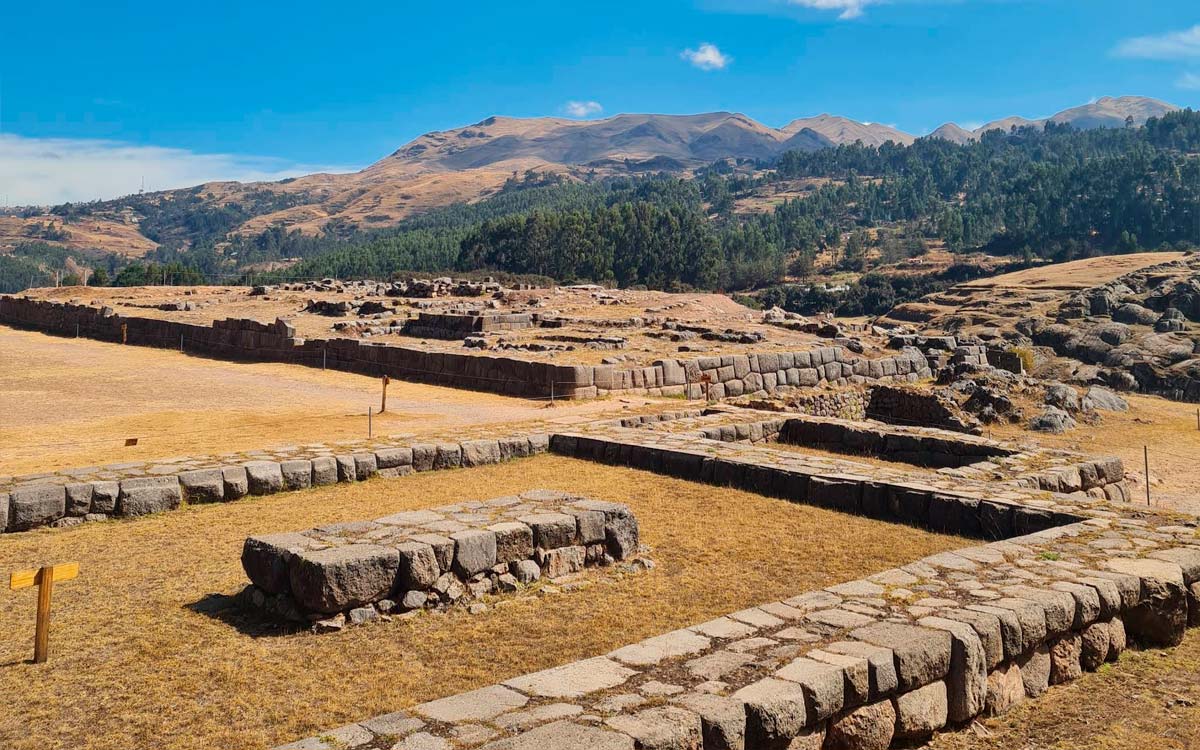
Its name means "red fortress" in Quechua. COSITUC indicates that it fulfilled military and administrative control functions and that the Inca's entourage going to Tambomachay lodged there, but it is debated whether it was a military post or a tambo. What can be seen in Puka Pukara? Here you can appreciate reddish stone walls, enclosures, inner plazas, baths, aqueducts, and towers. From the upper part you can see the valley and nearby hills.

  • Visit time: 20 to 25 minutes, plus 10 to 15 if you climb to the highest hill.
  • How to get to the next one: Q'enqo is about 3 to 4.7 km down the road, downhill. On foot it is 45 to 60 minutes. If you prefer not to walk this stretch, buses and taxis pass by. Along the way there are minor sites outside the ticket, such as the Temple of the Moon, which some travelers visit.

Q'enqo

Its name translates to "zigzag" or "labyrinth". It is a huaca (sacred place) built on a rocky outcrop and is associated with rituals to the sun, moon, and stars, and with funerary ceremonies. Its exact function is not confirmed. What can be appreciated in Qenqo? Here you can see a semicircular plaza with 19 niches and a central monolith, a labyrinth-shaped passage leading to underground galleries, a chamber with a ceremonial table, and, on the upper part of the rock, channels and zoomorphic figures.

  • Visit time: 30 to 45 minutes.
  • How to get to the next one: Go out to the road and continue downhill. Sacsayhuaman is about a 20-minute walk away. Along the way is the detour to Cristo Blanco, an optional viewpoint outside Circuit 1.

Sacsayhuaman

An ancient archaeological center built around the 15th century and interpreted as a fortress, temple, and ceremonial center. In 1536 it was the setting for Manco Inca's siege of Cusco, and after the conquest the Spaniards used its blocks as a quarry. What can be seen in Sacsayhuaman? Here you can appreciate three zigzagging walls of megalithic blocks, the Chuquipampa esplanade, the circular bases of the towers, the Rodadero (Suchuna) rocky outcrop, and the chincanas (tunnels).

  • Visit time: 1 to 1.5 hours.
  • Curious fact: the largest rock is estimated at about 125 tons. Every June 24th, the Chuquipampa esplanade hosts the staging of Inti Raymi.
  • How to finish: the Plaza de Armas is about 2 km downhill, a 20 to 30-minute walk via San Cristóbal or San Blas. You can also take a taxi or a bus.

Practical tips

Altitude acclimatization

Cusco is at about 3,400 meters above sea level and the four sites are even higher. The ideal is to arrive at least one or two days before the tour. Symptoms of altitude sickness usually appear between 6 and 24 hours after arrival, and adaptation generally takes between 24 and 48 hours. Altitude sickness can affect anyone, regardless of age or physical condition.

During those first days:

  • Walk slowly and rest before feeling exhausted.
  • Drink water frequently.
  • Leave demanding activities, such as walking among the ruins, for after acclimating.
  • If you have any health conditions, consult a doctor before traveling. Altitude medications should only be taken with medical advice.

What to bring on your visit to the 4 ruins of Cusco?

  • Sunscreen, hat, and sunglasses. UV radiation is higher at this altitude.
  • Layered clothing. The weather can change several times in a single day and nights are cold.
  • Water and something to eat, for the entire tour.
  • Comfortable footwear, because there are stretches of walking and uneven terrain.
  • Cash in soles and small change (coins and small bills). The tourist ticket can be purchased at the entrances, but many times they only accept cash, and tours usually require paying for entries in soles.
  • Your DNI or passport, to show along with the ticket.
  • In rainy season, a waterproof jacket.

Best time and best hour

The sites open in the morning (around 7:00 a.m.) and it is advisable to head out early. The early hours are usually quieter, and in the rainy season rainfall is concentrated in the afternoon. Going early also leaves you time to reach all four sites before closing.

It is worth noting that the best option to visit the 4 ruins of Cusco is in the dry season from May to September, with April and October as transition months. In those months there are more sunny days and clear skies, although nights are very cold and temperatures can drop below 0 °C in June and July. On the other hand, the rainy season runs from November to March or April. There are fewer visitors, but rain is more frequent. June, July, and August are the months with the highest influx of tourists.

The Inti Raymi Festival

Every June 24th, Inti Raymi, the Sun Festival, is celebrated, and its final ceremony takes place in Sacsayhuaman. The only stage that requires a ticket is the one at Sacsayhuaman, and tickets sell out in advance. Therefore, if you visit Cusco during those days, book early and expect more people and potential restrictions at the site.

How to make the most of your day

If you finish the tour early, there are several places nearby to complete the day. Some are just a few minutes from Sacsayhuaman, others in the historic center. Here are the options by area, from closest to farthest.

What to do when coming down from Sacsayhuaman?

  • Rodadero and Suchuna slides. They are part of Sacsayhuaman itself, so they are already included in your ticket. The Rodadero (also called Suchuna) is a rocky outcrop with natural slopes where visitors usually slide down, especially children.
  • Cristo Blanco. It is on the Pukamoqo hill, a few minutes from Sacsayhuaman. Access is free and it offers a wide view of the city. Many travelers visit it at sunset. The statue measures about 8 meters and was donated to Cusco by the Arab-Palestinian colony in 1945.
  • Viewpoint. Near Sacsayhuaman there are other free viewpoints. On the way down on foot, the San Cristóbal viewpoint is along the path toward the center.
  • Walk down Resbalosa street. It is a steep street connecting the Sacsayhuaman area with the historic center. From the Plaza de Armas you take it via Suecia and Huaynapata streets. To reach San Blas, the usual route is via Hatun Rumiyoc street and the Cuesta de San Blas, and there are also accesses from Sacsayhuaman via Siete Angelitos and Atoqsayk’uchi streets.

Museums with the General Ticket or Circuit II

City museums are not part of Circuit 1. They are visited with the General Ticket or with Circuit II (City and South Valley), which lasts 2 days and costs S/ 70 for foreigners and S/ 40 for nationals.

  • Qorikancha Site Museum. It is an underground museum with pieces from the Inca and pre-Inca cultures, and has access via El Sol Avenue. It is not the Qorikancha temple (the Santo Domingo convent), which has a separate entrance and is not included in the ticket.
  • Regional Historical Museum. It operates in the house of the chronicler Inca Garcilaso de la Vega, on Garcilaso street, next to Plaza Regocijo. It has pre-Hispanic pieces on the ground floor and colonial ones on the upper floor.
  • Optionals: The Museum of Popular Art, with works by prize-winning artisans from the Santurantikuy fair, and the Qosqo Center for Native Art, a center for folk dance performances.

If you plan to visit the ruins and the museums, the General Ticket turns out cheaper: Circuit 1 (S/ 70) plus Circuit II (S/ 70) add up to S/ 140 for foreigners, compared to S/ 130 for the General. In addition, four of those museums (Regional Historical, Popular Art, Contemporary Art, and Qosqo Center) do not sell the ticket at their doors, so you must buy it beforehand at COSITUC.

Other nearby plans that do not need a ticket

  • San Blas Neighborhood. It is the neighborhood of artisans and workshops, with cafes, restaurants, and viewpoints. On weekends its plaza fills with craft stalls.
  • Twelve-Angled Stone. It is on Hatun Rumiyoc street, about 200 m from the Plaza de Armas, and can be seen for free from the street. It is a block about 2 m long and around 6 tons, fitted into the wall of the Archbishop's Palace.
  • San Pedro Market. It is the main market of the city, with food, local products, and handicrafts. Entrance is free.

Frequently asked questions about the 4 ruins of Cusco

  • How much time does it take to visit the 4 ruins of Cusco?
    You need between 4 and 6 hours if you go on your own, depending on the pace and transport. An independent route that includes all four sites can take from 4 to 6 hours. Half-day tours usually last about 5 hours, since transport between sites is faster. As a reference, calculate about 30 to 45 minutes at Tambomachay, 15 to 20 at Puka Pukara, 30 to 40 at Q'enqo, and 1.5 to 2 hours at Saqsaywaman, plus transfers. If you also want to walk down to the center, reserve a full day.

  • Can the 4 ruins be visited without a tour?
    Yes, they can be visited on your own. You only need the Tourist Ticket, a means of transport to Tambomachay (local bus or taxi), and a little planning to tour the sites from top to bottom. The ticket only covers entry; transport and guides are hired separately. A guide is not mandatory, but helps in understanding the history of each place. If you decide to hire one, make sure they have their official credential visible.

  • Can I buy only the entry ticket to Saqsaywaman?
    No. It is not possible to buy an individual entry ticket for any of the sites included in the Tourist Ticket. To enter Saqsaywaman you need, at a minimum, the partial ticket for Circuit 1, which also includes Q'enqo, Puka Pukara, and Tambomachay. If you prefer to visit more sites, you can opt for the General Ticket.

  • How much does the Cusco tourist ticket cost?
    The official COSITUC prices, in soles, are as follows:
    TicketForeign touristPeruvian tourist
    Circuit 1 (the 4 ruins)S/ 70S/ 40
    General Ticket (16 sites)S/ 130S/ 70
    General for studentsS/ 70S/ 40

    COSITUC publishes these rates in its frequently asked questions section. Payment is in cash and in soles. Since prices can change, confirm the amount on the COSITUC website before traveling.

  • What is the difference between Circuit 1 and the General Ticket?
    The main difference lies in how many sites they include and how long they last:
    > Circuit 1: includes only Saqsaywaman, Q'enqo, Puka Pukara, and Tambomachay. It is valid for 1 day.
    > General Ticket: gives access to 16 places and is valid for 10 days. In addition to the 4 ruins, it includes museums in the center of Cusco, sites in the Sacred Valley such as Pisac, Ollantaytambo, Chinchero, and Moray, and the parks of Tipón and Pikillacta.
    If you only want to see the ruins of Cusco, Circuit 1 is sufficient and more economical. If you plan to do more excursions or visit museums, the General Ticket is usually more convenient.

Most Popular Trips

Salkantay Trek Machu
Sustainable Tourism Operator
We are a tour operator of Salkantay Trek to Machu Picchu. We have been providing tours for more than 8 years and our reliable.
Phone +51 84 226 547
WhatsApp +51 912 891 560
Address Av Tupac Amaru PP-10B, Santiago, Cusco, Peru
emailinfo@salkantaytrekmachu.com
Websitewww.salkantaytrekmachu.com
s