
With an altitude of 6,271 meters, Salkantay Mountain Peru is one of the most impressive peaks in the region and is considered a guardian Apu or sacred mountain in the Andean worldview. Located in the Vilcabamba mountain range, this area stands out for its beauty and isolation, surrounded by snowy peaks like Tucarhuay (5,910 m) and Veronica (5,682 m), which are visible even from Phuyupatamarca on the Inca Trail.
The Salkantay Trek has established itself as one of the most famous and complete routes to reach Machu Picchu, offering unmatched geographical diversity. Unlike other hikes in Cusco, this journey features changing landscapes, from the mountain pass surrounded by glaciers and lagoons, to the descent toward cloud forests and tropical zones.
During the journey, travelers can see condors and alpacas in their natural habitat, and also discover a variety of local plants. As a finishing touch, at the end of the hike, many hikers take the chance to relax in the hot springs of Santa Teresa, a perfect reward after several days of physical effort before the final visit to the Inca citadel.
Details of the Salkantay Trek
The Salkantay Trek is a journey of contrasts that demands respect for the mountain and careful planning. Unlike other routes, this trail stands out for its autonomy and the freedom it offers to the traveler. It is an expedition that tests physical endurance, but rewards every step with some of the most impressive and less-visited landscapes in the Cusco region.
Location of the Salkantay snowy mountain, Peru
The Salkantay Trail, also known as the New Inca Trail, is located north of the city of Cusco. To get there, you follow the Cusco – Limatambo – Abancay route, turning toward Mollepata, the usual starting point of the hike. From there, the path crosses Andean landscapes that combine glaciers, deep valleys, and cloud forests, marking a natural border between the highlands and the jungle.
Climate on the Salkantay Trek, Peru
During the day, the weather is sunny and pleasant, but at night temperatures can drop below 0 °C, especially between June and September. The season from December to March is the rainiest, which can make traveling on the trails difficult. Due to these conditions, the best time to do the route is from April to September, when the paths are drier and the clear sky allows you to see the snowy peaks.
Altitude of the Salkantay Trek, Peru
The highest point of the route is at 4,600 meters above sea level, specifically at the Salkantay Pass, located at the base of the majestic snowy mountain. This section is the most important technical challenge of the trip; it requires excellent physical preparation and prior acclimatization in Cusco to successfully overcome the altitude change and enjoy the spectacular views of the mountain range.
Note: Due to the drastic change in temperature between the mountain pass (extreme cold) and the Santa Teresa area (tropical heat), it is mandatory to dress using the layering system to avoid colds from the thermal shock.
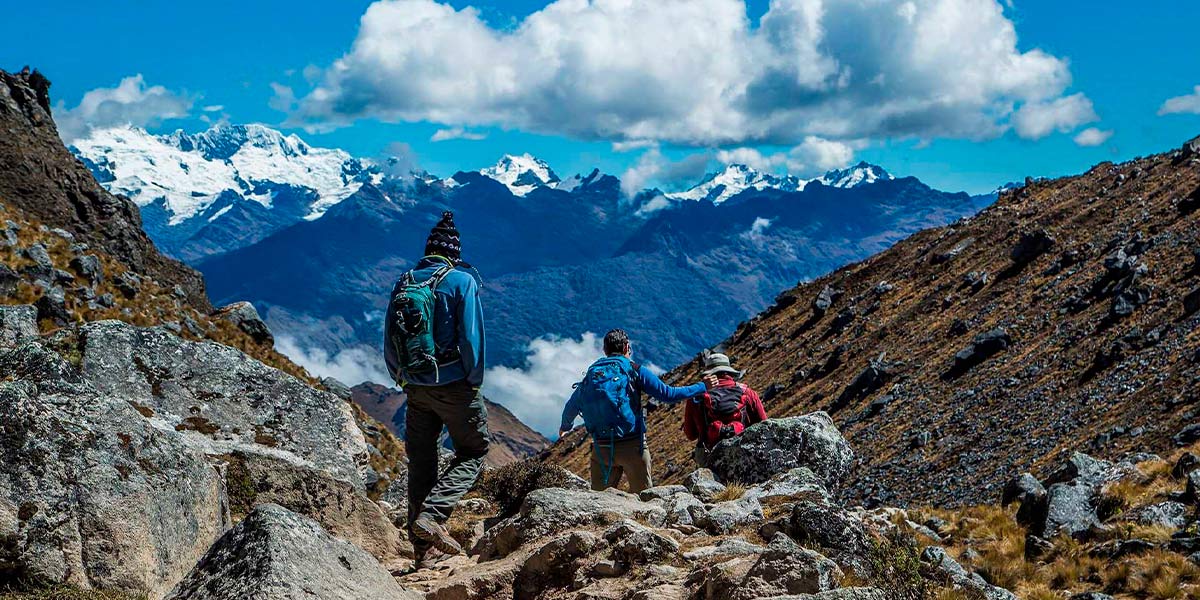
How is the Salkantay Trek in Peru?
- First Day: Cusco - Mollepata - Soraypampa
Departure by tourist bus to Mollepata small town located at an altitude of 2,850 meters above sea level, temperate climate vegetation jungle brow and the outline of the populated you will be able to appreciate some snowed ones that belong to the Salkantay mountain chain that are at an approximate altitude of 4000 - 5000 masl. In Mollepata you will enjoy beautiful landscape that is part of the Salkantay snow-capped mountain which is located at an altitude of 6,200 meters above sea level, contemplating this landscape you will start the trek which will last approximately 7 8 hours likewise you will be accompanied by the vegetation belonging to the jungle edge, on the way we will have lunch, and after that we will continue until we arrive at Soraypampa instead of our first camp and remember on this day you will visit the amazing Humantay Lagoon.
- Second Day: Soraypampa - Salkantay
The sunrise will be impressive because when you wake up the first thing you will see is the majestic Salkantay,starting the trip that this time will last approximately 7 to 8 hours ,you will have the opportunity to contemplate clearly the difference between the altitudinal floors, enter by a kind of canyon that will take you to the skirts of the Salkantay, finally you will arrive to Challhuay where you will spend the night.
- Third Day: Salkantay - Santa Teresa
It is the beginning of a new day and a new landscape new temperature since here begins the temperate climate typical of the beginning of the jungle. After breakfast you will continue with the journey, today it will be through valleys where we can observe various birds, mammals , insects, and other animals that are local, you will have the opportunity to observe the way of life of the population of the area.
- Fourth Day: Santa Teresa - Aguas Calientes
Upon waking up and having your breakfast you will continue with the trek for approximately 40 minutes until you arrive at the banks of the Urubamba river, here we will have to make use of the oroya. Our tour will be about 3 hours to the hydroelectric plant where you will see the Urubamba river valley, the immense waterfall that emanates from the mountain of Machupicchu, the northeast part of Machupicchu will be the ideal place to conect with the nature. On this day you will spend the night at Aguas Calientes or Machu Picchu Town.
- Fifth Day: Climb to Machupicchu
Today is the great day of knowing the Historical Sanctuary of Machu Picchu. Being 06:00 in the morning you have to ascend to Machu Picchu where you will have a guided tour. This walk is about an hour with 30 minutes arriving at Machu Picchu you will have the opportunity to be with the guide for 3 hours, then you will have In the afternoon return to the citadel of Aguas Calientes to take the train to the town of Ollantataymbo, where the buses return to the city of Cusco.
How to do the Salkantay Trek on your own
Unlike the famous Inca Trail, the Salkantay Trek can be done without hiring a tour or a guide, as long as the necessary precautions are taken. This option offers more freedom, but requires detailed planning and a good level of physical and logistical preparation.
Recommendations for organizing your adventure without a tour
Book your Machu Picchu ticket in advance to secure your visit at the end of the hike.
The route is practically the same as the Salkantay Trek with a tour, but the travel time can vary depending on your pace and endurance.
The first step is to get from Cusco to the town of Mollepata; vehicles depart from the Arcopata bus terminal.
The ascent begins from Mollepata. Bring only the essentials (food for 5 days, tent, and sleeping gear) to avoid carrying unnecessary weight.
Recommended equipment for the Salkantay Trek
Sleeping bag and thermal mat.
Sun cap or hat.
Trekking footwear and backpack.
Waterproof jacket and rain poncho.
Comfortable and resistant pants.
Canteen and water purification tablets.
Sunscreen and personal hygiene items.
Energy snacks and cash.
If you decide to hire a tour, it normally includes
Full board (breakfast, lunch, and dinner).
Tents and basic camping equipment.
Tourist guide and transportation from Cusco to Mollepata.
Entrance to Machu Picchu and train and bus tickets for the return.
Horses to carry part of the luggage (up to 5 kilos).
Best time to do the Salkantay Trek
The dry season, which covers April to October, is the most recommended period to start this adventure. During these months, the frequency of rain is minimal, which ensures that the trails are in top condition and reduces the risk of landslides in the cloud forest areas.
Mountaineers and expert guides agree that June, July, and August are the ideal months to do the Salkantay Trek due to the high chance of clear skies, which allows for capturing the best views of the snowy peak and Machu Picchu. However, it is important to consider that, during this time, the nights in the high-altitude campsites (such as Soraypampa) are the coldest of the year, with temperatures that can drop significantly below 0 °C.
Note: In the transition months (April and October), the landscape is exceptionally green and beautiful after the rains, but you should always carry a light rain poncho due to the possibility of sudden showers.
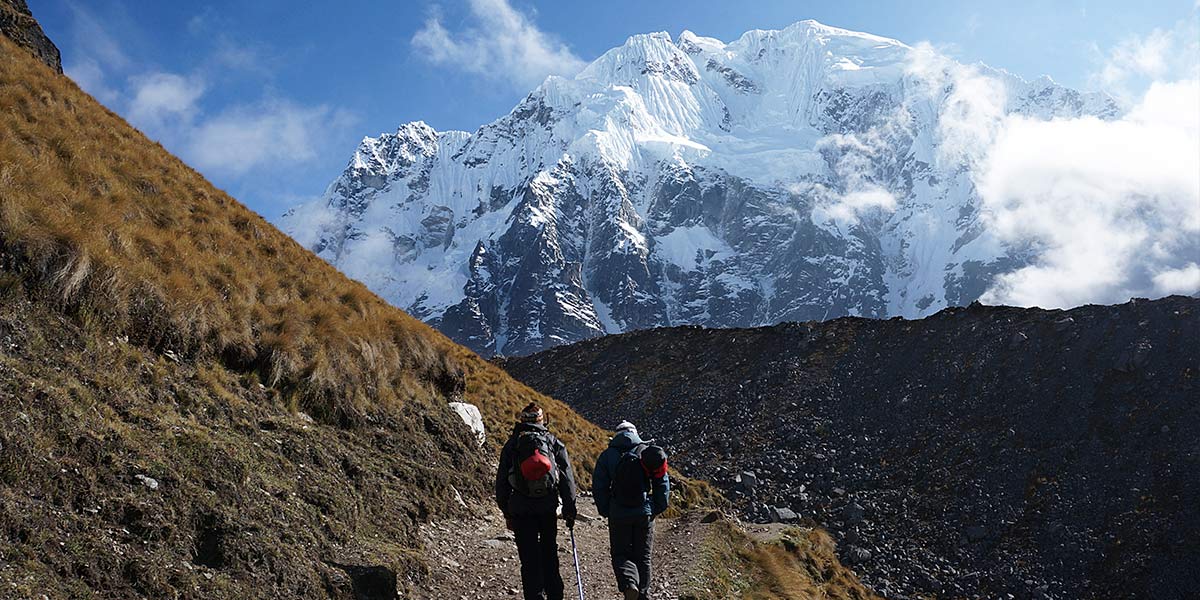
Practical tips for the Salkantay Trek
Acclimatize in Cusco one or two days before to reduce the risk of altitude sickness.
Avoid alcohol and greasy foods before starting the route.
Do some prior training to improve your endurance.
Always bring warm clothes, even in the dry season, as the nights are cold.
Plan every detail of the route, especially if you do it on your own.
Interesting Info:
Hikes to Machu Picchu
Getting to Machu Picchu on foot is an experience that requires physical effort, but along the way you will enjoy unique landscapes offered by the Peruvian Andes. Each route offers views of mountains, valleys, and archaeological remains that make the journey as memorable as the final destination. Learn about the best destinations you can take to the Inca citadel:

 +51 84 226 547
 +51 912 891 560
 Av Tupac Amaru PP-10B, Santiago, Cusco, Peru
  info@salkantaytrekmachu.com
 www.salkantaytrekmachu.com


