
The Twelve Angled Stone is an archaeological landmark and one of the most famous attractions in the city of Cusco. This individual piece of Inca masonry has become a symbol of Inca architecture, thanks to its technical precision; so if you are on vacations in Cusco, you cannot miss this treasure.
But, what makes this stone block attractive? This block of green diorite has twelve polished corners that fit perfectly with the surrounding stones of the wall, without the use of mortar. The polygonal construction technique not only stands out for its aesthetic value, but also for its functionality; furthermore, this engineering achievement earned it the declaration as Cultural Heritage of the Nation in Peru.
The wall that holds the 12 Angled Stone was originally part of the base of an Inca royal palace, and the name of the street, Hatun Rumiyoc, is translated from Quechua as "the house of the large stone". This guide is designed to provide the historical context and the necessary information so that visitors can appreciate this iconic Stone.
The 12 Angled Stone is located on Hatun Rumiyoc street (which in Quechua means "the house of the big stone"), just 200 meters, or about an eight-minute walk, from the Plaza de Armas of Cusco. This wall forms part of the base of what was an Inca royal palace, and which today houses the Archbishop's Palace. This section is an essential and accessible photography spot on the way to the San Blas neighborhood.
The importance of this wall lies in the Inca technique of polygonal masonry. The carving of the stone into 12 distinct angles is not only decorative, but an engineering solution that ensures solidity and seismic resistance without the use of mortar. The presence of stones with multiple points (five, six, seven) along the wall shows the builders' ability to interlace the pieces and give the structure the necessary flexibility to withstand the strong Andean earthquakes, a test that has passed the test of several centuries.
With more than 500 years of age, the 12 Angled Stone is embedded in what was the outer wall of the Palace of Inca Roca, the sixth ruler of the Tahuantinsuyo. Following the Spanish invasion in the 16th century, the palace was occupied and looted. Later, the Archbishop's residence was built upon its Inca foundations. The stone survived both the looting and the demolition precisely because of its structural function, keeping the wall as the base of the colonial building.
The complex carving of twelve distinct angles that fit perfectly with the adjacent stones is a masterful example of Inca polygonal masonry, designed to offer maximum solidity and seismic resistance. Symbolically, it is presumed that the division of its twelve angles represents the duality of the Inca world, reflecting the sociopolitical division of Cusco into Hurin Cusco (lower part) and Hanan Cusco (upper part).
Currently, the use of this impressive stone is not precisely known, but what is certain is that the Incas possessed a vast knowledge of the architecture they created. Constructions like the Inca citadel of Machu Picchu, the fortress of Sacsayhuaman, and many other attractions in the city of Cusco will allow you to witness their incredible work.
The stone of the 12 angles measures 2 meters and weighs approximately 6 tons. The architects mention that if the stone were removed from its place, the Cusco Art Museum, which is located in one of the streets that adjoins this stone, would collapse.
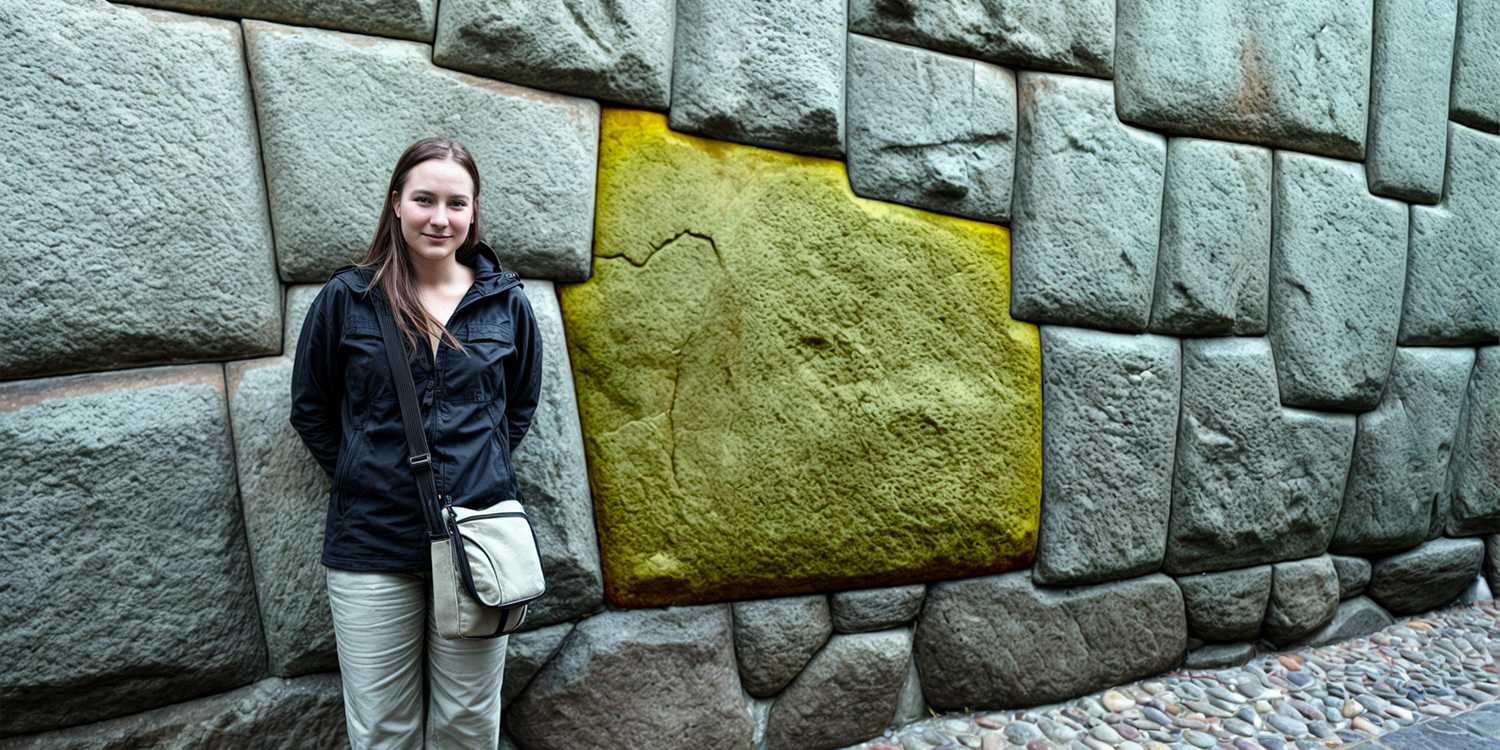
The Stone of the 12 angles is in the middle of Hatun Rumiyoq street, so it doesn't cost anything to go there and photograph it. As well as this wall, the city of Cusco has many Inca and colonial buildings, as part of its urban environment. That is why it is recognized as a 'museum city'.
→ A photografic camera.
→ Extra cash.
→ Light clothing (if you go during the day).
→ Warm clothes (if you go at night).
Hatun Rumiyoq street, where the stone is located, is a passage packed with craft shops. This is nice for tourists who want to take a souvenir from Cusco for their country. However, it can also be frustrating for other visitors who just want to take a leisurely walk around the city. Be patient when some merchants insistently offer you to buy some crafts.
Following Hatun Rumiyoq street in a straight line, you will reach the San Blas slope. This street is famous for being a bohemian neighborhood where backpacker tourists of various nationalities gather. This street leads to the San Blas square where you can visit the workshops of famous Cusco artisans as well as the local church, the oldest in the city of Cusco.
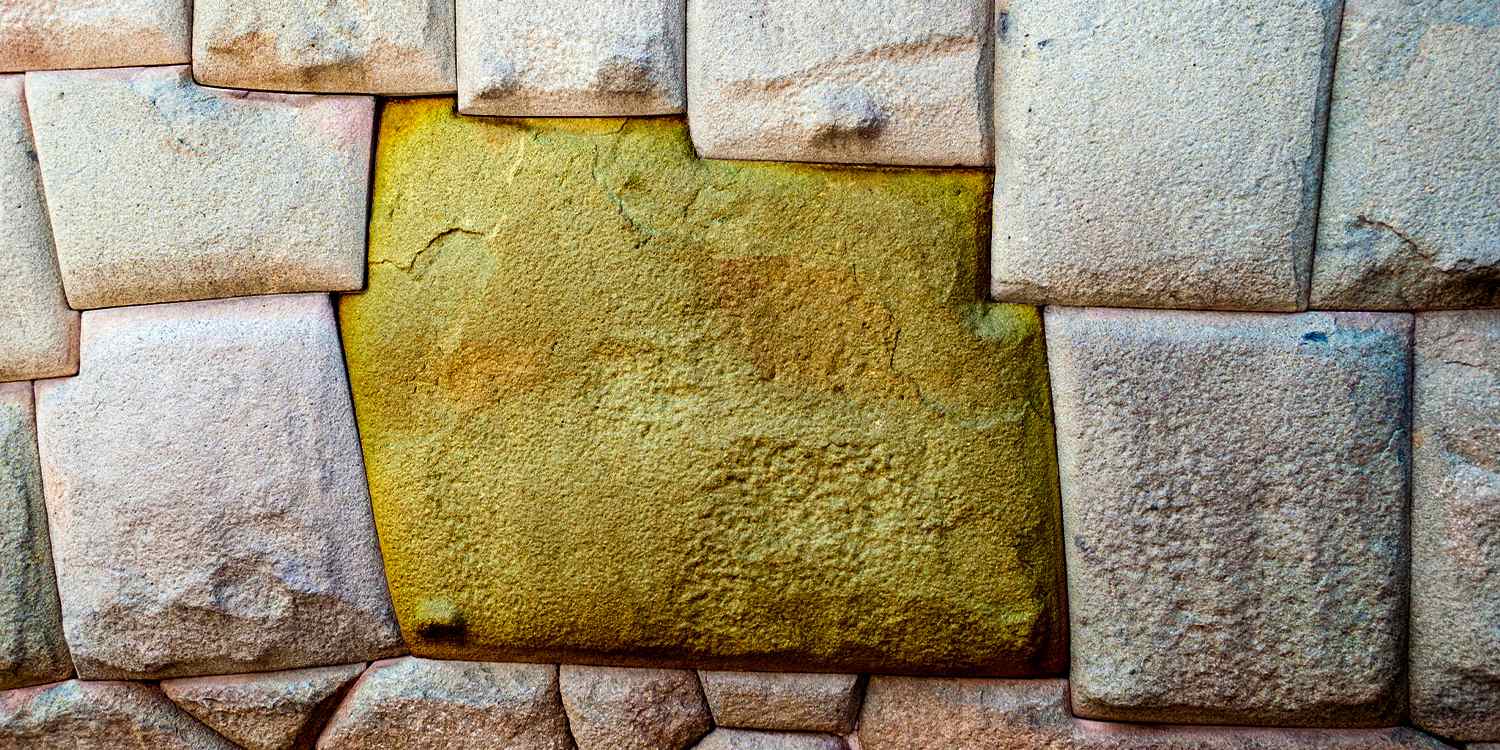
Despite the constant vigilance of the citizens of Cusco, the stone suffered an attack in 2014 when two Chilean citizens made a graffiti with their initials. Fortunately, professionals from the Decentralized Directorate of Culture of Cusco managed to erase them without damaging the surface. Violators were penalized.
Keep in mind that photographs of the 12 Angled Stone are allowed. However, the same does not happen when visitors want to touch it. As a protection and conservation measure, visitors are asked not to touch the stone structure. If so, it can last for many more generations.
Beyond the majesty of Machu Picchu, the surroundings of Cusco offer a variety of experiences that allow you to get to know the culture, history, and landscapes of Andean Peru up close. From traditional towns to little-explored natural wonders, there is a lot to discover just a few kilometers from the imperial city. If you are looking for new adventures outside the usual, here we present the places you can't miss:
Inca Trail, Machu Picchu and more

 +51 84 226 547
 +51 912 891 560
 Av Tupac Amaru PP-10B, Santiago, Cusco, Peru
  info@salkantaytrekmachu.com
 www.salkantaytrekmachu.com


