
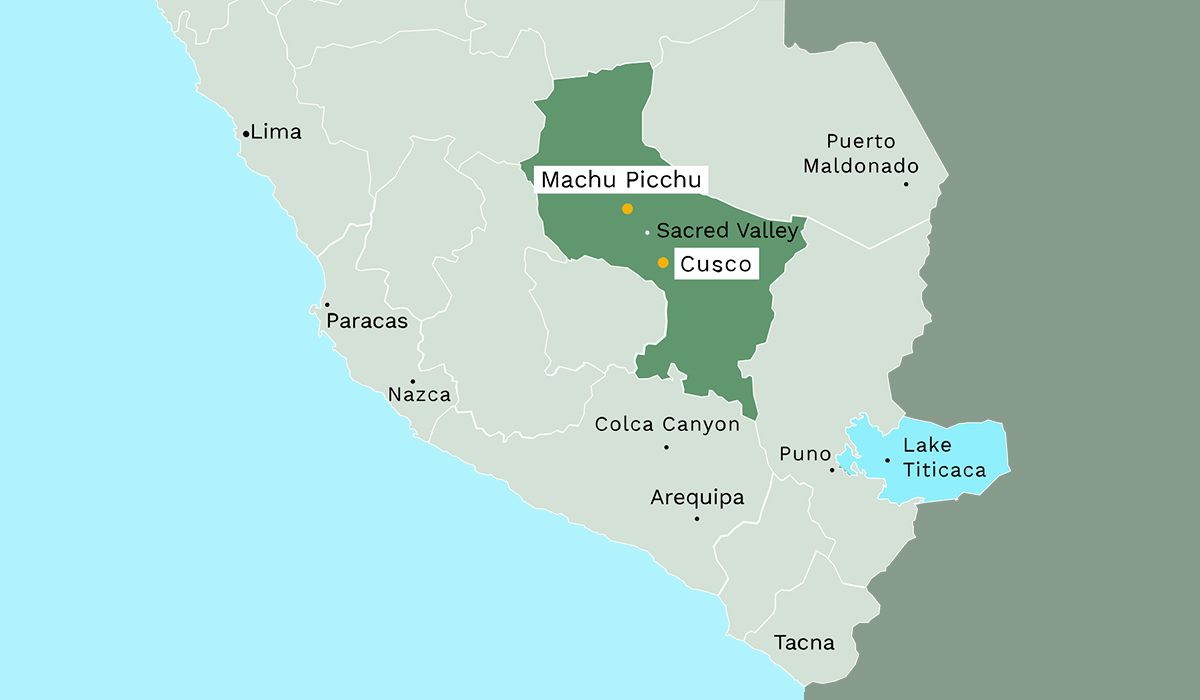
The city of Cusco, ancient capital of the Inca Empire, is located in the Southern Andes Range of Peru. Its complex geography is a determining factor in the "Cuzco climate", since this department presents a rough topography, which combines fertile inter-Andean valleys with mountain chains that descend sharply toward the edge of the Amazon jungle.
The Cusco climate is classified as semi-dry and cold. The city is marked by a strong variation between day and night, and by the division into two seasons: the dry one and the rainy one. The maximum average annual temperature is 19.6 °C, while the average minimum drops to 3.2 °C.
The Cusco geography is defined by towering snow-capped peaks. The highest points of the department include the Ausangate mountain (6,384 msnm), which is the highest peak in the region and an important tutelary Apu. Other significant elevations are the snowy Salkantay and the Pumasilli, which define the Vilcabamba Range. This complex topography is what creates the diversity of climates and Cusco landscapes that can be found in the department.
The geography of the Cusco region is notable for its variety, covering an extensive altitudinal gradient that goes from 6,384 meters above sea level (on the Ausangate Snowy Mountain) up to the valleys that border the Amazon.
The main axis of the region is the Vilcanota (or Urubamba) river. This river starts in the puna and flows through the inter-Andean valleys, creating the Sacred Valley of the Incas. This valley is the most important agricultural and logistical corridor in the region; also, the territory is flanked by canyons of immense depth and beauty, such as the Apurímac Canyon, which creates a spectacular landscape and is the habitat for specific wildlife like the Andean condor.
The territory is divided into three main zones that define the landscape and the climate:
The Highlands (Puna and Suni): This is the largest part of the region, which includes the capital (Cusco) and the high mountain areas. It is characterized by a cold and dry climate. Here you will find the great Apus (Sacred Snowy Peaks) and the puna plains.
The Jungle Brow (Cloud Forest): It is located between 2,000 and 3,000 meters in altitude. This zone has a humid subtropical climate and is home to lush and biodiverse vegetation. This is where the town ofAguas Calientes and the citadel of Machu Picchu (2,430 masl) are located.
Low Amazon Jungle: An eastern portion of the department descends to the Amazon, offering a tropical low jungle ecosystem and serving as the gateway to the Manu National Park.
The climate in Cusco is classified as mild and is determined by its altitude of 3,399 meters above sea level. The most notable feature is its daytime temperature range, where the temperature can vary up to 20°C between midday and midnight. It is common for the midday hours to feel warm and sunny (around 20°C) due to the strong radiation, but the air cools quickly at sunset, which forces the visitor to dress in layers. About the seasons in the Cusco region:
The dry season is the most stable and preferred for tourism. Days are bright, with almost completely clear skies, which is ideal for hiking and archaeological visits. However, this is the time for frost. The months of June and July are the coldest, with minimum temperatures regularly dropping below 0°C (32°F). This extreme cold at night is a direct result of the lack of cloudiness, which allows heat to escape without barriers.
The rainy season brings frequent rain, with January and February being the wettest months. Rain usually appears as concentrated downpours in the afternoon. The landscape dresses itself in a deep green. One advantage of this season is that the nights are noticeably milder (minimums above 5°C), since the cloud cover acts as an insulating blanket that holds in the heat.
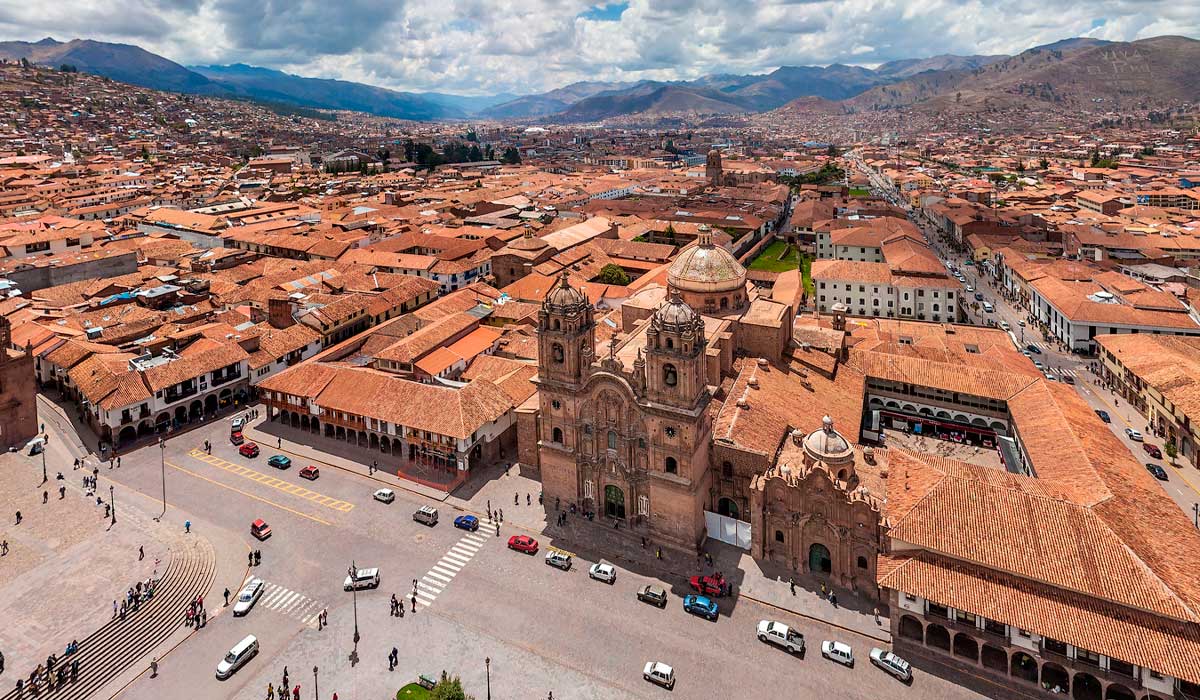
The best time to visit Cusco is from June to mid-September. Though temperatures hover in the mid- to upper 60s throughout the year, the city sees fewer rain showers during its winter months. Still, this is peak tourist season, so expect plenty of fellow trekkers beside you as marvel at iconic sites. To escape swells of tourists and high room rates, visit during May or between late September and early November. Avoid visiting between late November and April, when heavy downpours delay and dampen exploration. Whenever you decide to plan your trip, bring warm clothing to arm yourself from the chilly nighttime temperatures, which dip into the low 30s and 40s.
RELATED STORY:CLIMATE IN CUSCO PERU
Beyond the majesty of Machu Picchu, the surroundings of Cusco offer a variety of experiences that allow you to get to know the culture, history, and landscapes of Andean Peru up close. From traditional towns to little-explored natural wonders, there is a lot to discover just a few kilometers from the imperial city. If you are looking for new adventures outside the usual, here we present the places you can't miss:
Inca Trail, Machu Picchu and more

 +51 84 226 547
 +51 912 891 560
 Av Tupac Amaru PP-10B, Santiago, Cusco, Peru
  info@salkantaytrekmachu.com
 www.salkantaytrekmachu.com


