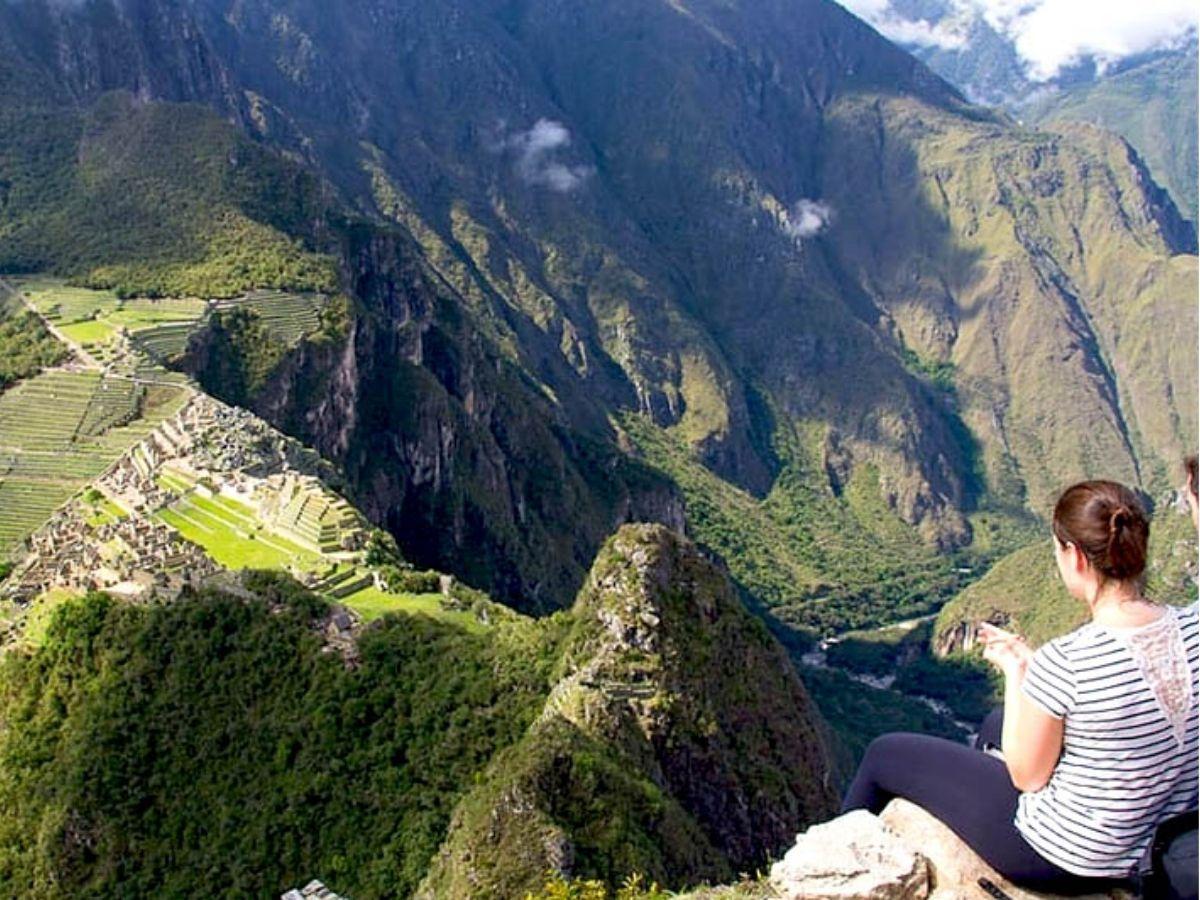
Huayna Picchu mountain is one of the most popular attractions in Machu Picchu, at 2,693 meters above sea level. Every year, thousands of visitors hike its trail to marvel at the panoramic views of the surrounding mountains and valleys, as well as the Lost City of the Incas from above.
The hike, even though it is not extremely difficult, has some steep sections and narrow steps that can become slippery in wet conditions. It is a moderate-high difficulty, recommended for those who have a reasonable physical condition. In total, the full climb up and down takes about two hours.
Because of its popularity, access to Huayna Picchu is limited to only 400 people per day, which makes it one of the most requested hikes in Machu Picchu. For this reason, tourists who want to live this experience must book their entrance well in advance, ideally several months before their trip. In this guide you will find all the needed information to plan your climb: how and when to book your ticket, what to bring on the day of the hike and some practical tips to make the most of this unique experience.
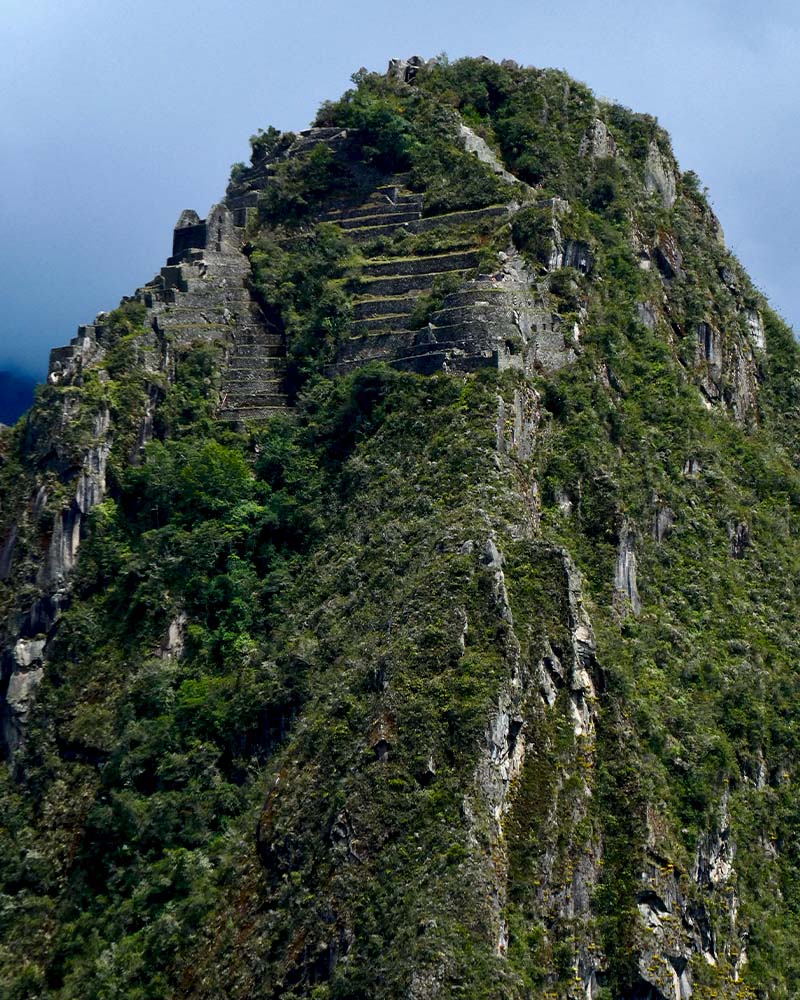
What is the Huayna Picchu mountain? The Huayna Picchu mountain (whose name in Quechua means "young mountain" or "new mountain") is the famous peak that appears in the most iconic photos of Machu Picchu, those classic postcards that show the Inca citadel with this mountain in the background. It rises to 2,693 meters (8,835 feet) above sea level, an altitude considerably higher than that of the Machu Picchu citadel itself, which is located at 2,430 meters. Its entrance is located on the north side of the archaeological complex.
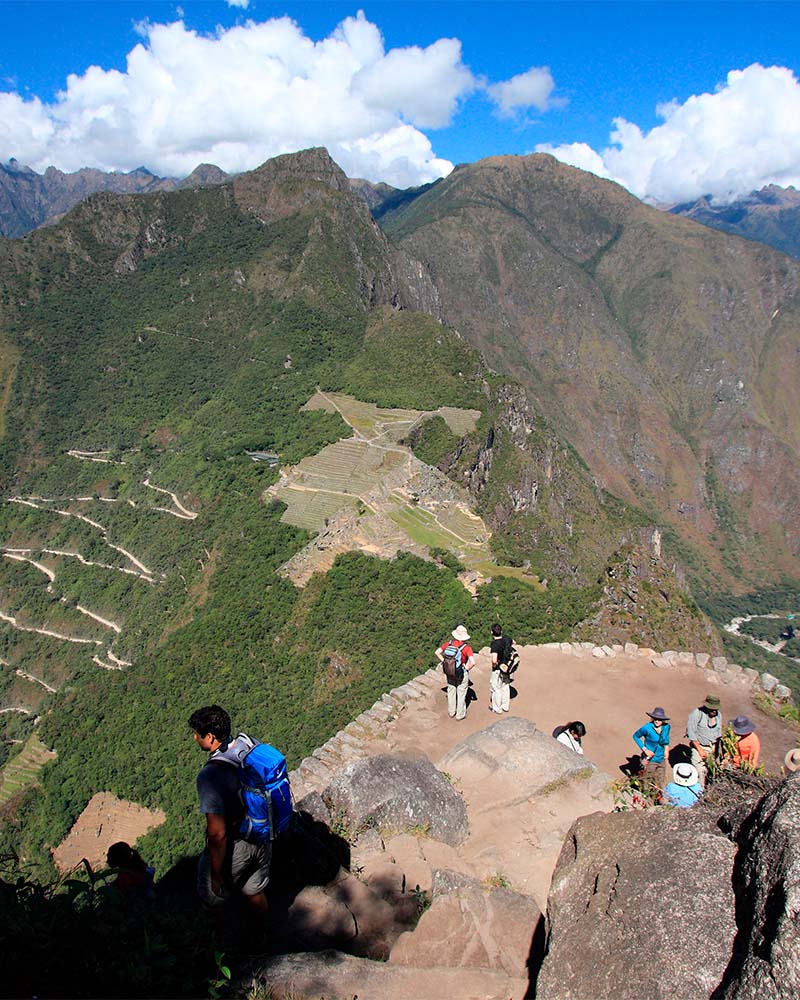
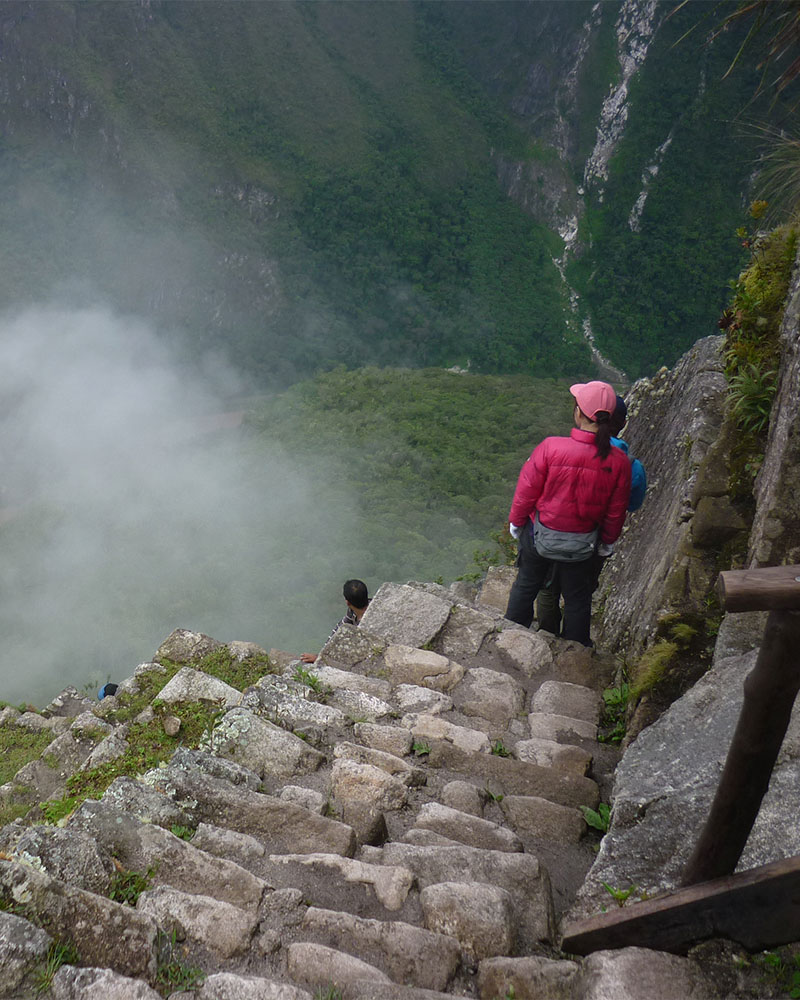
The climb to the top takes between 1 hour and 1 hour and 30 minutes, while the way down on the same path takes between 45 minutes and 1 hour. In total, the complete round trip experience lasts about 2 to 2 and a half hours, depending on the pace of each hiker and the stops to take photos. During the tour you will find the steep and narrow stairs known as the "stairs of death", as well as Inca terraces and temples. From the top, the reward is a complete aerial view of Machu Picchu, the winding Urubamba river at its feet, and the impressive Andes mountain range on the horizon.
According to records from the explorer Hiram Bingham and later studies by the Ministry of Culture of Peru, this peak was once the home of a high priest in charge of astronomical observations. It is also believed that it was a place for religious ceremonies where offerings were made to local gods.
 |  |  |
The Huayna Picchu mountain is located in the Andes mountain range, in the Cusco region (Peru), in South America. The mountain rises impressively over the ancient Inca citadel of Machu Picchu, located in the Urubamba province, about 80 kilometers northwest of the city of Cusco. The site is found inside the Historic Sanctuary of Machu Picchu and is part of the Vilcabamba mountain range.
Machu Picchu and Huayna Picchu are located in the middle of a subtropical cloud forest at an altitude of about 2,430 meters (7,970 feet), while Huayna Picchu rises to 2,693 meters (8,835 feet). The Urubamba river flows under the mountain, winding through the deep canyon known as the Sacred Valley of the Incas.
It is important to keep in mind that there is no separate entrance to Huayna Picchu: the only way to reach its trail is by entering the archaeological complex of Machu Picchu first. It should be noted that to access this trail it is important to buy the ticket for Circuit 3A: Huayna Picchu Mountain.
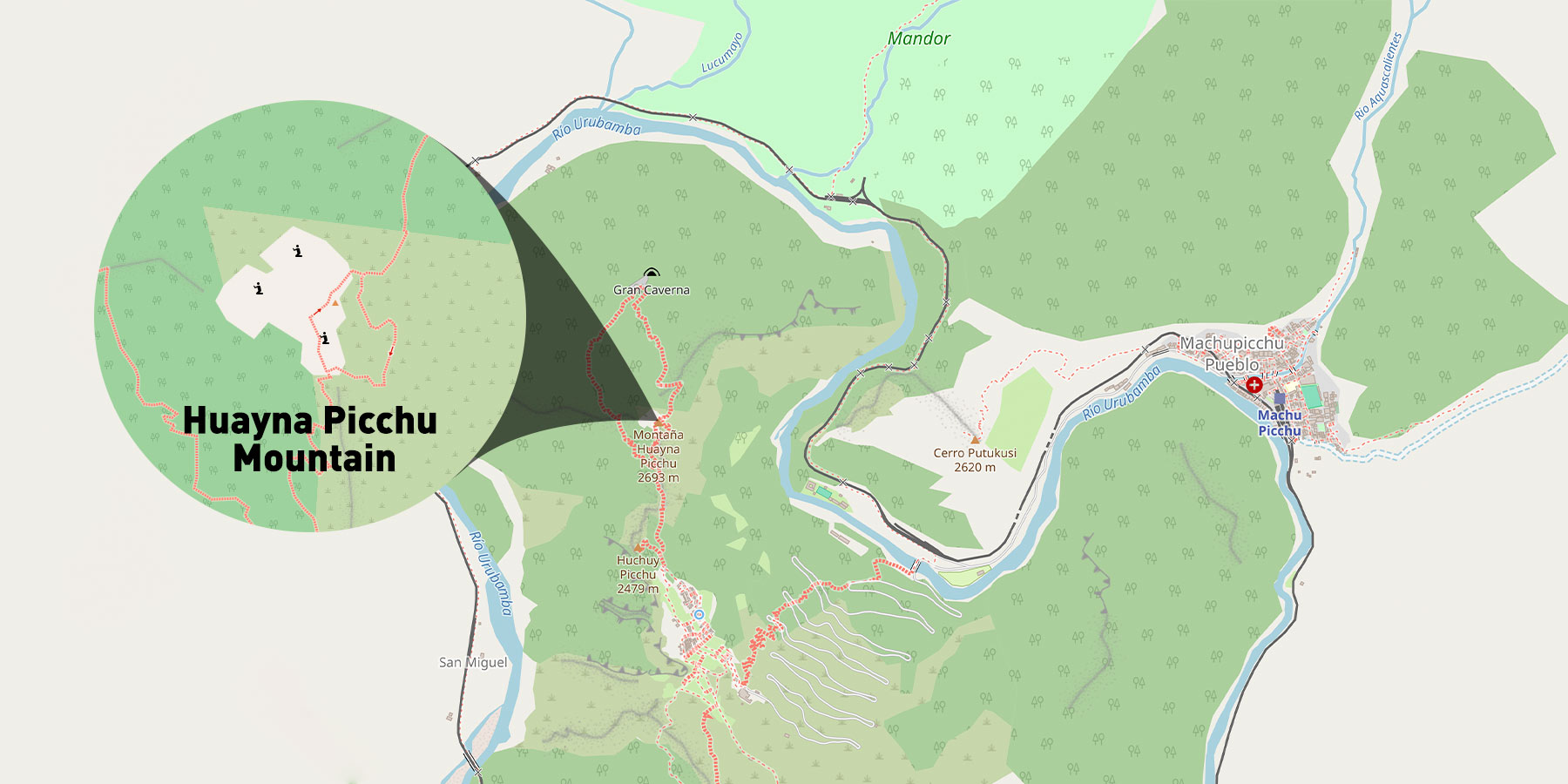
First you must get to the entrance gate of Machu Picchu. To do this, you must follow the route Cusco – Ollantaytambo – Aguas Calientes – Machu Picchu.
From the main gate of Machu Picchu (following the route for Circuit 3A), you must go down to the left along the path that borders the farming terraces, towards the northern sector of the complex, until you reach the "Sacred Rock" area. The walk from the main gate to the start of the Huayna Picchu trail takes between 15 and 20 minutes.
The entrance to the mountain is clearly marked at the control booth located at the start of the trail. There, the control staff will check that the name on your ticket matches exactly with your passport or ID document, so make sure you entered your details correctly when buying the ticket. If the name does not match, entry can be denied, so it is essential to bring with you the same document you booked with.
Access to Huayna Picchu is organized in two entrance shifts:
You must enter within the time of your assigned shift; once the hike begins, there is no time limit to complete it. If you have flexibility to choose, the first shift is usually the best option: the morning light is good for photography and the temperatures are cooler, which makes the climb more bearable before the sun is at its highest point.
The Huayna Picchu trail follows a winding path for 15 to 20 minutes to a point where it splits into two routes. The upper trail (the shortest) takes you directly to the top of the Huayna Picchu mountain. The other trail (long) continues around the mountain to a large cave inside which is the famous Temple of the Moon.
The trail can be done by most people with a reasonable physical condition, although it should not be underestimated: it includes steep sections and the narrow "stairs of death". The climb takes between 1 hour and 1 hour and 30 minutes, and the way down between 45 minutes and 1 hour, so the full round trip is around 2 to 2 and a half hours. The trip is only allowed for people older than 12 years.
A difficulty factor that is often overlooked is the altitude: at 2,693 meters, Huayna Picchu is not as high as the Salkantay pass (4,630 m) on the route of the same name, but the combination of intense physical effort with the altitude can affect travelers who arrive directly from Lima or from sea level areas, without having acclimatized. That is why it is recommended to spend at least one day in Cusco or in Aguas Calientes before trying this climb.
For those who doubt between this hike and the Machu Picchu Mountain, it is worth keeping in mind the difference: the Machu Picchu Mountain is a longer route in distance and time (between 3 and 4 hours in total), but its trail is less vertical and with more regular steps, which makes it a slightly more accessible alternative for those who prefer to avoid very steep sections or do not feel comfortable with the narrow stairs of Huayna Picchu.
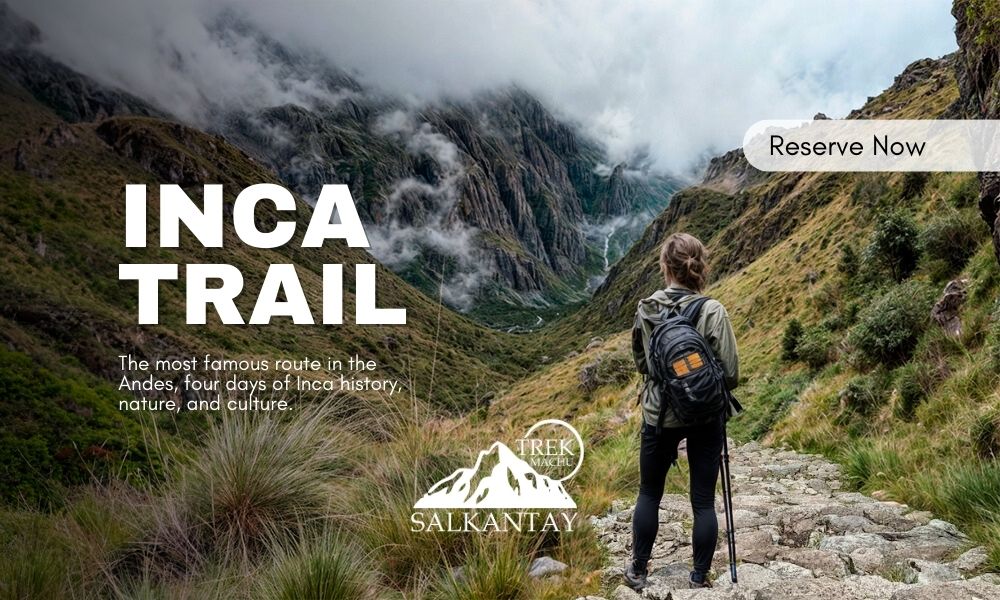
Between November and March is the rainy season, so it is more likely for fog to cover the mountain and you will not be able to see the landscapes from the top. On the other hand, from April to October is the dry season, these days are ideal to climb Huayna Picchu, since it rains little and there are more chances to enjoy the clear views from the top.
The whole Machu Picchu region has a subtropical climate, with average temperatures of 18°C. However, at the top of Huayna Picchu, exposed to the wind, the wind chill is usually considerably colder than in the citadel. That is why it is recommended to bring an extra layer of warm clothing, even if it is hot the rest of the day.
A key aspect to consider is how far in advance you must book your ticket. In high season (June to August), Huayna Picchu tickets usually sell out 3 to 6 months in advance, so it is recommended to buy the entrance as soon as the trip date is set. In low season, booking 2 to 4 weeks in advance can be enough, although it is always better not to leave it to the last minute.
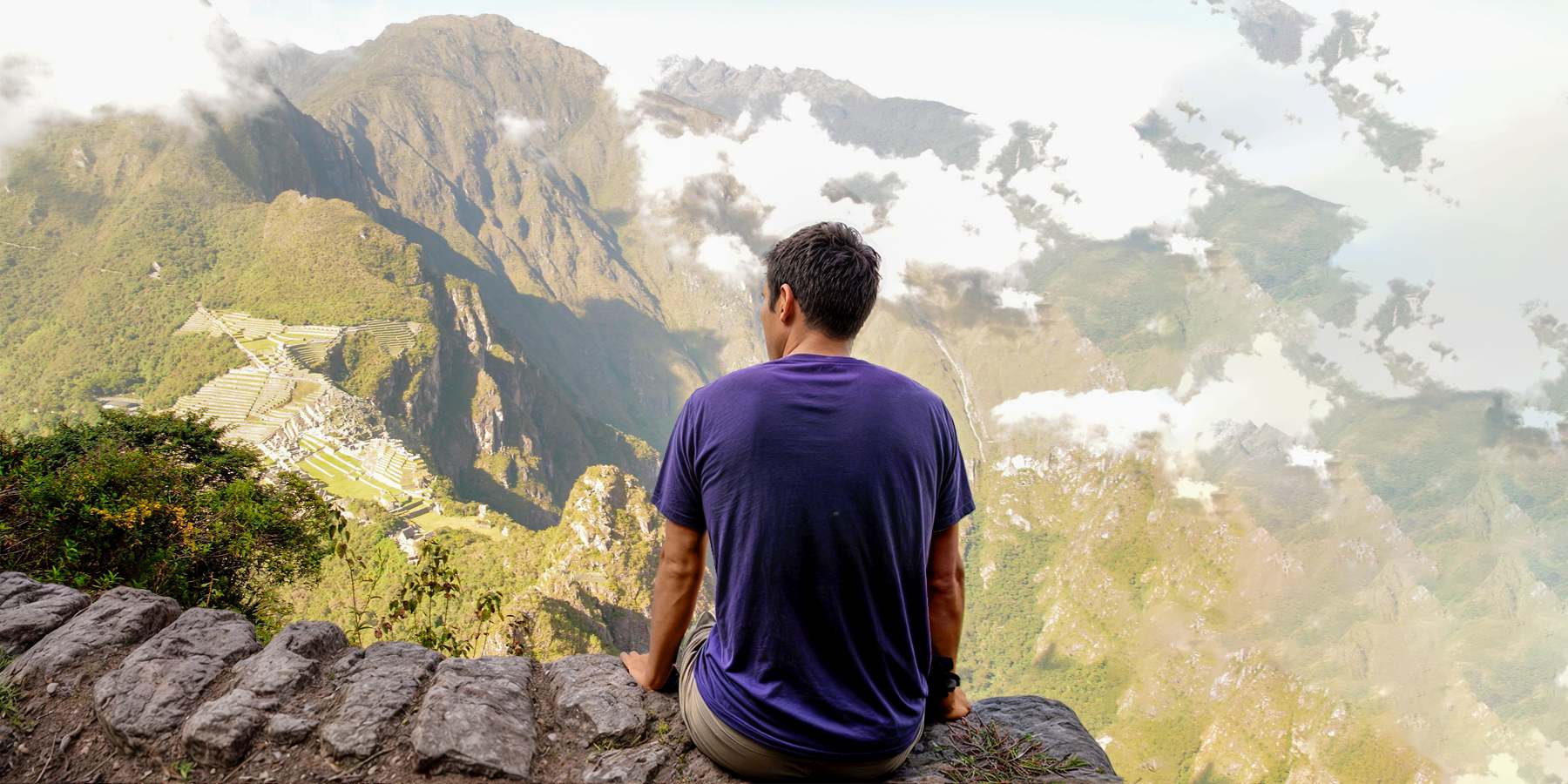
The southern region of Peru usually has unpredictable weather. It can be hot and rain at any time. Therefore, the tourist visiting Huayna Picchu must be prepared for both rain and sun.
Most of the trail goes over stone paths, so the use of hiking shoes with a good grip is recommended. It is also recommended to bring a rain poncho and sun protection.
People who are not used to hiking should start at a slow pace. Older people must consult their doctor before doing this hike.
Besides knowing what to pack, it is just as important to know the site restrictions, since some objects can stop you from entering if you bring them with you:
The hike to Huayna Picchu is not recommended for people who suffer from vertigo or are afraid of heights. Also, entry is not allowed for tourists under 12 years old; minors who access the mountain must be accompanied by their parents or guardians.
It is important to know that tourists must not cross the safety ropes or risk their lives taking photos at the edge of the cliffs. Furthermore, some sections of the route are quite steep and others run next to cliffs. However, the entire route has fixed cables and handrails for support in the most exposed sections, as long as you walk with care and do not leave the marked path.
The most difficult sections are found during the climb. For example, the "Stairs of Death" are steep and narrow steps that lead to the top of the mountain.
On rainy days, the stones on the path become extremely slippery, which greatly increases the risk in the most exposed sections. In severe weather conditions, the Archaeological Park authorities can temporarily close access to Huayna Picchu for safety reasons, so it is recommended to confirm the status of the trail at the time of entering Machu Picchu if you are visiting in the rainy season.
If you are already planning your climb to Huayna Picchu, it is a good time to decide how you will get to Machu Picchu and what other experiences you can combine with your visit. These are some directly related options:
If you prefer a more complete experience and to reach Machu Picchu by walking the traditional Inca trail before climbing Huayna Picchu, the Classic 4 day Inca Trail is the perfect combination: four days of trekking through Andean landscapes, minor archaeological sites, and the arrival at Machu Picchu through the Sun Gate, just before crowning Huayna Picchu the next day.
So, if you are looking for new adventures in the Cusco region, here are three options that you cannot miss:
 |  |  |

 +51 84 226 547
 +51 912 891 560
 Av Tupac Amaru PP-10B, Santiago, Cusco, Peru
  info@salkantaytrekmachu.com
 www.salkantaytrekmachu.com