
When asked if Cusco is a city, the answer goes beyond the purely urban. We are looking at a historical gem considered one of the most important and fascinating tourist destinations in the world today. Similarly, the name "Cusco" comes from the Quechua word "Qosqo", meaning "navel of the world", reflecting its role as the political and cultural center of the Inca Empire.
Today, it is recognized as the Archaeological Capital of the Americas. This metropolis's historical value can be understood simply by walking through its streets. Moreover, this destination is interesting because ancient Inca buildings coexist with imposing colonial churches and houses, creating a unique architectural environment with a history to discover.
Thousands of travelers visit Cusco to explore its main attractions, such as Sacsayhuaman, and the traditional towns that make up the Sacred Valley. Likewise, Cusco serves as a gateway and initial acclimatization point before beginning the journey to Machu Picchu.
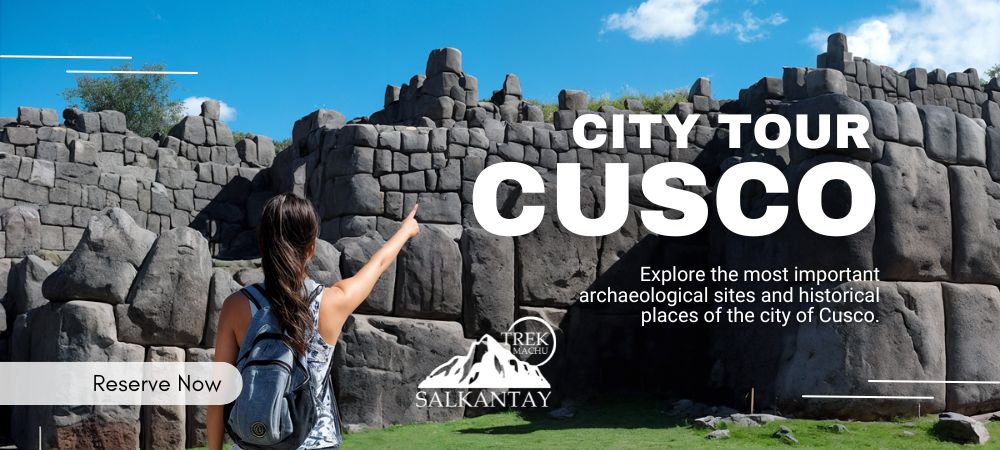
Cusco is the ancient capital of the Inca Empire.
Cusco was the capital of the powerful Inca Empire and the political, spiritual and administrative center of a civilization that dominated much of South America. The famous Inca roads, or Qhapaq Ñan, departed from here and connected the four regions of the Tahuantinsuyo. This is why it was originally named Qosqo in Quechua, meaning "navel of the world". During the colonial era, Spanish conquerors built churches and palaces atop ancient Incan temples. This resulted in a unique city where stone walls coexist with Baroque architecture. One notable example is the Coricancha, an ancient Sun temple, on which the Santo Domingo Convent was constructed.
Important fact: In 1983, Cusco was declared a World Heritage Site by UNESCO in recognition of its extraordinary historical and cultural value. During the Inca period, the city was considered sacred, and visitors were treated with respect because entering was a privilege.
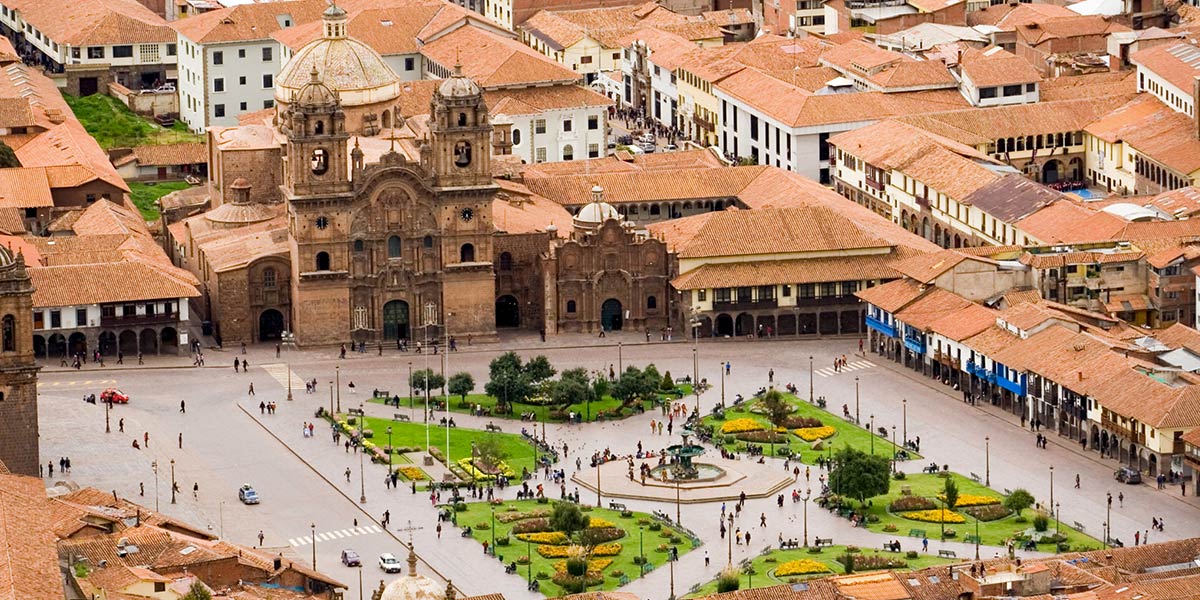
Cusco Main Square
Location
Cusco is located in the southern part of the Andes Mountains in Peru. The city is located at an elevation of 3,399 meters (11,151 feet). The region's most notable snow-capped mountains are Ausangate and Salkantay. The Vilcanota River runs through the Sacred Valley of the Incas, including the town of Aguas Calientes. Cusco also has a jungle region where the Incas built important cities such as Choquequirao and Machu Picchu.
What should you do in Cusco, the imperial city?
- Visit the Historic Center – Visiting Cusco's city center is like visiting a giant museum. Its streets are lined with Inca temples and colonial churches. The city is also famous for its nightlife and diverse tourist services, including restaurants, bars, cafés and hotels.
- Visit Sacsayhuaman – The Sacsayhuaman archaeological complex consists of several buildings, including Qenqo, Pucapucara, Tambomachay, and Sacsayhuaman itself. Sacsayhuaman is a fortress with walls made of enormous rocks, some of which weigh up to 120 tons. During the tour, you will also see tunnels, walls, platforms, paths, altars and water channels.
- Visit Coricancha – Coricancha, the most important temple in the Inca Empire, was even more important than Machu Picchu. This enclosure's walls are the most finely carved in the empire. Before the arrival of the Spanish, the walls were covered with sheets of gold and silver. Later, the temple was looted, and the invaders built the Santo Domingo church on its site.
- Go to the Sacred Valley of the Incas – The Sacred Valley, one of the most fertile and beautiful areas of the region, is located next to Cusco. The Incas built cities, temples, terraces and palaces there. Today, the tourist towns of Pisac, Chinchero, Maras, Urubamba and Ollantaytambo are located in this area. Visitors can enjoy the landscapes, visit archaeological sites, and practice adventure sports.
- Go to the Southern Valley of Cusco – South of the city of Cusco lies a fertile valley where the Incas built important temples, such as Tipón and Racchi. The first Incas migrated to Cusco from the south. There is also an important pre-Inca Wari city called Piquillacta. The South Valley is famous for its exquisite traditional dishes, such as cuy chactado and chancho al horno.
- Visit the Mountain of 7 Colors – A few years ago, part of the snowy Ausangate mountain melted, revealing a unique multicolored landscape produced by the minerals found there. Today, the Mountain of Seven Colors, or Vinicunca, is one of Cusco's main attractions. Located more than 120 kilometers from Cusco, it stands at an elevation of over 5,000 meters (16,404 ft). Despite the cold and high altitude, hundreds of tourists visit every day.
- Visit Machu Picchu – Machu Picchu is definitely the main tourist attraction in Cusco. This citadel is located almost 100 kilometers from the city and can be reached by car and train. The Inca city is situated in the Cusco jungle region. It is famous for its beautiful landscapes, mysterious structures, and hiking trails, such as those on Huayna Picchu and Machu Picchu mountains.
- Hiking the Inca Trail – The Inca Trail is one of the most famous hiking routes in the world. This trek follows trails built by the Incas several centuries ago. The trail connects Cusco with Machu Picchu, covering 4 days of hiking and 3 days of camping. On the last day, you will arrive at the Inca city through the "Sun Gate" (Intipunku), an ancient entrance gate used by the Incas.
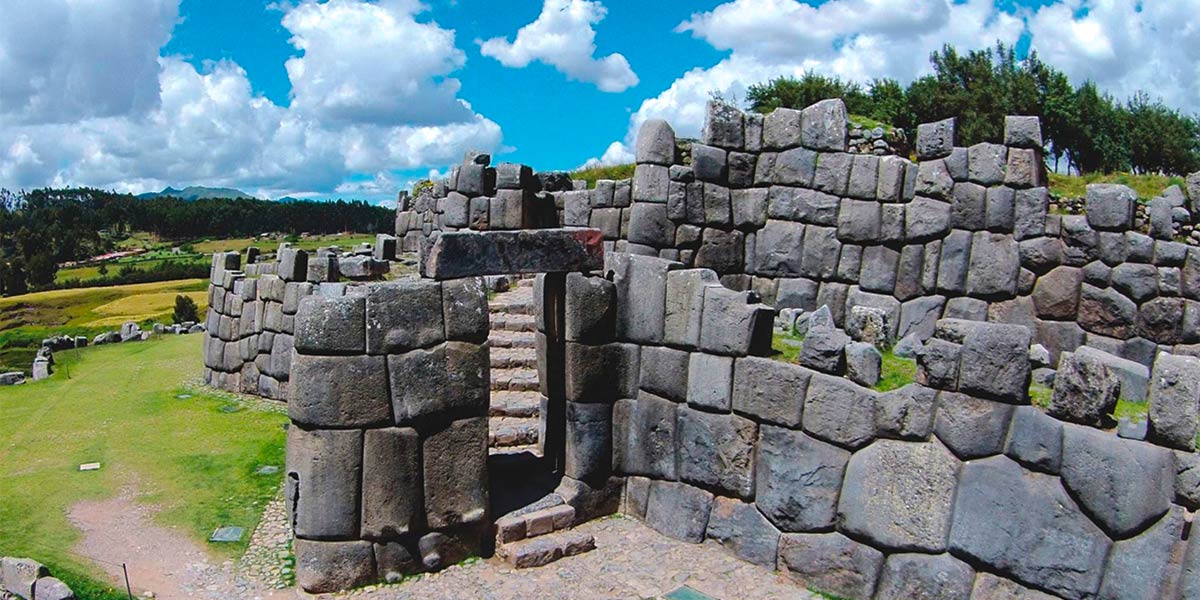
Sacsayhuaman Archaeological Center
Where should you start your visit to Cusco?
Assuming that most tourists spend four days in Cusco, the following itinerary is recommended:
- Day 1: Cusco City Tour – After resting from your trip to Cusco, you can explore the city in the afternoon on a “City Tour” that includes the cathedral, Coricancha, Sacsayhuaman, Qenqo, Pucapucara, and Tambomachay. This will help you acclimate to the city's high altitude.
- Day 2: Sacred Valley of the Incas – The Sacred Valley is a great option because its attractions are not at high altitudes. This allows you to better adapt to the climate. The tour of the valley lasts almost the whole day. You can visit Pisac, Urubamba, Chinchero, Ollantaytambo, and even Maras and Moray. You can also enjoy adventure sports.
- Day 3: Machu Picchu – If you don't want to spend a night in the town of Aguas Calientes, you can visit Machu Picchu in one day. To get there, you must travel by train and bus for about four hours. Most tourists visit the Inca city on the second or third day of their trip to acclimate to the altitude and avoid the symptoms of altitude sickness.
- Day 4: Rainbow Mountain – After several days of acclimatizing to Cusco's altitude, it's a good idea to hike to Rainbow Mountain on the last day. If you prefer a less demanding alternative, you can choose to hike in the South Valley of Cusco instead. Other similar hikes include the Humantay lagoon.
Frequently Asked Questions: Discovering Cusco
Is Cusco a city or a region?
Cusco is both. As a city, it is the ancient capital of the Inca Empire and the modern-day urban center. As a region, it encompasses a vast area of the Peruvian Andes, ranging from snowy peaks to the lush jungles where Machu Picchu is nestled.
What is the meaning and historical importance of the name "Cusco"?
The name comes from the Quechua word "Qosqo", meaning "navel of the world". Historically, it was the political, spiritual, and administrative center of the Tahuantinsuyo empire. The Qhapaq Ñan, a network of roads that connected the four regions of the empire, began here. It is important to note that the Inca Trail to Machu Picchu is part of this extensive route.
Why is Cusco called a "museum city"?
It is called that because Incan and colonial architecture coexist uniquely in its streets. It is common to see perfectly carved Incan stone foundations over which the Spaniards built Baroque churches and large houses. This can be seen clearly in the Coricancha Temple and the Santo Domingo Convent.
What is the altitude of the city, and how does it affect travelers?
The city of Cusco sits at an elevation of 3,399 meters. Because of its altitude, it is a strategic point for acclimatization. It is recommended that you spend your first day resting and doing light activities, such as a city tour, before embarking on more demanding hikes to Machu Picchu or the Mountain of Seven Colors.
What are the main archaeological attractions in the area?
In addition to the historic center, the sites that comprise the Sacsayhuaman, Qenqo, Pucapucara, and Tambomachay archaeological park stand out. These structures demonstrate the Inca's mastery of engineering, with walls containing rocks weighing up to 120 tons.
What does the geography of the Cusco region look like outside of the city?
The region is geographically diverse. It encompasses the fertile Sacred Valley of the Incas (Pisac and Ollantaytambo), imposing snowy mountains such as Salkantay and Ausangate, and a high jungle area where the citadels of Choquequirao and Machu Picchu are located.
What is the best way to plan a four-day itinerary?
To ensure a balanced and safe experience with regard to altitude, the following itinerary is suggested:
- Day 1: Acclimatization and city tour of the cathedral and nearby archaeological centers.
- Day 2: Take a tour through the Sacred Valley, which is at a lower altitude than the city.
- Day 3: Visit the Inca city of Machu Picchu.
- Day 4: There are more demanding hikes, such as the "Mountain of Seven Colors" and "Humantay Lake."
The Best Cusco Trek & Tours
Cusco boasts spectacular landscapes and unforgettable routes. Walking through its intensely colored mountains, deep valleys, and historical archaeological sites is one of the best ways to experience the region. The changing climate, diverse ecosystems, and high altitude make each trail a unique experience with physical challenges and breathtaking views. Below are some popular treks in Cusco:

 +51 84 226 547
 +51 912 891 560
 Av Tupac Amaru PP-10B, Santiago, Cusco, Peru
  info@salkantaytrekmachu.com
 www.salkantaytrekmachu.com


