
This breathtaking alternative route to Machu Picchu blends the raw beauty of the Salkantay Trek with the magic of the classic Inca Trail and a rare encounter with the majestic Andean Condor. We watched in awe as these giants of the sky spiralled upward, gliding just metres above our heads, close enough to feel the rush of their wings.
This is a journey into the heart of 'Savage Mountain' Salkantay where clouds drift low over ancient jungle and wrap around one of the Andes' most powerful peaks. At 6,271 m (20,573 ft), Salkantay stands as the crown of the Vilcabamba range and your adventure begins right at its feet.
Chosen by travellers seeking solitude over crowds, this route rewards you with four days of spectacular, unspoiled Andean scenery before you step onto the legendary Inca Trail on day three. You'll walk in the footsteps of the Incas, arriving at the Sun Gate of Machu Picchu on the morning of day seven, a moment that stays with you forever.
Slightly more demanding than the traditional Inca Trail, this expedition uses horses to carry supplies during the first four days, then transitions to a porter team once you join the protected trail zone, where horses are not permitted. Trek permits sell out fast — secure your place early to guarantee your spot on this once-in-a-lifetime journey.
Condor + Salkantay trail
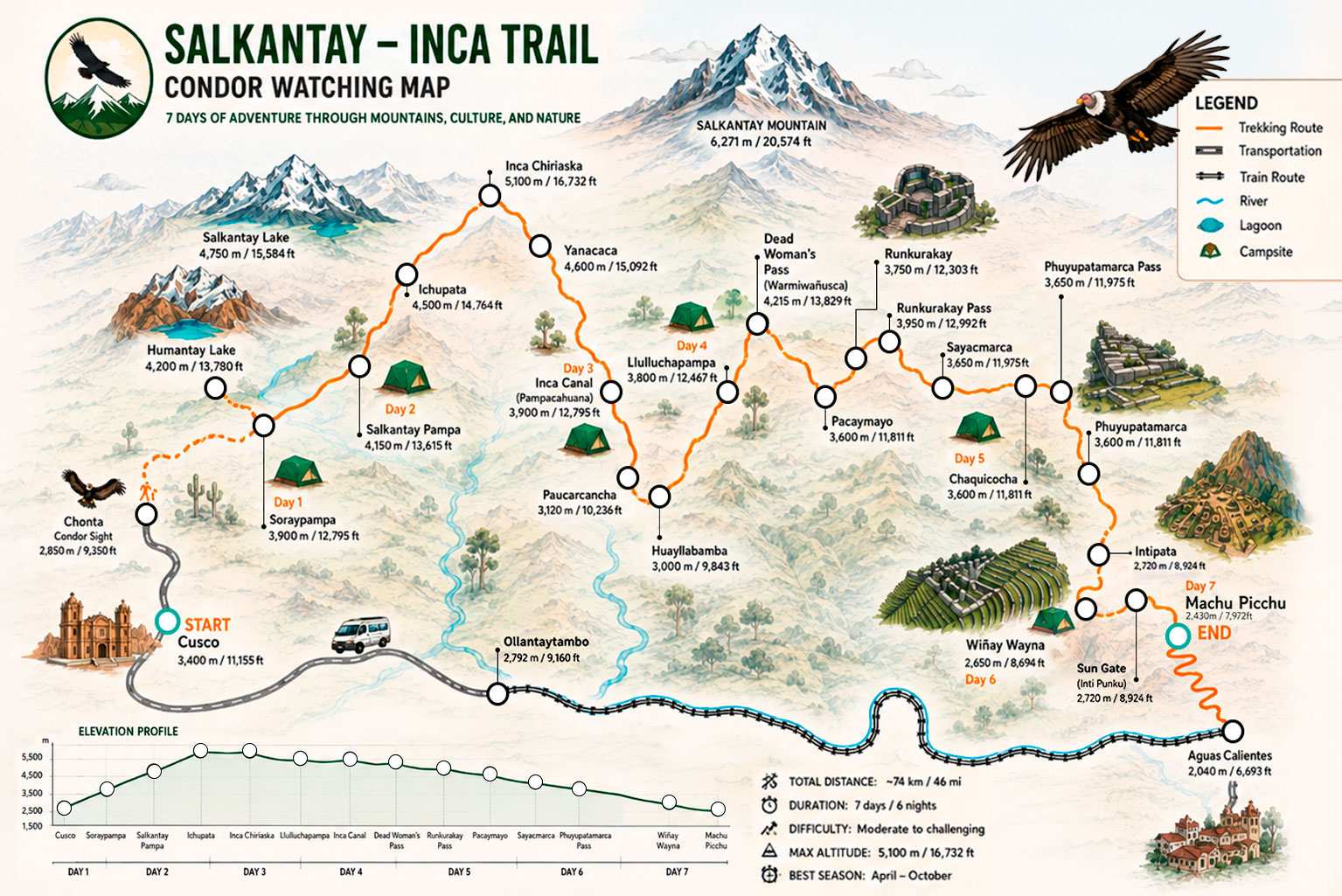
Day 01: Cusco - Chonta - Condor Sight - Sayllapata
Day 02: Sayllapata - Salkantay Pampa
Day 03: Salkantay Pampa - Pampacahuarina
Inca Trail
Day 04: Pampacahuarina - Llullucha Pampa
Day 05: Llucha Pampa - Chaquicocha
Day 06: Chaquicocha - Wiñayhuayna
Day 07: Wiñayhuayna - Machu Picchu
Crew: A Salkantay Trek Machu Representative in Cusco and a professional Tour Guide, a Cook, a Horseman and Porters for the Salkantay Trek and Inca Trail to Machu Picchu.
Accommodation: Campsites (6 nights).
Meals: 6x breakfast, 6x lunch, 6x dinner, 6x afternoon tea.
Transportation: Transportation by private van, 1x train
Group Available: Mix: 2 Max: 8 Trekkers

Today is the day the two great routes converge. We leave the classic Salkantay path behind and step onto the legendary Inca Trail, and the transition couldn't be more dramatic. The morning begins with a walk through a wide, colorful valley blanketed in wildflowers, with the Salkantay glacier looming magnificently to the left like a silent, ice-covered guardian. The trail winds through the living Andean communities of Qhesqa and Paucarcancha, where life continues much as it has for centuries.
Then comes the climb.
Incachiriaska Pass (4,880 m / 16,000 ft) is the highest and most physically demanding point of the entire expedition, and its name says it all: "the place where the Inca cools off". Standing at the top, you'll understand why. The views are raw and overwhelming: Salkantay fills the horizon, ancient glacier formations cling to the surrounding ridgelines, and small mountain lagoons glitter in the valleys below. This is one of those moments you'll carry with you long after the trek is over.
Keep your eyes sharp up here. The remote, cliff-lined terrain around the pass is prime condor territory — the Andean condor, the largest flying bird on Earth, rides the thermals through these rocky corridors. Alongside them, vizcachas sun themselves on boulders, white-tailed deer pick their way across the slopes, and if fortune is on your side, you may catch a rare glimpse of guanacos or vicuñas, protected species that few trekkers ever get to see this close.
The descent leads into the lush, fertile Cusichaca Valley and down to the charming village of Pampacawana (4,000 m / 13,123 ft). Here, the past announces itself immediately: the remains of ancient Inca irrigation canals snake through the landscape, a quiet reminder that this valley has fed communities for over 500 years. Camp is set up nearby, and as the evening chill rolls in, a warm dinner brings the group together, well-earned fuel after one of the most spectacular and demanding days of the journey.
Before the sun is fully up, breakfast is done and boots are on. What lies ahead is the day most trekkers talk about for years, and for good reason.
The climb to Warmiwañusca, the legendary Dead Woman's Pass (4,200 m / 13,780 ft), begins immediately and doesn't let up. It's demanding, honest work — a long, rhythmic push through altitude that tests your lungs and rewards your stubbornness. Along the way, the trail cuts through the cloud forests of Yunkachimpa and Corral Punku, two distinct ecosystems that soften the effort with mist, moss, and on clear mornings, jaw-dropping views of the snow-capped peaks standing guard above the treeline.
Reaching the pass is one of those moments that doesn't need embellishment. You made it to the highest point of the entire Classic Inca Trail — take it in.
The descent into the Pacamayo Valley (3,300 m / 10,826 ft) is steep and fast, trading altitude for lush green landscape as the valley opens up below. Lunch here feels like a full system reboot — warm food, open air, and legs that are quietly grateful for the flat ground.
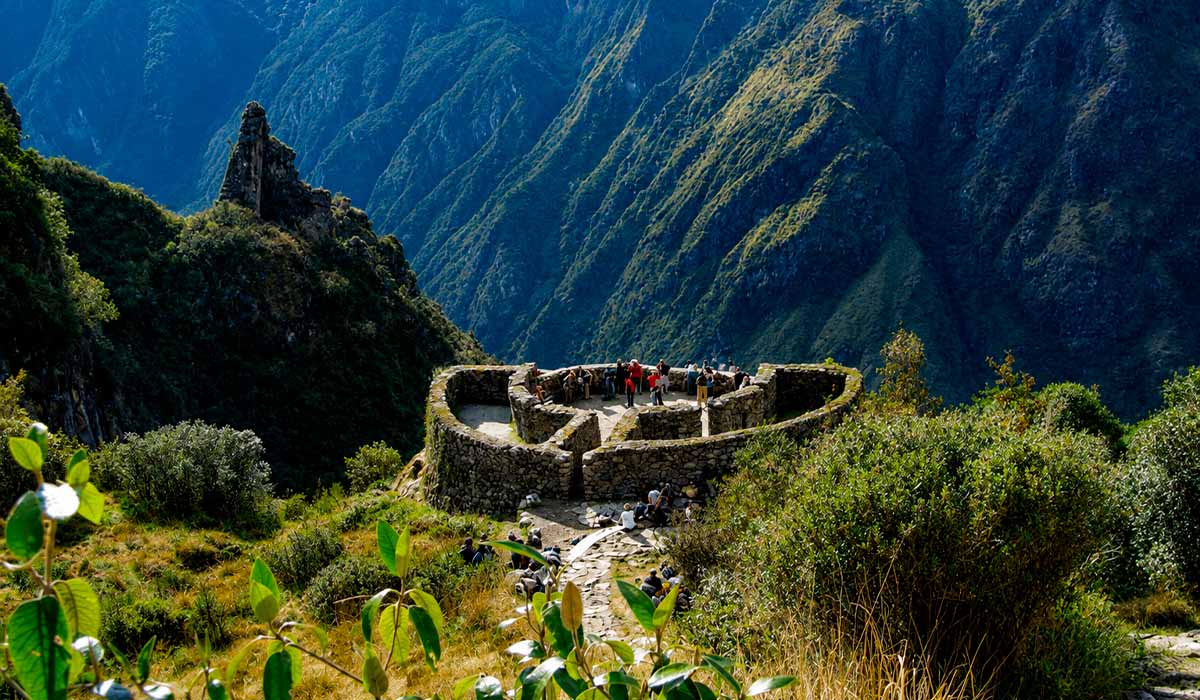
The afternoon brings the ruins. Runkuracay sits above the valley with a striking semicircular design unlike anything else on the trail — your guide will walk you through its geometry and its role as a tambo, a rest and surveillance point in the Inca road system. Then the route climbs again, crossing the Runkuracay Pass (3,860 m / 12,664 ft) before descending onto the impeccably preserved stone-paved lines of the Royal Inca Trail.
From here, the path feels different. You're walking the same stones Inca messengers and armies walked centuries ago. The trail skirts the dark, mirror-still waters of Yanacocha Lake before arriving at Sayacmarca, an archaeological complex clinging dramatically to the cliff edge, half-hidden by cloud and mountain shadow, as if it was built to be discovered slowly. Camp at Chaquicocha (3,670 m / 12,040 ft) closes the day. A hot dinner, the soft sounds of the Andes at night, and a sky full of stars that city life makes you forget exist.
There are mornings that change you. This is one of them.
We rise before dawn and climb the ancient stone stairway toward Inti Punku — the Sun Gate — the sacred threshold through which Inca pilgrims once entered the most legendary city in the Americas. The climb is short but electric. And then, as the path crests and the clouds below begin to glow, Machu Picchu appears.
No photograph prepares you for it. The citadel materializes from the mist as the first light of the sun pours through the gate, illuminating the terraces, towers, and temples in a way that makes the word "majestic" feel like an understatement. This is the golden hour shot — the one that defines the trek — and you'll have time to take it in properly before descending into the site as one of the first visitors through the gates.
Once inside, a two-and-a-half-hour guided tour brings Machu Picchu fully to life. To ensure the best possible experience and in keeping with current site regulations, the tour follows a structured route through the citadel's most significant sectors — each one unlocking a new layer of the city's history, architecture, and enduring mystery.
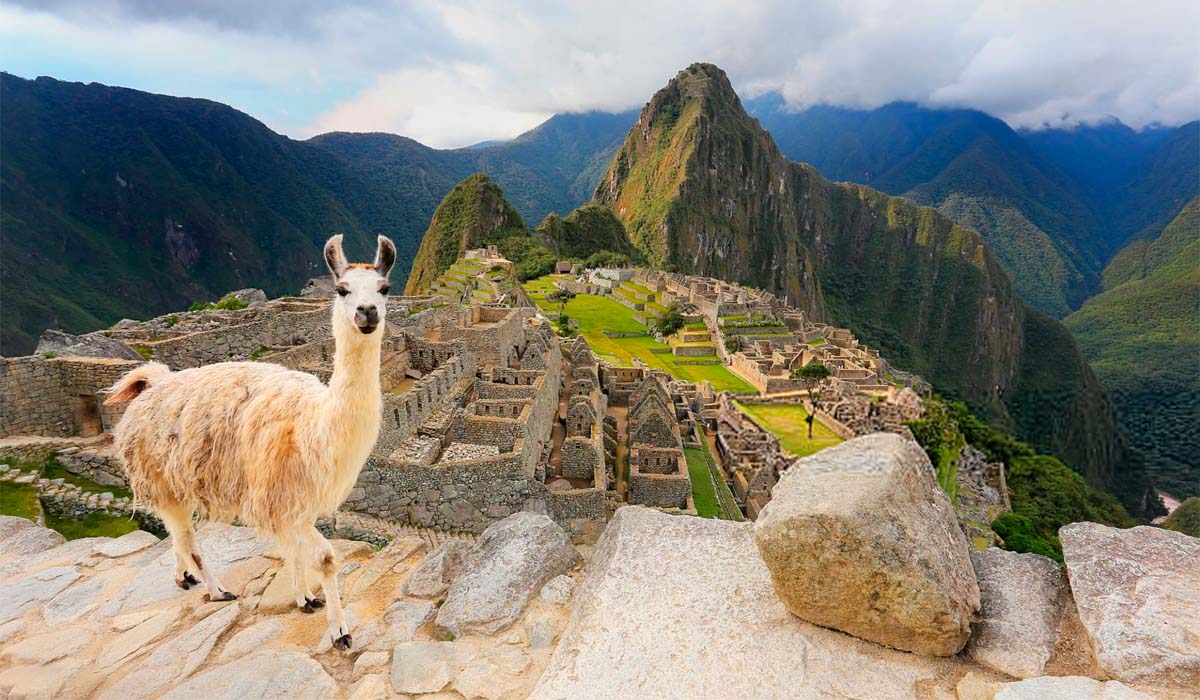
After the guided tour, you have the option of climbing the surrounding mountains to enjoy unmatched panoramic views. Please note that these activities incur an additional cost and require advance booking.
In the afternoon, we will descend to the town of Aguas Calientes, where you will have free time to have lunch with the group or relax in the local hot springs. Finally, our service concludes with a return trip to Cusco by tourist train, followed by ground transportation to the city. You will arrive at night after completing one of the most complete and memorable routes in the Andes.
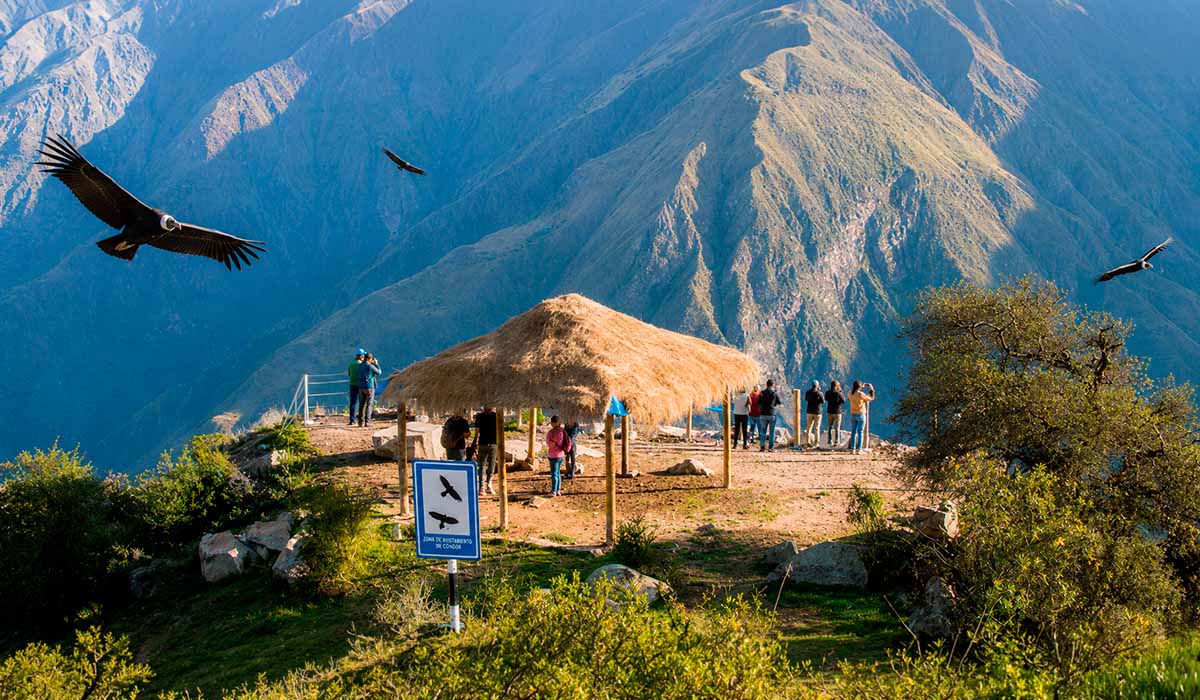
Our adventure kicks off with a scenic bus ride from Cusco, winding through the vast Anta highlands before following a dusty trail across the Puna grasslands to the remote village of Chonta. From here, a three-kilometer walk along the mountain ridge leads to exclusive viewpoints perched above one of South America's most breathtaking natural wonders, the Apurimac Canyon.
In certain stretches, the Apurimac plunges twice as deep as the Grand Canyon, and from these platforms you'll feel every bit of that immensity as the river snakes far below. But the real stars of the show are the Andean condors. For a full two hours, you'll watch these magnificent birds soar and spiral in their natural habitat and if you're lucky, one will glide silently right over your head.
After this unforgettable wildlife encounter, we re-board our transport and continue to Challacancha, the official trailhead of our main route. The trail climbs steadily through the Tillka sector, connecting with the path toward the village of Marcocasa (3,500 m / 11,482 ft), all while crossing sweeping Andean landscapes of steppe and native cloudforest. Towering above it all is the snow-capped peak of Rayuska (5,350 m / 17,552 ft), keeping silent watch over the valley.
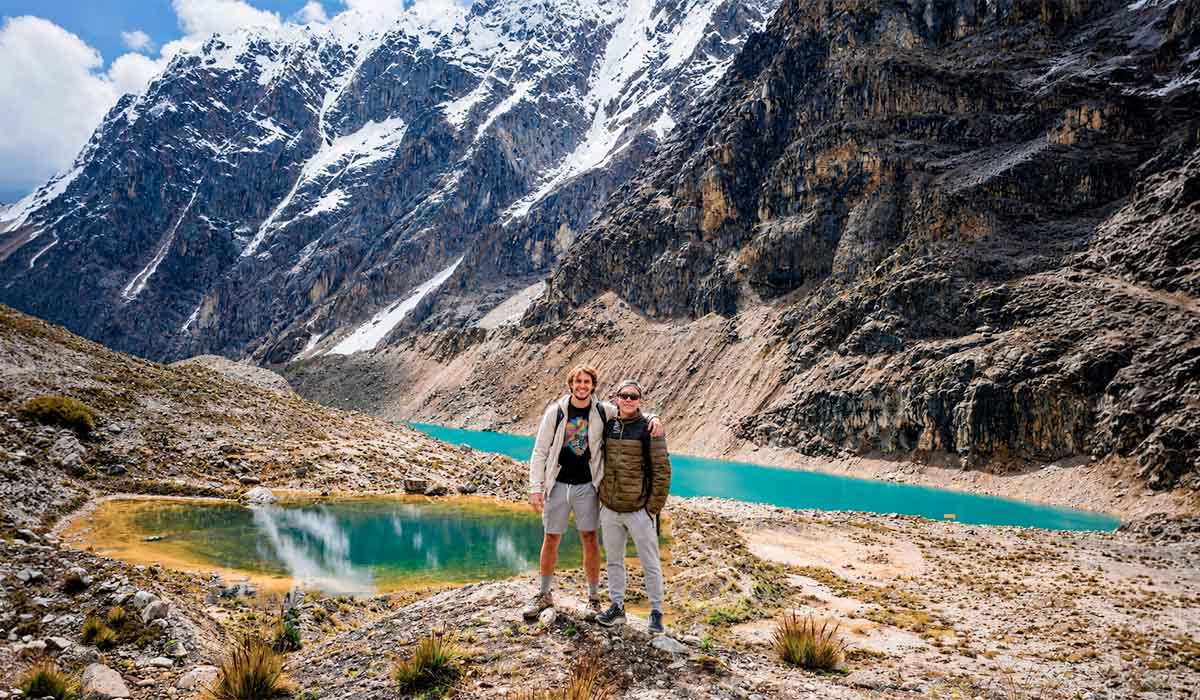
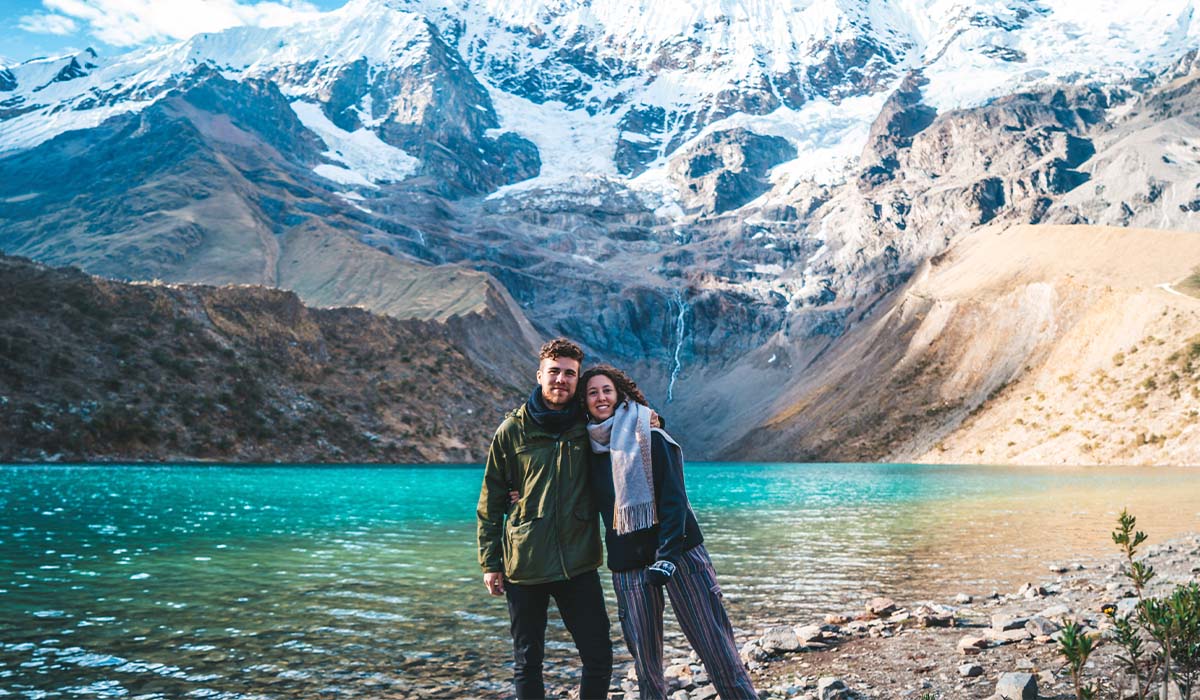
Our first camp waits at Soraypampa (3,600 m / 10,200 ft), where a warm, well-earned lunch is ready to refuel the group. The afternoon brings the day's crown jewel: a two-hour climb to Humantay Lagoon, a stunning glacial lake cradled between snow-dusted peaks. Its milky turquoise waters feel almost unreal. After taking it all in, we descend back to camp.
The day winds down beautifully in our cozy dining tent, where a spread of traditional herbal teas and hot chocolate awaits — the perfect prelude to a hearty dinner and a night of restful sleep beneath an impossibly starry Andean sky.
After a nourishing breakfast at camp, we lace up and begin climbing the mountain at a comfortable, steady pace. The trail gradually merges with the main route at an elevation of 3,850 m (12,600 ft) — a natural crossroads where the landscape begins to open up and the real Andean drama unfolds.
From this point, the mountains put on a show. Over the next hour of walking, the massive glaciers of Humantay (5,917 m / 19,412 ft) and the colossal Salkantay (6,271 m / 20,574 ft) dominate the skyline, their ice-covered flanks catching the light in ways that stop you mid-stride. These are not simply mountains in the geological sense — within the Andean worldview, peaks of this scale are revered as Apus, powerful protective spirits that have watched over these lands and their people for thousands of years. Walking in their presence carries a weight that no photograph quite captures.
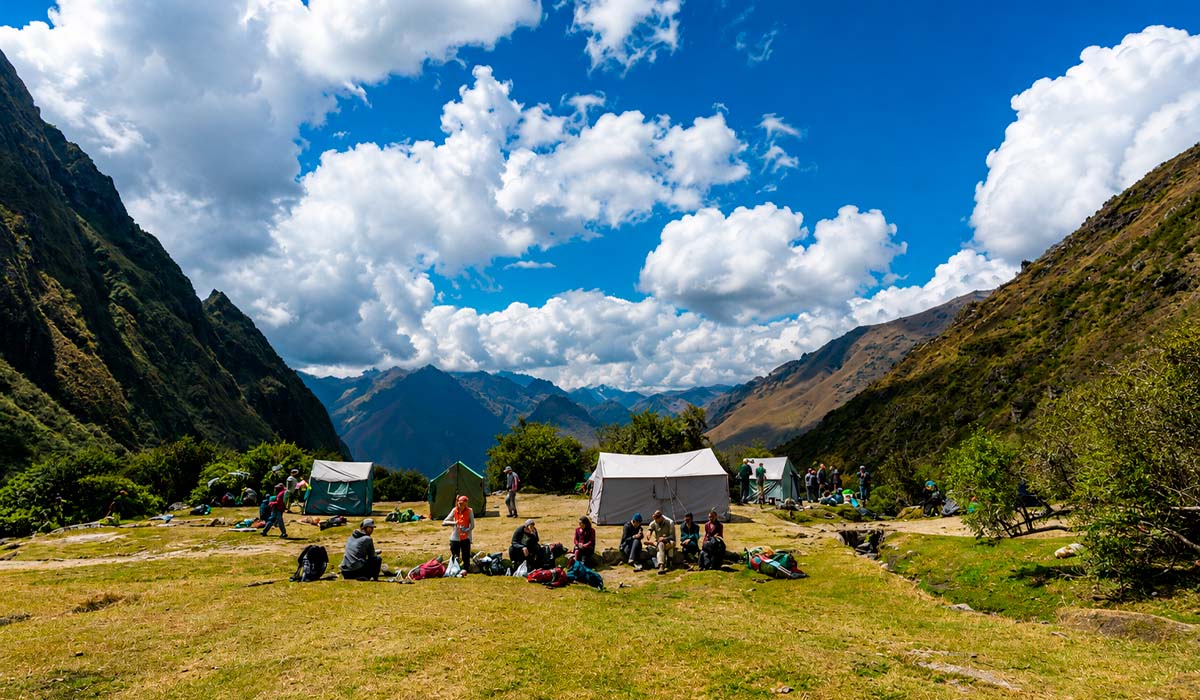
The day's destination is Salkantay Pampa, a sweeping high-altitude esplanade sitting at 4,100 m (13,451 ft) above sea level. As our team sets up the second base camp of the expedition, there's a moment to breathe, look around, and truly absorb where you are. A hot dinner follows — warmth you'll genuinely appreciate as the temperature drops and the cold typical of these elevations settles in. This is the night to layer up: thermal base layers, fleece and your heaviest jacket are not optional up here.
The alarm goes off early — today is one of the most layered and rewarding days of the entire journey. We open with a three-hour walk through the valley, arriving at the Paucarcancha sector (3,205 m / 10,515 ft) for a guided exploration of the Inkaracay archaeological ruins. These are not background scenery. Inkaracay was a strategic node in the vast Andean road network, and as your guide walks you through its design and function, the scale of Inca engineering starts to feel genuinely astonishing.
From there, the trail dips down to the town of Wayllabamba (2,999 m / 9,842 ft) — a moment that feels small on the map but carries real emotional weight on the ground. This is where we say goodbye to our horses and muleteers, whose quiet, tireless work has carried our gear through the high passes without complaint. And this is where our team of porters officially joins the expedition, the backbone of everything that follows on the Classic Inca Trail.
Lunch here is more than a meal. It's a reset — a chance to refuel and mentally prepare for what comes next.
The afternoon climb is steep, sustained, and absolutely beautiful. Step by step, the dry mountain terrain gives way to something entirely different: the cloud forest. Twisted native trees draped in dense moss, giant ferns unfurling along the trail edges, endemic orchids appearing in unexpected bursts of color, and the constant background music of high-Andean birds moving through the canopy. It's the kind of environment that makes you slow down just to look.
The climb tops out at Llullucha Pampa (3,855 m / 12,650 ft), a sweeping high-altitude esplanade where camp is waiting. After a day this full, the sleeping bag has never felt more deserved.
The trail today feels like a different world. Almost overnight, the high-altitude steppe gives way to lush semi-tropical vegetation — the air gets thicker, greener, warmer, and alive with sound in a way that makes you feel the Andes breathing.
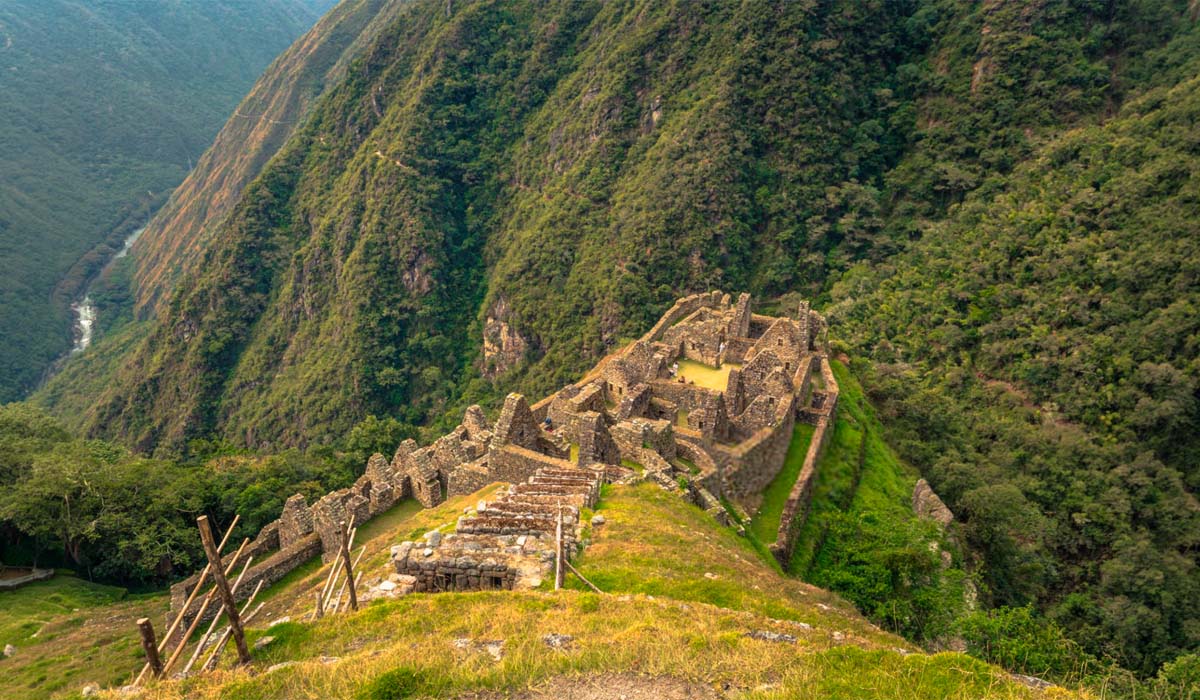
The morning's goal is Phuyupatamarca Pass (3,650 m / 11,980 ft), a climb that earns its reward immediately at the summit. Spread out below is the Inca complex of Phuyupatamarca (3,600 m / 11,811 ft) — and it stops you cold. Honoring its Quechua name, "town above the clouds", this site perches on a mountaintop with ceremonial terraces, ritual baths, and stone pathways that have survived centuries of cloud, rain, and jungle. Among the most complete and best-preserved complexes in the entire Andean road network, it deserves more than a glance — your guide will walk you through every layer of its history while lunch is served with one of the most extraordinary views on the planet.
The descent from Phuyupatamarca plunges steeply into the heart of the cloud forest — dense, dripping, and spectacular. This is one of the most biodiverse biological corridors in all of Peru, and it shows: endemic orchids in impossible colors cling to mossy branches, and exotic bird species dart through the canopy around every bend. Walk slowly here. This section rewards the ones who aren't in a rush.
The trail levels out at Winay Wayna (2,700 m / 8,858 ft) — the final camp of the expedition. The name means "forever young" in Quechua, and standing in front of its dramatic hillside terraces cascading down toward the jungle below, you understand why the Incas chose this spot. A guided tour at golden hour reveals the site's ingenious hydraulic system and agricultural design before the group gathers for the last dinner on the mountain.
Single room: Please note that if you have booked the "Single room" option for this trek, you receive your own single tent for all nights.
Local flights: No local flights are included in the trek´s price!

 +51 84 226 547
 +51 912 891 560
 Av Tupac Amaru PP-10B, Santiago, Cusco, Peru
  info@salkantaytrekmachu.com
 www.salkantaytrekmachu.com


